
Botswana | Park guide
Chobe National Park
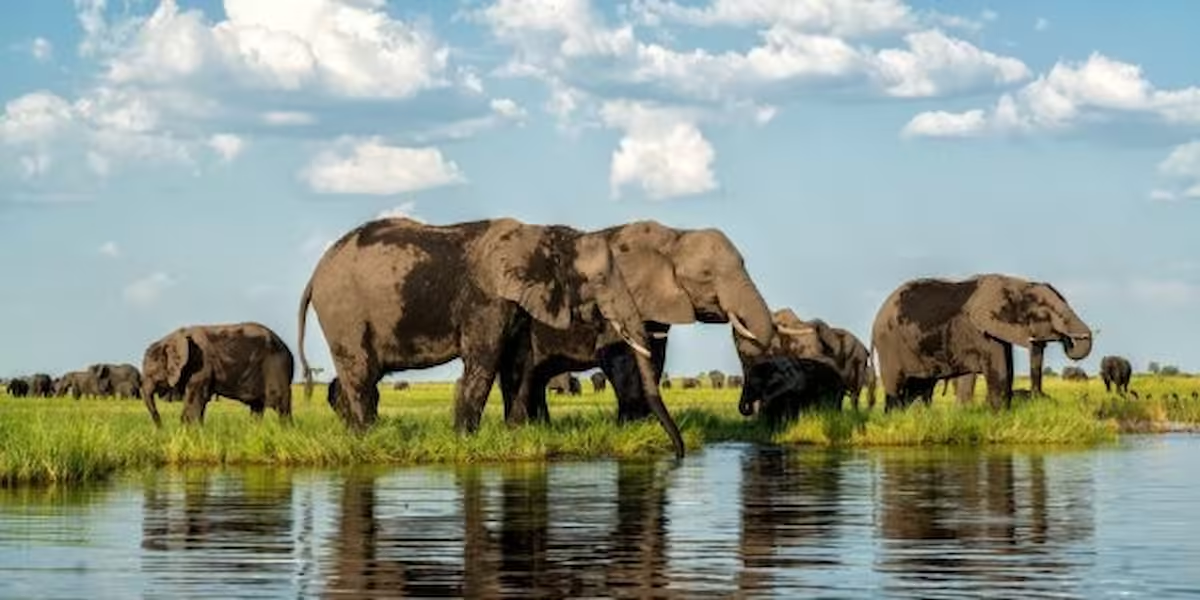
Riverfront elephant masses - 120,000 strong - watched by boat.
Chobe National Park is one of northern Botswana's most important wildlife destinations, centred around the Chobe River and a huge protected landscape of floodplains, woodland, swamps and seasonal pans. Established as a national park in 1968, the park's current area is officially recorded by the Botswana government as 10,590 km². Botswana Tourism describes the park as comprising four broad geographical areas: the Chobe Riverfront, Ngwezumba Pans, Savuti and Linyanti.
For travelers, however, Chobe is not simply a large national park to tick off a list. Its character changes dramatically depending on where you stay. The Chobe Riverfront near Kasane offers exceptionally accessible big-game viewing and some of Botswana's strongest elephant encounters, while the more remote Savuti and Linyanti areas provide a deeper wilderness experience.
The defining feature is water. During Botswana's dry months, wildlife from the surrounding woodland and plains concentrates around permanent water sources. Along the Chobe River, large herds of elephants and Cape buffalo gather to drink, while hippos, crocodiles and hundreds of water-associated bird species make the river itself a safari destination.
Safaris visiting Chobe National Park
Why go on a Chobe safari?
Chobe is particularly compelling if your priority is large concentrations of elephants, river-based wildlife viewing and easy access to a productive safari area.
Unlike destinations where wildlife viewing depends almost entirely on driving through extensive dry woodland, Chobe gives you two complementary ways of experiencing the ecosystem:
- Game drives through woodland, floodplains and grasslands
- Boat cruises along the Chobe River
- Excellent elephant viewing
- Large buffalo herds
- Lion and leopard encounters
- Hippos and crocodiles
- Strong antelope diversity
- More than 460 recorded bird species
- Access to remote ecosystems such as Savuti and Linyanti
- Easy combination with Victoria Falls
- Access through the established tourism hub of Kasane
The combination of land and water is one of Chobe's greatest advantages. A morning game drive and an afternoon river cruise can reveal completely different wildlife during the same day.
The Chobe River: the heart of the safari
The Chobe River is the defining geographical feature of the park's most visited sector.
The river originates in the northern Angolan highlands before reaching Botswana and forming the northern boundary of Chobe National Park. Its permanent water becomes particularly important during the dry season, when surrounding water sources disappear and animals increasingly concentrate along the river.
This produces one of Chobe's most memorable wildlife spectacles.
Elephant families can walk down to the river in groups, entering the water to drink, bathe and play. Buffalo gather on the floodplains and riverbanks, while hippos remain partly submerged in deeper water.
Crocodiles lie along exposed sandbanks and muddy edges, often appearing almost motionless until another animal comes close.
For photographers, the river creates opportunities that are difficult to reproduce on a conventional game drive: elephants crossing water, silhouettes against the sunset, buffalo drinking at the shoreline, hippos surfacing beside boats and waterbirds feeding in the shallows.
Chobe Riverfront
The Chobe Riverfront is the most accessible and frequently visited part of the park.
It lies closest to Kasane, making it the natural choice for travelers who want to experience Chobe without committing to several days in a remote bush camp.
The landscape here is characterized by riverine woodland, floodplains and open areas around the Chobe River. During the dry season, wildlife becomes increasingly concentrated around the remaining water.
The Riverfront is particularly famous for:
- African elephants
- Cape buffalo
- Impala
- Puku
- Lechwe
- Waterbuck
- Giraffe
- Kudu
- Sable
- Roan
- Warthog
- Bushbuck
- Lion
- Leopard
- Hyena
- Jackal
Botswana Tourism specifically identifies puku as endemic to the Chobe area, making the Riverfront interesting for travelers who want to see species beyond the traditional safari checklist.
Chobe's elephants
If there is one animal that defines the Chobe safari experience, it is the African elephant.
Botswana is home to one of the world's largest populations of African savanna elephants, and Chobe is one of the country's most important elephant areas. Botswana's tourism authority describes the Chobe region as having the country's largest elephant population, while recent government reporting emphasizes that the concentration of elephants in Chobe is exceptionally high.
The experience is particularly impressive in the dry season.
As water becomes scarce away from permanent rivers, elephants repeatedly travel toward the Chobe River. Family groups can cross safari roads, walk through woodland and descend directly to the river.
A single afternoon can therefore produce multiple elephant encounters rather than one isolated sighting.
The behavior is also varied. You may see elephants:
- Drinking
- Bathing
- Swimming
- Spraying water
- Feeding on river vegetation
- Playing
- Crossing the road
- Interacting between family groups
- Moving between woodland and river
Botswana Tourism notes that large numbers of elephants may gather around the river during the dry winter period and that elephant movements can occasionally make sections of the Serondela Road difficult to pass.
Buffalo and Chobe's large herbivores
Elephants are not the only reason Chobe is famous for concentrations of large herbivores.
Cape buffalo are particularly conspicuous around the Chobe Riverfront during the dry months. Large herds may gather close to water before dispersing into surrounding grazing areas.
Other herbivores include:
- Puku
- Lechwe
- Waterbuck
- Impala
- Kudu
- Giraffe
- Warthog
- Roan antelope
- Sable antelope
- Wildebeest
- Zebra
- Bushbuck
- Reedbuck
The presence of both water-dependent species and woodland antelope creates a varied wildlife community across the park.
The more remote Linyanti area is particularly interesting for travelers seeking species such as sitatunga, a secretive semi-aquatic antelope associated with swamp environments. Botswana Tourism also lists roan, sable, reedbuck and other antelope in this northern ecosystem.
Predators of Chobe
Chobe is not only an elephant destination.
The abundance of herbivores supports a strong predator community.
Lions
Lions are among the most frequently sought predators in Chobe. They can be encountered around the Riverfront and in other parts of the wider Chobe ecosystem.
Early morning and late afternoon are generally productive periods for predator viewing because temperatures are lower and lions are more active.
Leopards
Leopards are present throughout suitable habitat but are naturally more elusive than lions. Riverine woodland and areas with dense vegetation can provide excellent leopard habitat.
Seeing one should be treated as a fortunate encounter rather than a guaranteed sighting.
African wild dogs
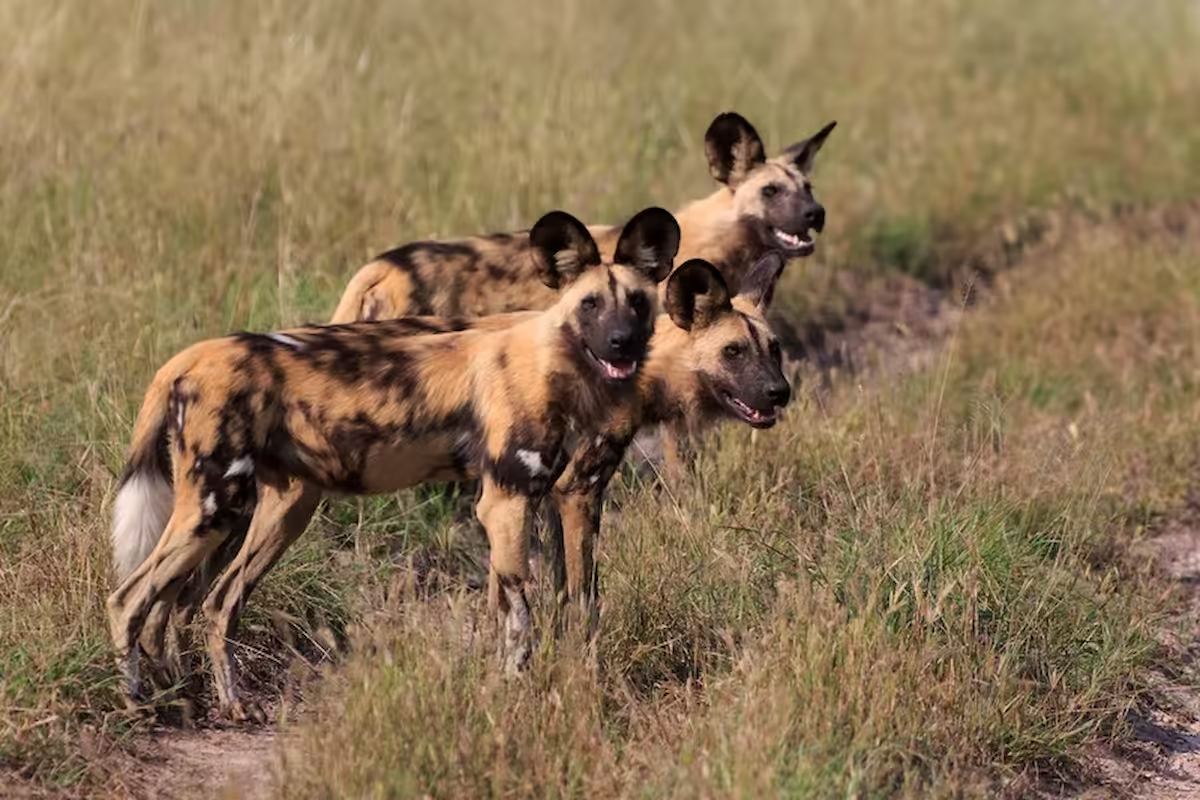
Wild dogs occur in northern Botswana, although sightings are less predictable than elephant or buffalo encounters. Travelers specifically interested in wild dogs should consider a broader northern Botswana itinerary rather than relying solely on a short Chobe Riverfront stay.
Hyenas and smaller predators
Spotted hyenas and jackals add another layer to the predator ecosystem, while smaller carnivores may appear during quieter drives.
Chobe River boat cruises
A Chobe River safari is one of the experiences that most clearly distinguishes Chobe from many conventional African safari destinations.
From a boat, wildlife is viewed from water level rather than from a 4x4 vehicle.
This is particularly effective for:
- Elephants
- Hippos
- Crocodiles
- Buffalo
- Waterbuck
- Lechwe
- Waterbirds
- Kingfishers
- Fish eagles
- Bee-eaters
- Cormorants
- Darters
The perspective can also make elephants appear remarkably close as they approach the river.
Rather than driving from sighting to sighting, the boat allows travelers to follow the natural rhythm of the river: animals approaching the water, birds feeding along the banks and hippos surfacing nearby.
Late afternoon cruises are particularly attractive because they combine wildlife activity with sunset photography.
Botswana Tourism specifically highlights river cruises as a way to experience hippos, crocodiles and waterbirds from a completely different perspective than land-based game drives.
Birding in Chobe National Park
Chobe is an exceptionally strong destination for birdwatchers.
More than 460 bird species have been recorded in the park, giving the destination considerable value beyond big-game viewing.
Depending on habitat and season, birders may encounter:
- African fish eagle
- Pel's fishing owl
- Carmine bee-eater
- Kingfishers
- Rollers
- Sacred ibis
- Egyptian goose
- Spur-winged goose
- Cormorants
- Darters
- Storks
- Martial eagle
- Water-associated species
The river is particularly productive because it combines water, mudflats, reeds, woodland and open floodplain habitats.
For dedicated birders, the wet and green season can be especially rewarding because migratory species arrive and breeding activity increases. Botswana Tourism identifies the green season as an important period for birding, with migratory birds arriving to breed.
Savuti: the wild interior of Chobe
Savuti is one of the most distinctive areas associated with Chobe National Park.
Rather than thinking of Chobe as one uniform landscape, it is better to understand Savuti as a dramatically different ecosystem within the wider park.
Savuti is famous for its changing water system and wildlife concentrations. Its landscapes include woodland, grassland and seasonal water sources, producing very different safari conditions from the Chobe Riverfront.
For travelers who want a more remote safari, Savuti can be a better choice than staying only around Kasane.
It is particularly attractive for:
- Predator-focused safaris
- Elephant viewing
- Buffalo
- Zebra
- Wildebeest
- Antelope
- Wild dogs
- Remote mobile safaris
- Longer northern Botswana itineraries
Savuti is best incorporated into an itinerary where the traveler has enough time to experience the wider ecosystem rather than treating it as a quick excursion from Kasane.
Linyanti
The Linyanti area lies in the northern part of the Chobe ecosystem around the Linyanti River and associated wetlands.
This is considerably more remote and exclusive in character than the busy Chobe Riverfront.
The permanent waters of the Linyanti and Kwando systems become important dry-season wildlife areas, attracting elephants, buffalo, zebra and wildebeest. The region also supports predators and specialized antelope, including the possibility of seeing the elusive sitatunga.
Linyanti is therefore particularly suited to travelers looking for:
- Remote wilderness
- Small luxury camps
- Fewer vehicles
- Photography
- Predator viewing
- Specialized antelope
- Walking and specialist safari experiences
- Longer Botswana journeys
It is important, however, to distinguish Linyanti as an area within the broader Chobe landscape from the separate private concessions and safari camps around it.
Ngwezumba Pans
The Ngwezumba Pans form another geographical component of Chobe National Park.
Unlike the permanent waters of the Chobe and Linyanti systems, pans are strongly influenced by seasonal rainfall and water availability.
Their importance changes throughout the year, creating another example of how Chobe's wildlife distribution is determined by water.
This is one reason why a Chobe safari should not be planned around a fixed list of animal sightings. Wildlife moves according to rainfall, water availability, vegetation and seasonal conditions.
When is the best time to visit Chobe?
May to October: best for concentrated wildlife
The dry season is generally the strongest period for classic Chobe game viewing.
Botswana's winter dry season runs roughly from May through August, followed by hot, generally dry conditions in September and October. During this period, animals increasingly concentrate around rivers, pools and remaining water sources.
For Chobe specifically, this makes the Riverfront particularly productive.
May to June: the landscape begins drying after the rains, while temperatures become more comfortable. Wildlife viewing improves as animals begin concentrating around reliable water.
July to August: these are classic dry-season safari months. Elephants and buffalo become particularly prominent around the Chobe River, while mornings can be cold.
September to October: these can be excellent months for wildlife concentration but are also among the hottest periods. Elephants can remain highly active around the river even during hotter parts of the day.
November to March: green season
The summer rainy period transforms the landscape.
The bush becomes greener, temperatures can be high and wildlife disperses as temporary water becomes available in more places.
This can make animal concentrations less predictable than during the dry season, but it brings different advantages:
- Green landscapes
- Dramatic clouds
- Newborn animals
- Predator opportunities
- Migratory birds
- Breeding activity
- Fewer travelers in some periods
- Strong photographic conditions
Botswana Tourism describes the green season as particularly productive for birding and young plains game.
Travelers should therefore not assume that the rainy season means poor safari.
It is simply a different safari.
How to get to Chobe National Park
Fly to Kasane
Kasane is the principal gateway to Chobe National Park.
The town sits along the Chobe River and provides accommodation, tourism services, campsites and access to both land and water activities.
Botswana Tourism identifies Kasane as the gateway to Chobe National Park, with the park approximately 10 km away.
This makes Chobe considerably easier to access than some of Botswana's remote wilderness destinations.
Chobe and Victoria Falls
One of Chobe's major advantages is its location close to Victoria Falls.
Botswana Tourism places Victoria Falls approximately 80 km from Kasane, making it practical to combine a Chobe safari with a Victoria Falls visit.
This combination is particularly attractive for international travelers who want both wildlife and a waterfall.
A typical itinerary could therefore begin with Victoria Falls and continue into Botswana for Chobe, or do the safari first and finish at the falls.
For a first Southern Africa trip, this is one of the easiest ways to combine two major attractions without adding an excessive amount of internal travel.
Where to stay on a Chobe safari
Chobe offers several levels of accommodation.
Kasane lodges and hotels
These are practical for travelers who want easy park access, river cruises, game drives, Victoria Falls excursions, comfortable accommodation and shorter stays.
They work particularly well for 2 to 3 night Chobe safaris.
Riverfront safari lodges
These provide closer immersion in the Chobe environment, often with easy access to river activities and game drives.
Remote camps
Savuti and Linyanti provide a more secluded experience, often with smaller camps and a stronger sense of wilderness.
Botswana Tourism describes the Linyanti and surrounding northern areas as places where camps are small and private, sometimes hosting only around twenty guests.
How many nights do you need in Chobe?
Two nights
Suitable for first-time visitors, short Botswana trips, Victoria Falls combinations and travelers primarily interested in elephants and river cruises.
Three nights
A better balance. You can combine game drives, a river cruise, multiple wildlife-viewing periods and a relaxed safari pace.
Four to five nights
Recommended for travelers who want to explore beyond the immediate Riverfront or combine Chobe with Savuti and Linyanti.
Six to seven nights
Best suited to a broader northern Botswana safari incorporating several ecosystems.
For most first-time travelers focused specifically on Chobe, three nights is a strong starting point.
Chobe vs Moremi
Chobe is famous for elephants and the Chobe River, a strong land and water combination, easy access from Kasane, river cruises as a major attraction, excellent dry-season elephant concentrations and simple combinations with Victoria Falls. The Riverfront can be relatively busy.
Moremi Game Reserve is famous for diverse Okavango habitats, a strong wetland and land safari, access usually through Maun or safari camps, mokoro and boating as major attractions, exceptional habitat diversity, a natural combination with the Okavango Delta and remote areas that can offer a quieter experience.
If your priority is elephants, a river cruise and easy access, Chobe has a major advantage.
If your priority is Okavango wetlands, mokoro and varied Delta habitats, Moremi and the Okavango Delta may be stronger.
Chobe vs Khwai
Khwai offers a very different safari atmosphere despite being geographically connected to the northern Botswana ecosystem.
Chobe Riverfront is easier to access and particularly strong for river-based wildlife viewing.
Khwai offers a community-concession environment with opportunities for activities such as night drives and walking, depending on the concession and operator.
A traveler who wants a more varied northern Botswana experience can combine both rather than choosing only one.
Chobe vs Savuti
These destinations are closely connected geographically but provide different experiences.
Choose the Chobe Riverfront for elephants, river cruises, easy access, short safaris and a Victoria Falls combination.
Choose Savuti for remote wilderness, longer safari journeys, predator-focused experiences, fewer infrastructure conveniences and deeper immersion in the interior.
For a first visit to Botswana, the Chobe Riverfront is generally easier.
For experienced safari travelers, adding Savuti can make the itinerary substantially more diverse.
Chobe vs Okavango Delta
The Okavango Delta is fundamentally a wetland ecosystem whose character is defined by seasonal flooding, channels, lagoons and islands.
Chobe's signature experience is different: a permanent river meeting extensive woodland and floodplain habitat.
Choose the Okavango for mokoro, Delta channels and wetland landscapes.
Choose Chobe for elephants, river cruises and big-game viewing.
Combining them creates one of northern Botswana's strongest safari itineraries.
Chobe for families
Chobe can work very well for families, particularly when staying around Kasane.
The accessibility means families do not necessarily need to commit to long transfers into remote wilderness.
A family itinerary can combine shorter game drives, boat cruises, wildlife viewing, comfortable lodge accommodation, Victoria Falls and flexible activity scheduling.
However, parents should remember that Chobe remains a genuine wild environment. Elephants, hippos, buffalo and crocodiles are potentially dangerous animals, and children need to follow lodge, boat and guide instructions carefully.
Chobe for honeymoons
Chobe can be an excellent honeymoon destination when paired with a more secluded Botswana camp or Victoria Falls.
A romantic Chobe itinerary can include private game drives, sunset river cruises, bush dinners, luxury lodge accommodation, elephant encounters, photography and Victoria Falls.
The river is particularly atmospheric in the late afternoon, when elephants descend to drink and the landscape changes under the setting sun.
For a honeymoon, three nights in Chobe followed by either Victoria Falls or a more remote Botswana destination is generally the strongest combination.
Chobe for photographers
Chobe offers several photographic advantages that are difficult to find together in one destination.
Elephants at the river
This is the obvious attraction. The combination of water, animals and open riverbanks allows photographers to capture behavioral images rather than simply portraits.
Boat photography
The low perspective from the river can produce images of hippos, crocodiles, elephants, buffalo, waterbirds, reflections and sunset silhouettes.
Bird photography
With more than 460 recorded bird species, Chobe deserves serious consideration for dedicated bird photographers.
Conservation and human-wildlife conflict
Chobe's conservation story also comes with a difficult reality.
The same wildlife concentrations that make Chobe exceptional for tourism can create serious challenges for communities living alongside the park.
Wildlife corridors connect protected areas with communal landscapes, allowing elephants and other animals to move between habitats.
In 2025, Botswana government reporting recorded human-wildlife conflicts in the Chobe area and highlighted the need to coordinate land use and wildlife corridors.
In 2026, Chobe District reported 333 human-wildlife conflict incidents during 2025, with crop destruction representing a significant burden on affected communities.
Conservation therefore cannot simply mean keeping animals inside protected areas.
The long-term survival of Chobe's wildlife also depends on maintaining viable landscapes and workable relationships between wildlife, tourism and surrounding communities.
Responsible safari in Chobe
Visitors have a direct role in protecting the quality of the safari experience.
Do not:
- Ask guides to chase animals
- Pressure guides to leave designated roads illegally
- Surround predators
- Block elephants
- Approach wildlife on foot without authorization
- Make excessive noise
- Feed wildlife
- Attempt to attract animals for photographs
This is not merely an ethical issue.
It can also create dangerous situations for both wildlife and people.
In 2025, Botswana's Department of Wildlife and National Parks reported incidents involving guides leaving gazetted routes and surrounding lions during a kill. Several guides were arrested and had their guiding licences suspended.
The best Chobe experience is one where wildlife behavior is allowed to unfold naturally.
Suggested Chobe safari itineraries
3-day Chobe safari
- Day 1: Arrive in Kasane - afternoon game drive or river cruise
- Day 2: Morning game drive - afternoon Chobe River cruise
- Day 3: Morning game drive - departure
Best for first-time visitors and Victoria Falls combinations.
4-day Chobe safari
- Day 1: Arrival - sunset river cruise
- Day 2: Morning and afternoon game drives
- Day 3: River cruise - extended wildlife viewing
- Day 4: Morning safari - departure
Best for travelers wanting a more relaxed pace.
5-day Chobe and Savuti
- Day 1: Kasane and Chobe Riverfront
- Day 2: Chobe game drives and river cruise
- Day 3: Transfer toward Savuti
- Day 4: Full-day Savuti safari
- Day 5: Morning safari - onward journey
Best for travelers wanting to experience contrasting Chobe landscapes.
7-day northern Botswana safari
- Days 1 to 2: Chobe Riverfront
- Days 3 to 4: Savuti
- Days 5 to 6: Linyanti or another northern Botswana wilderness area
- Day 7: Departure
This style of itinerary is more appropriate for experienced safari travelers who want to understand northern Botswana as an interconnected ecosystem rather than visiting only the most accessible riverfront.
Best Chobe safari for different travelers
First-time safari travelers: three nights on the Chobe Riverfront.
Honeymoon travelers: three to four nights of luxury Chobe combined with Victoria Falls.
Families: three nights in Kasane and Chobe plus Victoria Falls.
Photographers: three to four nights with game drives and river cruises.
Birdwatchers: three to four nights with dedicated birding time.
Luxury travelers: Chobe plus a private northern Botswana camp.
Experienced safari travelers: Chobe, then Savuti and Linyanti.
Victoria Falls visitors: two to three nights in Chobe.
Elephant enthusiasts: the Chobe Riverfront during the dry season.
First Botswana safari: Chobe with the Okavango or Moremi.
Chobe safari planning: what makes it different
Chobe should not be sold simply as another Botswana wildlife park.
Its strongest proposition is the relationship between river, elephant and accessibility.
The Chobe River draws wildlife into a relatively concentrated area during the dry season, while the surrounding woodland supports a much broader range of animals.
Then the geography changes as you move toward Savuti and Linyanti.
That gives travelers the possibility of experiencing several different safari environments within one broader destination.
For a short trip, stay near Kasane and concentrate on the Riverfront.
For a longer Botswana safari, use Chobe as the northern gateway into a wider journey through Savuti, Linyanti, Khwai, Moremi and the Okavango Delta.
Suggested internal links
Okavango Delta > Moremi Game Reserve > Khwai > Savuti > Africa Safari Packages.
Chobe National Park FAQs
Boat or 4x4 in Chobe?
Both: morning 4x4 for predators, afternoon boat for herds at eye level. The boat safari is the signature - never skip it.
When are herds biggest?
August to October, when thousands of elephants and buffalo crowd the river daily.
When is the best time to visit Chobe National Park?
May to October dry season for riverfront herds; green season disperses game but drops rates.
What is NOT included that surprises first-timers?
International flights, visas, travel insurance (required), premium drinks, the balloon flight where offered, and tips. Our quotes line-item park fees and permits so the total you compare is the total you pay.
What happens if it rains?
Game drives run rain or shine - vehicles have roofs and ponchos, animals remain active, and green-season light is superb for photography. Only true downpours pause activity, and camps flex schedules around them.
What insurance do we need?
Comprehensive travel insurance is required, including medical evacuation (AMREF/Flying Doctors cover, about 30 dollars, is recommended for remote circuits). Bring policy details - camps and operators ask for them.
Can we customise the route?
Freely - add nights, upgrade camps, swap parks or append beach and trekking. Request a proposal and we re-quote line by line.
Do we need a visa?
Most visitors need one: Tanzania offers visas on arrival for many nationalities, Kenya uses an eTA applied for online before travel, Uganda an e-visa. We confirm the current rule for your passport before you fly.
One decision per country, and they differ. Tanzania sells visas on arrival for most passports - US$50, US$100 for United States citizens - or by eVisa in advance. Kenya has issued only the eTA since 2024, at US$32.50 online at least three days before departure. Uganda runs an e-visa printed before you fly, and the US$100 East African Tourist Visa folds Kenya, Uganda and Rwanda into a single stamp. Six months of passport validity covers all three. Send us passport details at proposal stage and we confirm every rule for your nationality before you commit to flights.
Traveling solo - how do single supplements work?
All itineraries run solo. Expect a 20 to 50 percent supplement where lodges charge per room; vehicles cost the same whether one or six ride. Ask for the honest supplement math per trip.
Is Chobe National Park worth visiting?
Yes, particularly if you want a safari that combines exceptional elephant viewing, large herbivore concentrations and river-based wildlife viewing.
Chobe is also unusually convenient. You can stay in or around Kasane, reach the park relatively quickly, undertake a game drive in the morning and a river cruise in the afternoon, then continue to Victoria Falls without requiring a complicated transfer.
Its accessibility does mean that the Chobe Riverfront can feel more developed and busier than remote Botswana destinations. Travelers seeking absolute isolation may therefore prefer Savuti, Linyanti or private concessions.
What is Chobe National Park famous for?
Chobe is most famous for its large elephant concentrations and the Chobe River.
The dry season brings elephants and buffalo toward the permanent river water, creating some of the most impressive large-herbivore encounters in northern Botswana. The park is also known for diverse antelope, lions, leopards, hippos, crocodiles and exceptional birdlife.
The combination of game drives and boat cruises is another major reason travelers choose Chobe.
Can you see the Big Five in Chobe?
Chobe contains several of the species commonly associated with the Big Five, including elephant, lion, leopard and buffalo.
However, travelers should not choose Chobe simply because they want to complete a Big Five checklist.
The destination's greatest strength is its ecosystem and wildlife concentration, particularly elephants, buffalo and river-associated species. Leopard and other predators are naturally less predictable, and rhino should not be treated as a guaranteed Chobe sighting.
If completing the Big Five is the overriding objective, the itinerary should be designed around multiple destinations rather than relying on Chobe alone.
How many elephants can you see in Chobe?
There is no reliable reason to promise a specific number on an individual safari.
What makes Chobe exceptional is that elephants can occur in large concentrations, especially along the Chobe River during the dry season.
Botswana Tourism reports that visitors may see hundreds of elephants gathered around the river during favorable dry-season conditions.
The actual experience varies with season, water availability, location and daily animal movements.
Is Chobe better in the dry season or rainy season?
For travelers whose priority is concentrated big-game viewing, the dry season is generally the stronger choice.
From roughly May through October, animals increasingly gather around permanent water sources, vegetation becomes less dense and visibility improves.
The rainy season offers a different experience. The landscape becomes green, migratory birds arrive and many herbivores give birth. The scenery can be spectacular, but wildlife is more dispersed because temporary water is available throughout the landscape.
How long should I stay in Chobe National Park?
For a dedicated Chobe visit, three nights is a strong minimum for a satisfying safari.
Two nights can work if Chobe is one component of a larger Victoria Falls or Botswana itinerary.
Three nights gives enough time for multiple game drives and at least one river cruise without making the experience feel rushed.
Four or more nights becomes more valuable if you are incorporating Savuti, Linyanti or other northern Botswana destinations.
Can you combine Chobe with Victoria Falls?
Yes, and this is one of the strongest combinations in Southern Africa.
Kasane is approximately 80 km from Victoria Falls, according to Botswana Tourism.
This allows a traveler to begin with Victoria Falls and continue into a Chobe safari, or do the safari first and finish at the falls, without needing to dedicate several additional days to travel.
Is Chobe suitable for a first safari?
Yes.
Chobe is particularly beginner-friendly because of its accessibility, established accommodation infrastructure and straightforward combination of game drives and boat cruises.
It also provides spectacular wildlife without requiring a traveler to undertake a long fly-in safari into a remote concession.
For someone taking their first African safari, Chobe can therefore provide an excellent introduction to Botswana.
Is Chobe crowded?
The answer depends heavily on where you go.
The Chobe Riverfront is the most accessible and frequently visited part of the park, so it can have more vehicles than remote Botswana destinations. Savuti and Linyanti provide a more isolated experience.
This distinction is important when planning the trip. A traveler looking for solitude should not simply book a generic Chobe safari; they should ask which sector and which accommodation area they will actually be visiting.
Can I self-drive Chobe National Park?
Self-drive is possible in parts of the Chobe area, but it requires appropriate preparation and a realistic understanding of driving in a wild environment.
Road conditions can vary seasonally, wildlife can block roads, and navigation is not equivalent to driving through a conventional national park.
For travelers without extensive African 4x4 experience, a guided safari is usually the better option.
The added benefit is that professional guides understand wildlife behavior, seasonal roads and productive areas.
Is Chobe good for birdwatching?
Very much so.
More than 460 bird species have been recorded in Chobe, and the combination of permanent river, floodplain, woodland and seasonal habitats creates excellent bird diversity.
Birders should consider visiting during the green season when migratory species are present and breeding activity increases.
What should I combine with Chobe?
The strongest combinations depend on the type of safari you want.
Chobe with Victoria Falls is best for a first Southern Africa trip. Chobe with the Okavango Delta is best for combining riverine big-game viewing with a true inland wetland ecosystem.
Chobe with Moremi and the Okavango gives a comprehensive northern Botswana safari. Chobe with Savuti and Linyanti suits travelers prioritizing remote wilderness and diverse northern Botswana habitats, while Chobe with Khwai combines accessible riverfront safari with a community-concession experience.
Put Chobe National Park in the right place
Season, zone and camp selection by a specialist.