
Namibia | 7 days | classic
7-day Namibia safari
Sossusvlei, Swakopmund and Damaraland desert rhinos - guided or self-drive.
Duration7 days
Styleclassic
StartsWindhoek
EndsWindhoek
Green season from$2,750 pp
Peak season from$3,350 pp
Grand Namibia loop: dunes, coast, Damaraland rhinos and Etosha waterholes at self-drive or guided pace. The sweet spot: depth plus a buffer day for weather, herds and rest. Route: Sossusvlei - Swakopmund - Damaraland over 7 days. Season logic: May-October dry season for Etosha; dunes year-round.
Highlights
- Private throughout - own vehicle and guide, departing on your dates, with no group to join.
- Safari route - Sossusvlei, Swakopmund, Damaraland.
- Season-smart routing - camp zone set by your month, not by a fixed template.
- Honest pricing - park and concession fees line-itemed on every quote.
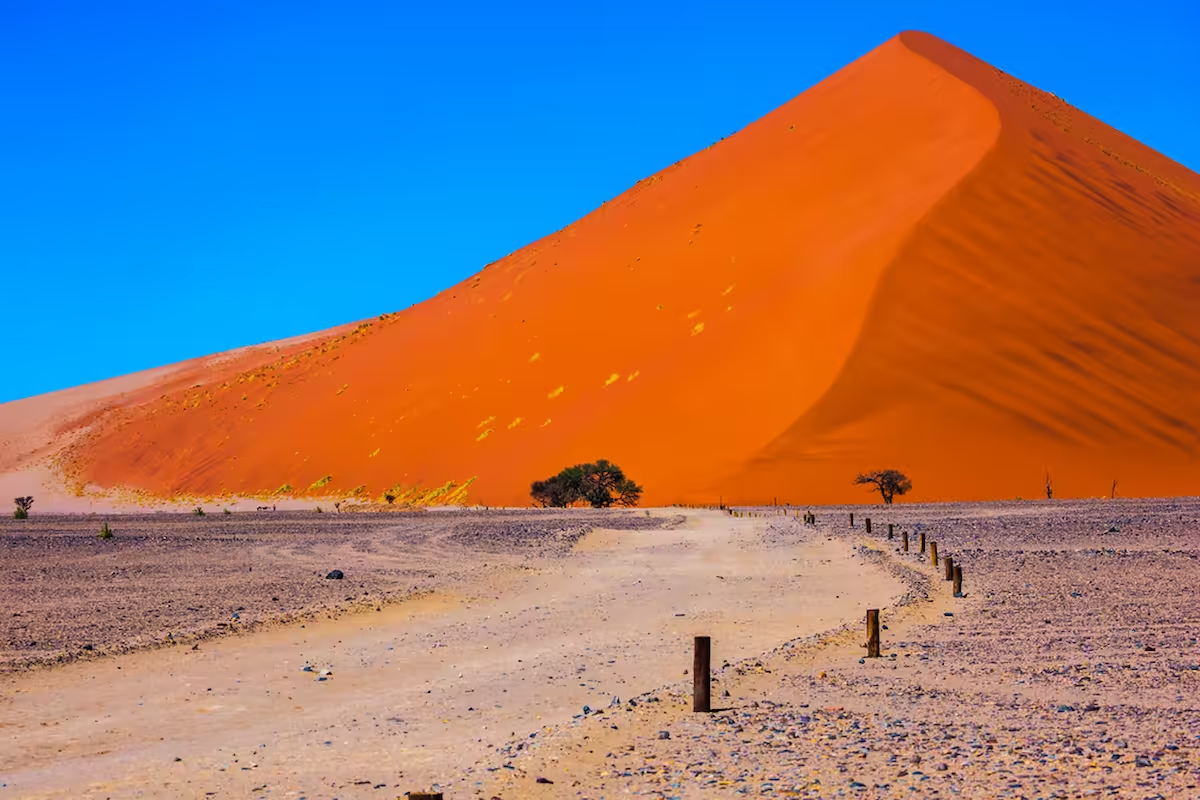
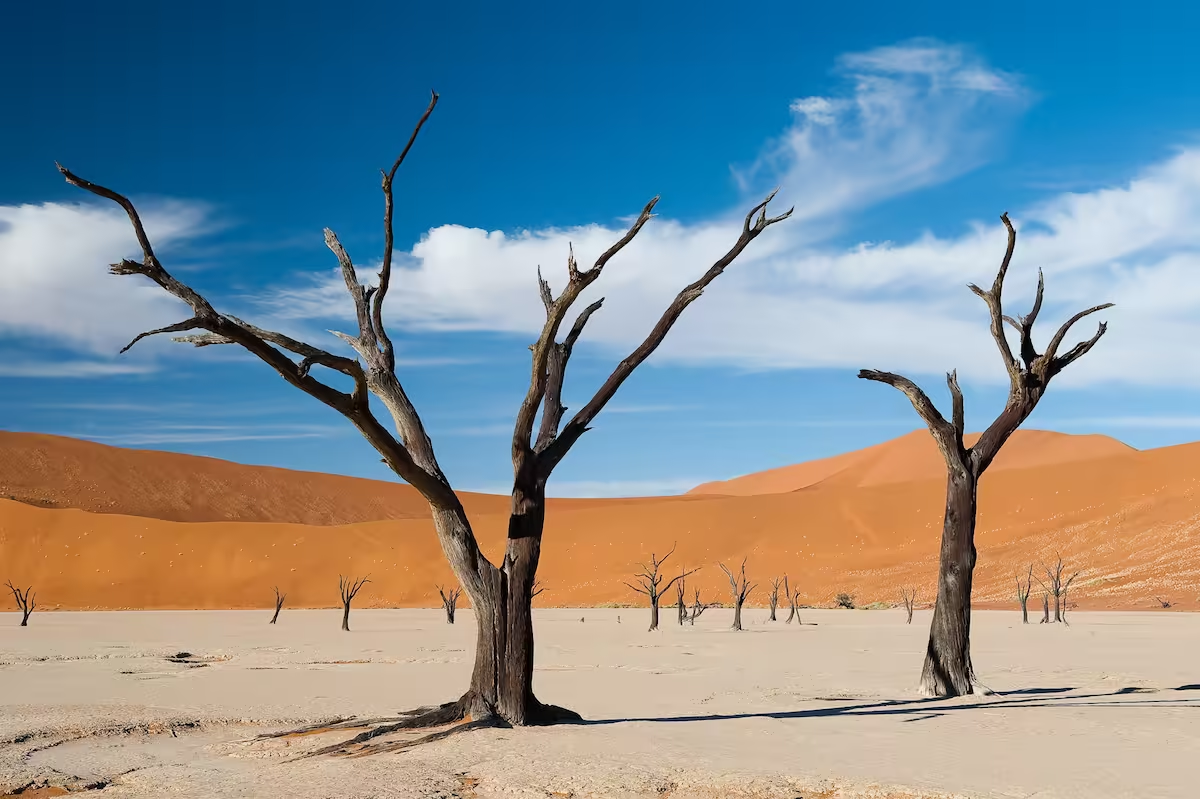
- Sossusvlei - the 300-metre dunes of Sossusvlei and the dead-vleis at first light.
- 3 nights in Damaraland - desert wildlife is spread thin, so a second day is what turns searching into sightings.
- Built around the driving - honest distances planned as a route, not as a list of stops.
Day-by-day itinerary
Day 1 - Arrive Windhoek

Morning: Land at Windhoek; meet your private guide for a full safari briefing.
Midday: Lunch and gear check; rest after the flight.
Afternoon: Introductory game drive in Sossusvlei where routing allows, else lodge pool and early rest.
Evening: Dinner and overnight near Windhoek. (Add a pre-night after long-haul arrivals.)
Meals: Dinner.
Accommodation: Hotel in Windhoek.
Day 2 - Sossusvlei
Morning: Early departure for a dawn game drive when predators are still active, returning for brunch.
Midday: Picnic lunch at a designated site or lodge lunch, then rest through the midday heat while wildlife dozes.
Afternoon: Afternoon game drive in Sossusvlei: Dawn Big Daddy climb, Deadvlei pan and Sesriem Canyon.
Evening: Sundowner at a scenic stop, dinner and overnight at the lodge or camp.
Meals: Breakfast, picnic lunch and dinner.
Accommodation: Lodge or tented camp near Sesriem.
Day 3 - Swakopmund
Morning: Early departure for a dawn game drive when predators are still active, returning for brunch.
Midday: Picnic lunch at a designated site or lodge lunch, then rest through the midday heat while wildlife dozes.
Afternoon: Afternoon game drive in Swakopmund: Seal kayaking, Sandwich Harbour 4x4 and a coastal breather. Transfer from Sossusvlei (coastal drive via Kuiseb).
Evening: Sundowner at a scenic stop, dinner and overnight at the lodge or camp.
Meals: Breakfast, picnic lunch and dinner.
Accommodation: Coastal hotel in Swakopmund.
Day 4 - Damaraland
Morning: Early departure for a dawn game drive when predators are still active, returning for brunch.
Midday: Picnic lunch at a designated site or lodge lunch, then rest through the midday heat while wildlife dozes.
Afternoon: Afternoon game drive in Damaraland: Twyfelfontein engravings and desert-rhino tracking on foot with community trackers. Transfer from Swakopmund (4-hr northbound drive).
Evening: Sundowner at a scenic stop, dinner and overnight at the lodge or camp.
Meals: Breakfast, picnic lunch and dinner.
Accommodation: Remote tented camp or community lodge in Damaraland.
Day 5 - Damaraland
Morning: Early departure for a dawn game drive when predators are still active, returning for brunch.
Midday: Picnic lunch at a designated site or lodge lunch, then rest through the midday heat while wildlife dozes.
Afternoon: Second full day for deeper territories with picnic lunch out: Twyfelfontein engravings and desert-rhino tracking on foot with community trackers.
Evening: Sundowner at a scenic stop, dinner and overnight at the lodge or camp.
Meals: Breakfast, picnic lunch and dinner.
Accommodation: Remote tented camp or community lodge in Damaraland.
Day 6 - Damaraland
Morning: Early departure for a dawn game drive when predators are still active, returning for brunch.
Midday: Picnic lunch at a designated site or lodge lunch, then rest through the midday heat while wildlife dozes.
Afternoon: Second full day for deeper territories with picnic lunch out: Twyfelfontein engravings and desert-rhino tracking on foot with community trackers.
Evening: Sundowner at a scenic stop, dinner and overnight at the lodge or camp.
Meals: Breakfast, picnic lunch and dinner.
Accommodation: Remote tented camp or community lodge in Damaraland.
Day 7 - Depart
Morning: Final sunrise activity around Damaraland with bush breakfast.
Midday: Brunch, then transfer to Windhoek for onward connections.
Afternoon: Day rooms available on late flights; souvenir stop if time allows.
Evening: End of safari services at Windhoek airport.
Meals: Breakfast and brunch.
Accommodation: Departure day - no overnight stay.
Why this 7-day Namibia safari itinerary
7 days on the Namibia circuit: Sossusvlei, Swakopmund, Damaraland. Every day below is a real day on the ground, not a transfer with a game drive attached.
Why Sossusvlei comes first
It is the first light-and-landscape stop out of Windhoek, and the dunes must be climbed before the sun is high - and that is where the route opens.
Damaraland gets 3 nights
Damaraland holds 3 of the 7 days, and that is deliberate: desert wildlife is spread thin, so a second day is what turns searching into sightings.
What 7 days buys
7 days moves past the point of rushing: whole days rather than stops, and enough slack that weather or wildlife can bend the plan without breaking it.
Getting around Namibia
Namibia is a long-distance road trip by design: Windhoek to the dunes, out to the coast, north through Damaraland to Etosha. Distances are honest ones, so the itinerary is built around the driving rather than the other way round. Sectors are sometimes linked by a short internal flight to keep a day for game viewing.
Accommodation
Hand-picked lodges and tented camps matched to your tier - mid-range comfort or luxury suites, always positioned for short game-drive starts. Family rooms, honeymoon suites and triple options on request.
Safari vehicle and guide
Extended 4x4 Land Cruiser with pop-up roof, fridge, charging ports and window seats for all. Your English-speaking driver-guide averages a decade in these parks and is assigned by specialty - Migration positioning, photography, birding or family pacing.
Who this safari is best for
First-time safari travelers and anyone wanting the essential parks done properly.
Pricing
| Season | Per person (2 travelers) |
|---|---|
| Green season | from $2,750 |
| Peak season | from $3,350 |
| Tier | What you get |
|---|---|
| Budget | Camping and simple camps, with departures in the green season to hold the rate down. The private vehicle, your guide and the park fees stay exactly the same - the cut is beds and season, never guiding or positioning. |
| Mid-range | Comfortable lodges and tented camps with full board, positioned for short game-drive starts. This is the standard the from-price on this page assumes. |
| Luxury | Top-end suites and private villas in the best position in camp, private guiding throughout and flexible meal times. The highest season surcharge applies. |
Best time to book
Namibia runs on two seasons. The one you pick changes what you see, what the camps cost and how far ahead you need to commit.
Dry season
May to October is the comfortable window: cooler, drier days, clear desert light and animals drawn to the waterholes in Etosha. It is also the busy season, and the better desert camps go first.
Green season
November to April brings the rains, when the desert greens, the dunes take on deeper colour and visitor numbers drop sharply. It is hot - December to February is the hottest stretch - but it is also where the value and the dramatic skies sit.
What actually drives the timing
The desert attractions work year-round; the waterhole logic in Etosha is what changes seasonally. Damaraland's desert-adapted rhino are tracked on foot and by vehicle regardless of month, while the Skeleton Coast fog is heaviest in the cooler half of the year.
How far ahead to book
May to August and the school holidays want six to nine months of notice for the fly-in camps and the Sesriem gate lodges. Green-season Namibia often goes through on two to four months.
What is included and excluded
Every price on this page is a full-cost quote. Park and concession fees are line-itemed, so the total you compare against another operator is the total you pay.
Included
- Transport and guiding - private extended 4x4 safari vehicle with a dedicated driver-guide for your group only.
- Park and conservation fees - entry to Sossusvlei, paid on your behalf and shown as line items on the quote.
- Accommodation - 6 nights in lodges, tented camps or seasonal camps matched to your tier.
- Meals - most meals as listed day by day: breakfast at camp, a picnic or lodge lunch, and dinner, with bottled water in the vehicle throughout.
- Transfers - every road transfer in the day-by-day, including airport pick-up and drop-off.
- Game drives - morning and afternoon drives in your own vehicle, on no schedule but yours.
- Taxes - government taxes and VAT on everything quoted.
Not included
- International flights - into Hosea Kutako International, Windhoek (WDH); we route the connections but do not issue tickets.
- Visas - Namibia allows visa-free entry for many nationalities for stays up to 90 days. We confirm the current rule for your passport before you fly.
- Travel insurance - required, and it must include medical evacuation.
- Premium drinks - premium wines, spirits and cocktails at lodges and camps.
- Tips - driver-guide and camp staff gratuities.
- Optional extras - balloon or scenic flights, extra nights, luxury camp tier, beach or trekking extensions.
Parks and guides
Back to hub | Style hub | Customize any itinerary
Related safaris
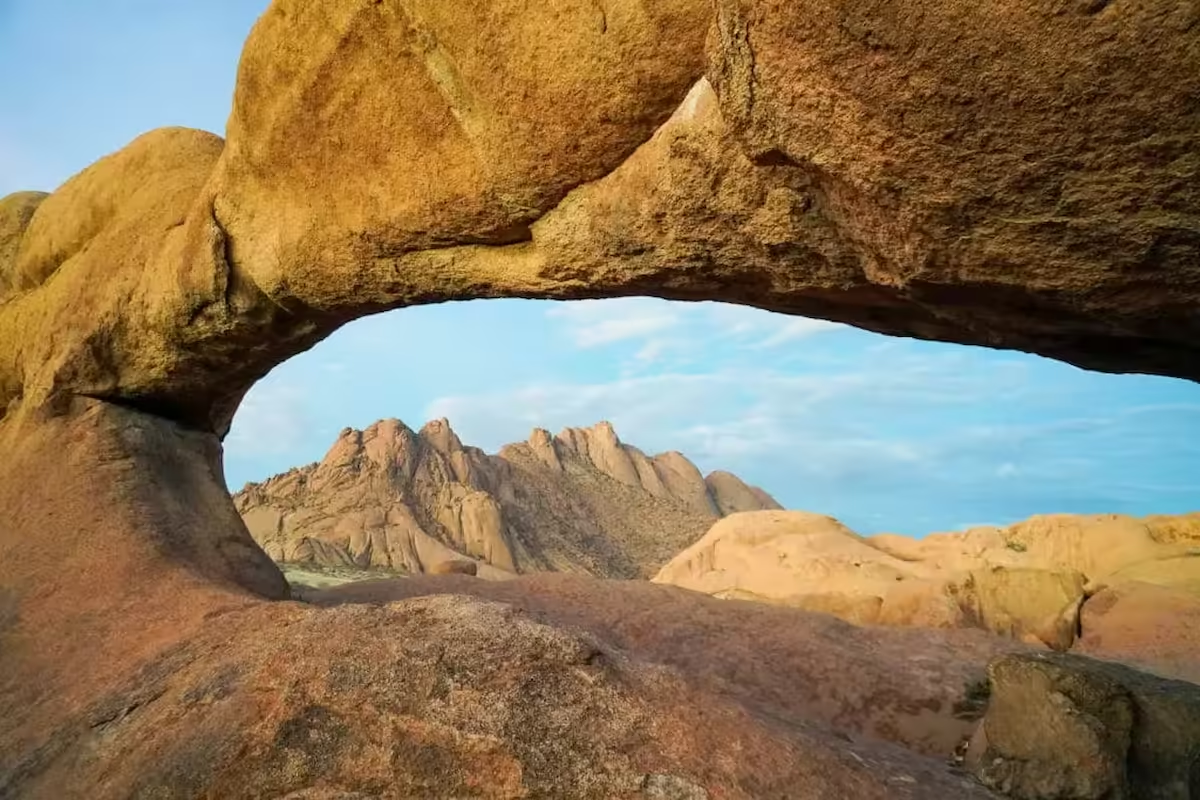
8-Day Namibia Safari + Damaraland
Adds rhino tracking and Twyfelfontein to dunes and coast.
From $3,150
FAQs
Are your guides qualified?
Our driver-guides average a decade in their parks, hold national guiding licenses plus first-aid certification, and are assigned by specialty - Migration positioning, photography, birding or family pacing.
How do we get the best price without hurting the trip?
Travel green season, bring four or more travelers to split the vehicle, choose tented camps over lodges, and drive where flying saves little. Never cut guide quality, Migration-zone positioning or insurance.
The four levers that actually work: green season (published rates 20-40 percent below high season with fewer vehicles at sightings), four or more travelers splitting the vehicle, tented camps over permanent lodges of the same operator, and road transfers under two hours instead of flight sectors. The three that do not: cutting guide quality, cutting Migration-zone positioning, and dropping insurance - the last one being a false economy at US$100-300 for a multi-thousand-dollar trip.
What is the best month for this trip?
Dry-season months give the easiest wildlife viewing; green-season months cut cost 20 to 35 percent. Tell us your window and we confirm the wildlife logic.
What vaccinations and malaria prevention do we need?
Yellow fever certificates are required when arriving from endemic countries; malaria prophylaxis is recommended for most safari regions - discuss options with your doctor 6 to 8 weeks out. We brief every trip on water, sun and insect precautions.
CDC guidance for the region is precise. Yellow fever vaccination is recommended for all safari travelers and becomes a certificate requirement when you arrive via an endemic country such as Rwanda or Uganda. Routine boosters, hepatitis A, typhoid and hepatitis B round out the travel clinic list. Malaria transmission covers every game park below roughly 2,500 meters, the parasite is chloroquine resistant, and the preventatives that work are atovaquone-proguanil, doxycycline, mefloquine or tafenoquine, started before arrival and finished after. Book the clinic six to eight weeks out, and pack repellent with 20 percent DEET plus long sleeves for dusk.
What photography gear should we bring?
A 100 to 400mm zoom covers 90 percent of sightings; add a wide second body for landscapes. Beanbags beat tripods in vehicles. We provide charging setups and dust management briefings - tell us your kit and targets.
How do internal flights and luggage limits work?
Bush flights allow 15 to 20kg in soft duffels; lodges store hard cases free. We route connections with realistic margins and meet you at every airstrip - missed-connection cover is built into fly-in trips.
Is this trip private?
Yes - every itinerary here runs with your own vehicle and guide. No Mixed-group compromises unless you ask for a join-in price.
How fit do we need to be?
Game-drive safaris need no fitness. Trekking trips state their grade honestly - ask for the training notes.
What is NOT included that surprises first-timers?
International flights, visas, travel insurance (required), premium drinks, the balloon flight where offered, and tips. Our quotes line-item park fees and permits so the total you compare is the total you pay.
Request this safari
Your dates, your camp tier - reply within 24 hours.