5-Day Namibia Safari: Dunes & Coast
Sossusvlei, Dead Vlei and the Atlantic coast - the shortest way into the desert.
From $2,000

Namibia safari hub
Waterhole wildlife in Etosha, the red dunes of Sossusvlei, desert-adapted elephants in Damaraland, Atlantic fog on the Skeleton Coast and the rivers of the Zambezi Region.
A journey planned around landscapes as much as animals, and - uniquely in Africa - one you can drive yourself.
A Namibia safari takes you through Etosha National Park, the Namib Desert, Sossusvlei, Damaraland, the Skeleton Coast and the wildlife-rich Zambezi Region. It combines waterhole wildlife viewing, desert-adapted animals, enormous open landscapes, self-drive routes, guided safaris and some of southern Africa's most distinctive conservation areas.
Namibia is not a conventional safari destination where every day revolves around one large concentration of animals. Its appeal comes from the contrast between ecosystems. In the north, Etosha's waterholes draw elephant, rhino, lion, giraffe, zebra and springbok into open country where animals can be watched without dense vegetation in the way. In the northwest, Damaraland and the Kunene region support wildlife adapted to extremely arid conditions, including desert-adapted elephants and black rhinos. Along the Atlantic, the Skeleton Coast combines fog, dunes, gravel plains, shipwrecks and desert wildlife. Further east, the Zambezi Region changes completely, with rivers, floodplains, woodland and wetlands supporting elephant, buffalo, hippo, wild dog and exceptional birdlife.
That ecological variety is what makes a Namibia safari different from a traditional East African game-viewing holiday.
Namibia also offers something unusual in African safari tourism: the possibility of building a substantial safari around a self-drive route. At least 80% of the country's roads are gravel, so journey planning, driving time and vehicle choice become real parts of the experience rather than administrative details.
Namibia suits travellers who want more than repeated game drives around one wildlife area.
Namibia has developed a distinctive approach to conservation beyond its protected areas. Communal conservancies are legally recognised community organisations with wildlife management plans, elected committees and defined boundaries. Around 86 registered communal conservancies now cover 19.6% of the country, with tourism joint ventures operating in a number of them.
That means a Namibia safari can be about both wildlife and the landscapes and communities that make wildlife conservation possible.
African safaris → Southern Africa safari →
Three combinations that explain why the country is worth more than one trip.
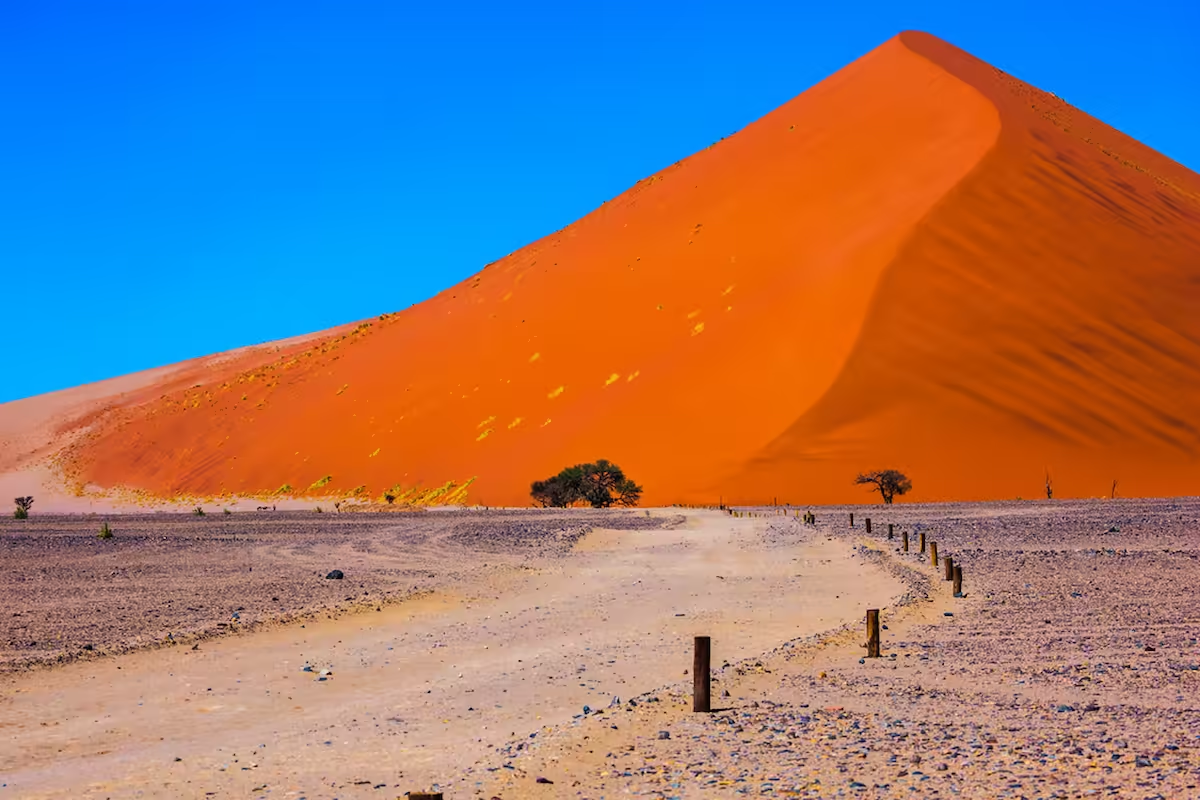
Red dunes, white salt pans and dark camel thorn trees - the most photographed landscape in the country and a sunrise you plan the whole day around. Namibia's protected areas →
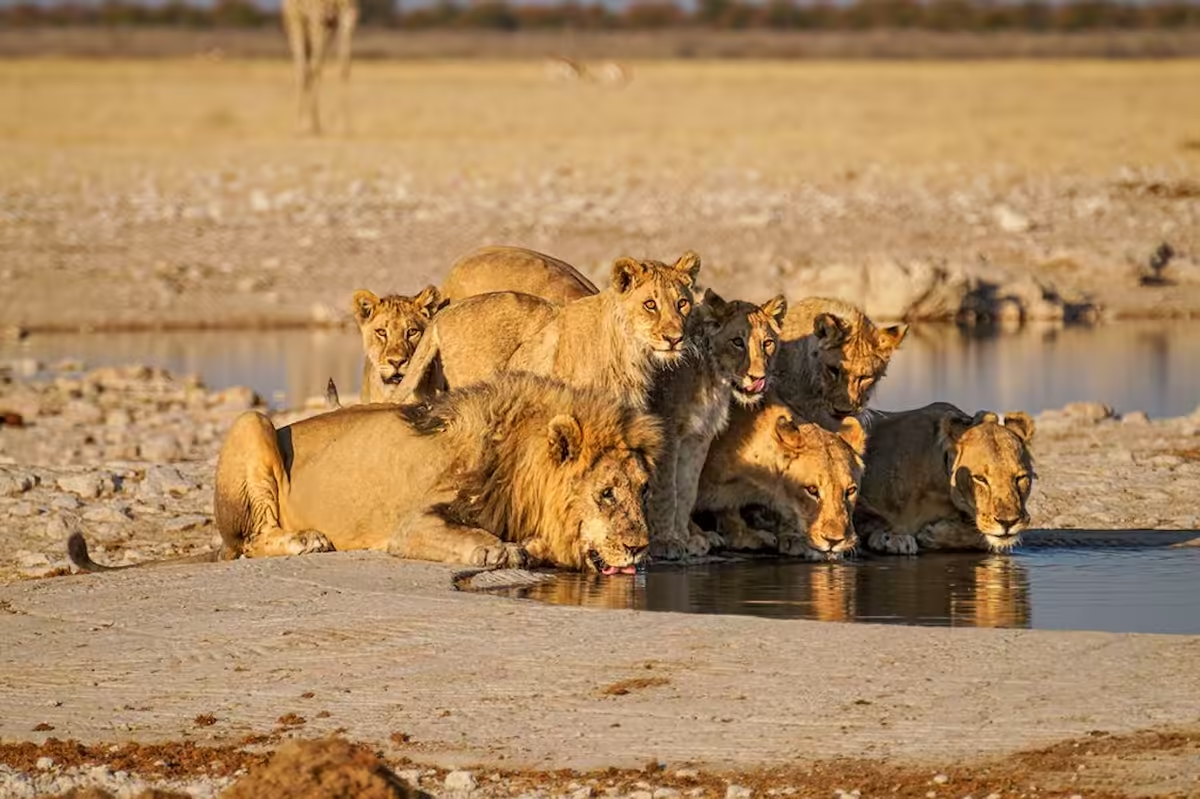
Elephant, rhino, lion and giraffe approaching open water on a pan you can see across - wildlife viewing that depends on patience rather than tracking. Etosha guide →
Elephants and black rhinos living in the dry river systems of Damaraland and the Kunene, found by reading tracks rather than waiting at a hide. Game drives →
Three we book most often. Every other duration and route lives on the packages page.
Sossusvlei, Dead Vlei and the Atlantic coast - the shortest way into the desert.
From $2,000
Sossusvlei, Swakopmund, Damaraland and Etosha in one circuit - our standard first trip.
From $4,200 pp
The full desert-to-river circuit, finishing in the wetlands of the Zambezi Region.
From $5,800 pp
Everything on this page, grouped. Jump straight to the part you need.
Namibia should not be treated as one uniform safari destination. Each major region offers a different wildlife experience.
The country is large, the distances are long and the ecosystems are genuinely separate. A route that mixes two or three of the regions below will feel like several different safaris rather than one repeated one.
Safari activities → Where to stay in Namibia →
The core wildlife destination for most first-time Namibia safari itineraries.
The park covers approximately 22,935 km2 and is dominated by the enormous Etosha salt pan, together with smaller pans, grasslands, shrublands and woodland. The open terrain and the concentration of animals around waterholes create the park's characteristic viewing experience: instead of tracking animals through thick vegetation, you sit at a waterhole and watch wildlife approach to drink.
The bird list is equally impressive, with 407 recorded species.
Etosha is particularly interesting for travellers who want to understand how water controls wildlife distribution in an arid environment. Rather than relying on tracking animals through thick vegetation, visitors spend time at established waterholes and observe what arrives.
The Okaukuejo waterhole is the best known of these. It is floodlit after dark, which makes it one of the few places in Africa where you can watch black rhino, elephant and lion at night without leaving your seat.
A longer itinerary can incorporate different sections and camps rather than treating the park as a single stop.
Each has its own waterhole system and habitat, so a circuit of the park covers noticeably different country. Etosha National Park safari →
Namibia's most recognisable landscape, and a good deal more than a photography stop.
Sossusvlei sits inside the wider Namib Desert, which contains an extraordinary range of adaptations to extreme aridity. The Namib Sand Sea covers approximately 3,077,700 hectares, with a buffer zone of about 899,500 hectares, and is the only coastal desert in the world containing extensive dune fields influenced by fog.
The fog is not simply a visual feature. It is part of the ecological system. Plants and animals here have evolved mechanisms to obtain and conserve water in an environment where conventional surface water is extremely limited.
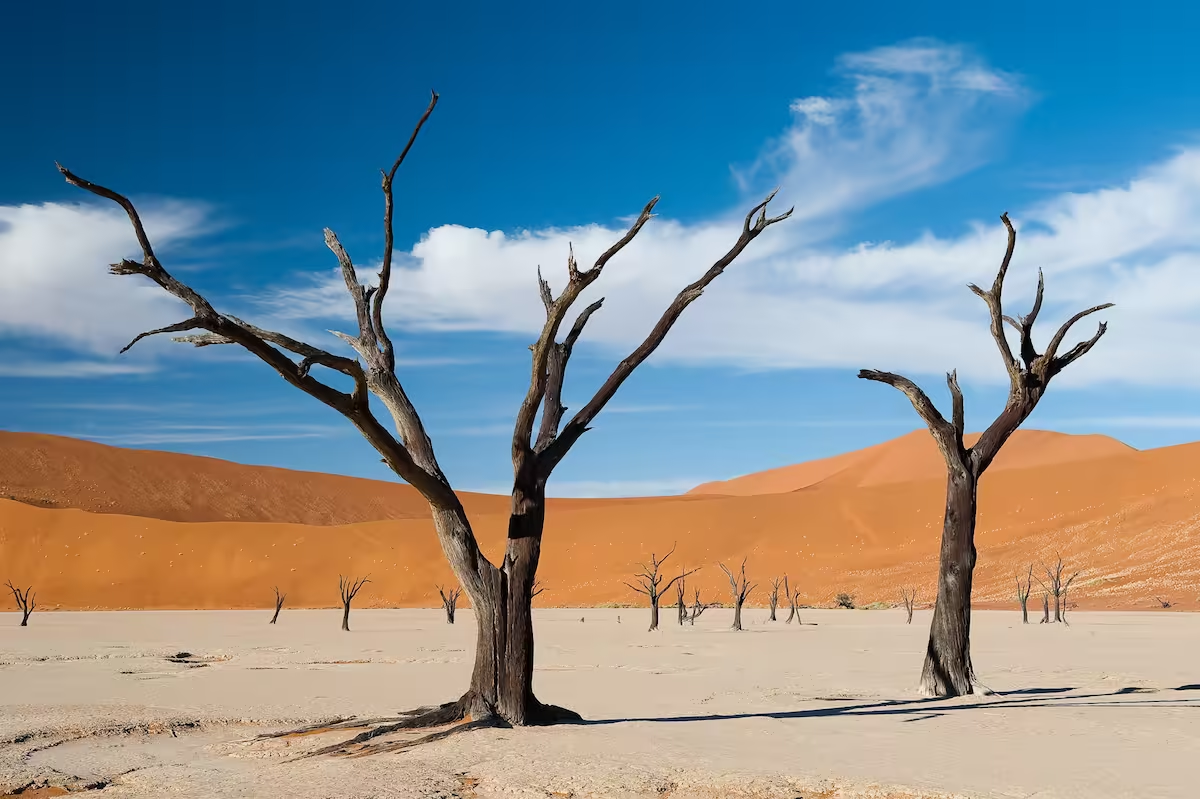
Dead Vlei is particularly distinctive because the remains of ancient camel thorn trees stand against the pale clay pan and the surrounding dunes. Dark trees, pale clay, orange dunes and blue sky together create one of Namibia's strongest photographic landscapes.
Visitors should understand that Sossusvlei is primarily a landscape and desert ecology experience, not a conventional Big Five wildlife destination. It is at its best in the first two hours after sunrise, when the dune faces are still in shadow and the light is moving across them.
Photographic safaris → Namibia safari packages →
Where Namibia's geological character and wildlife ecology meet.
Damaraland is particularly associated with desert-adapted elephants and black rhinos. These animals do not live in a lush environment. Their survival depends on using ephemeral river systems, underground water sources and vegetation distributed across an extremely dry landscape.
That makes a Damaraland safari different from an Etosha safari. In Etosha, wildlife viewing is often concentrated around predictable waterholes. In Damaraland, encounters can involve tracking animals across enormous landscapes and reading signs of their movement through dry river systems.
Twyfelfontein adds a cultural and archaeological dimension to a Damaraland itinerary. The area is known for its extensive rock engravings and the ancient relationship between people and wildlife recorded on its walls. A Damaraland route can therefore combine wildlife, geology, archaeology and desert ecology in a few days. Cultural tours →
One of the country's strongest specialist safari subjects: large mammals surviving where rainfall is extremely limited.
Desert elephants are not a separate elephant species. They are African elephants that have adapted their movements, diets and use of water resources to arid conditions. Their survival is closely linked to ephemeral rivers and vegetation corridors.
Finding them is therefore not simply a matter of driving to a waterhole. It can require local knowledge and tracking across country that has no obvious route through it.
The Kunene region is also important for desert-adapted black rhino. Rhino tracking in these areas is very different from watching rhino at a predictable waterhole: it can involve following tracks, dung, browsing patterns and other signs of movement.
That creates a more active form of safari, and one of the clearest reasons to travel with a guide who knows the area. Game drives →
One of Namibia's most unusual protected landscapes.
The park extends approximately 500 km from the Ugab River toward the Kunene River and reaches roughly 40 km inland. Its coastal environment is heavily influenced by the cold Benguela Current, which contributes to the area's famous fog.
The park has recorded 306 bird species and supports desert-adapted elephant, rhino and lion among other wildlife.
A Skeleton Coast safari is less about high-density game viewing and more about remote wilderness. The experience can include desert wildlife, coastal photography, birdwatching, geological landscapes, seal colonies in the surrounding coastal areas and shipwreck scenery.
It is particularly suitable for travellers who have already experienced conventional safari destinations and want something markedly different. Coastal and boat excursions →
Northern Kunene is one of Namibia's most remote landscapes.
The region is better suited to travellers comfortable with long distances, limited infrastructure and specialist safari logistics. Vehicles need to be self-sufficient, fuel stops are far apart and driving times are longer than the map suggests.
A Kunene itinerary is particularly rewarding when combined with Damaraland and the Skeleton Coast, which together form a coherent northwest circuit. Namibia self-drive →
The northeastern corner of Namibia, and one of the biggest ecological contrasts to the Namib Desert.
The Zambezi Region contains rivers, floodplains, woodland and wetlands, and connects Namibia with the wider Kavango-Zambezi conservation landscape. Instead of an open salt pan, visitors encounter woodland, floodplains, riverine habitats, seasonal water and wildlife corridors.
Bwabwata covers more than 6,000 km2 and lies between the Okavango and Kwando river systems. It holds strong elephant and buffalo concentrations as well as sable, roan, lion, leopard, cheetah, hyena, hippo, sitatunga and red lechwe, and it is one of Namibia's remaining refuges for African wild dogs.
Mudumu supports elephant, buffalo, lion, leopard, cheetah, African wild dog, hippo, crocodile, sitatunga, red lechwe, sable, giraffe and zebra, with around 430 bird species recorded. That combination makes it particularly good for pairing wildlife viewing with birdwatching.
Nkasa Rupara is one of Namibia's most unusual wildlife areas because of its wetland ecology - the largest wetland area in the country with conservation status. When the Kwando River floods, the landscape can resemble a small version of the Okavango Delta. It supports buffalo, elephant, hippo, crocodile, lion, leopard, African wild dog, roan, red lechwe, sitatunga, reedbuck, kudu and warthog, with around 430 bird species recorded.
Because this part of Namibia sits inside the wider Kavango-Zambezi landscape, it is where the country's safari geography starts to connect naturally with Botswana, Zambia, Angola and Zimbabwe. Botswana safari →
Three areas that add contrast to the standard northwest circuit.
Khaudum is for travellers looking for a more remote Kalahari experience. Unlike Etosha's developed waterhole circuit, it is more demanding and requires careful preparation: deep Kalahari sand, woodland, dry river systems, remote water sources, elephants, predators and antelope. A Khaudum safari suits experienced self-drive travellers or specialist guided expeditions.
The Waterberg plateau rises above the surrounding plains and creates habitat for species that are less characteristic of the desert landscapes farther west, including sable antelope, roan antelope, buffalo, eland, giraffe, leopard and a strong birdlist. It works particularly well as a stop between central Namibia and the northern safari circuit.
Around the parks, communal conservancies give local communities formal roles in managing wildlife and natural resources. Staying in them is one of the clearest ways a traveller can see conservation and rural livelihoods operating together rather than separately. Namibia accommodation →
A broader range of wildlife than the country's desert image suggests.
Namibia supports 217 mammal species, including 26 endemic mammals, alongside 644 recorded bird species. What changes across the country is not the presence of wildlife but its density and the way you encounter it.
The result is a wildlife experience that changes dramatically as the route moves from Etosha → Damaraland → Skeleton Coast → Zambezi Region.
Yes - but Big Five in Namibia is not the same experience as Big Five elsewhere in Africa.
Namibia supports the traditional African Big Five:
The country's enormous landscapes and arid conditions mean wildlife densities vary considerably between regions. For travellers whose main objective is repeated Big Five sightings, the itinerary should be designed around the strongest wildlife areas - Etosha first, then the Zambezi Region - rather than treating every Namibian attraction as equally suitable.
For travellers interested in desert ecology, wildlife adaptation, landscapes and self-drive exploration, Namibia offers a much broader experience than the Big Five label alone. Game drives →
Highly relevant to serious birders, because the ecosystems run from Atlantic coastline and desert to wetlands and woodland.
Namibia records 644 bird species nationally.
More than 400 bird species have been recorded in the park, drawn to the same waterholes that hold the mammals.
The park has recorded 306 species, including coastal and desert specialists that are found nowhere else in the country.
Mudumu and Nkasa Rupara each have records approaching 430 species, while Popa Falls has recorded more than 400. Riverine forest, wetlands, floodplains and woodland give this region far greater habitat diversity than the Namib Desert.
A specialist birding route can therefore run Etosha → Zambezi Region → Bwabwata → Mudumu → Nkasa Rupara. Birdwatching safaris →
One of Africa's strongest destinations for landscape photography, with wildlife photography that depends on open backgrounds.
A single itinerary can provide completely different photographic environments:
A wildlife photographer may prioritise Etosha and the Zambezi Region. A landscape photographer may prioritise Sossusvlei, Damaraland and the Skeleton Coast. A specialist may combine Etosha with Kunene for desert-adapted species. The strongest photographic itineraries allow time rather than simply adding destinations. Safari photography guide →
Self-drive is one of the defining features of tourism in Namibia - and the reason many travellers come at all.
The country's road network is extensive and well signed, with at least 80% of roads being gravel. That does not mean every traveller should simply rent a car and improvise: a successful self-drive safari requires careful route planning.
Allow additional time for gravel roads, and keep speeds generally below 80 km/h: the surface, the wildlife on it and the long distances make speed the main risk factor on a Namibian road trip.
A conventional vehicle works on major routes. A 4x4 becomes much more appropriate when the itinerary includes remote areas, deep sand, rough tracks or camping.
Namibia self-drive guide → What to pack →
A guided safari removes most of the logistical pressure from a long, demanding route.
It is particularly useful when the itinerary involves desert wildlife tracking, remote conservancies, specialist photography, long-distance routes, wildlife interpretation, cultural visits or remote camping.
For first-time visitors, a guided itinerary also prevents the most common planning mistake: trying to cover too much territory in too few days. Private guided safaris →
The fastest way to reach the parts of Namibia that road travel makes expensive in time.
Fly-in safaris are especially useful when the priority is remote wilderness rather than road travel. They work particularly well for:
A fly-in safari generally costs more, but it can transform a route that would otherwise require several long driving days into a journey with two or three flights instead. Luxury African safaris →
Namibia is a year-round destination, but the experience changes considerably through the seasons.
This is generally the most popular period for wildlife viewing. As surface water becomes less available, animals concentrate around dependable water sources, which makes Etosha waterhole viewing particularly valuable.
The summer period can bring rainfall, thunderstorms and dramatic changes in the landscape, and the desert can become surprisingly colourful after rain.
Rain can affect remote-road conditions, so green-season routes need more margin. Best time for an African safari →
A quick way to check whether your dates match the trip you have in mind.
There is no single Namibia safari price, because the cost depends heavily on how the trip is organised.
Usually means self-drive, camping or basic lodges, longer road journeys and fewer internal flights.
Typically combines comfortable lodges, selected campsites, private or shared activities and a planned self-drive or guided route.
Can include premium lodges, private vehicles and guides, fly-in transfers, exclusive concessions, desert wildlife tracking, private dining and specialist experiences.
In Namibia, luxury is strongly connected to location and remoteness rather than to the size of the room.
Luxury desert camps can be positioned far from major settlements, allowing guests to experience landscapes with almost no visible development around them.
The strongest luxury itineraries are not simply expensive versions of standard routes. They use accommodation to reach places that would otherwise require difficult logistics. Namibia luxury safari → Luxury safaris →
Namibia works well for families because the journey combines wildlife with activities that suit different ages.
Family planning should take driving distances seriously. A route that looks manageable on a map can involve several hours on gravel roads, and young children notice them. For families with younger children, fewer bases and shorter driving days produce a better experience than trying to cover the whole country.
Namibia family safari → Family safari guide →
Wilderness, privacy and dramatic landscapes - a honeymoon built around scenery rather than crowds.
Namibia honeymoon safari → Honeymoon safaris →
Namibia is rarely visited alone - and the combinations are part of the appeal.
A common southern African combination is Namibia → Botswana → Victoria Falls, or Namibia → Zambezi Region → Victoria Falls. The northeastern Namibia route is particularly logical because the Zambezi Region already sits inside the wider Kavango-Zambezi landscape.
Namibia provides Sossusvlei, the Namib Desert, Etosha, Damaraland, the Skeleton Coast and desert-adapted wildlife. Botswana provides the Okavango Delta, Chobe, Moremi, Savuti and the Linyanti. A combined trip moves from desert ecosystems into major wetland and river ecosystems, which is one of the strongest ways to build a genuinely varied southern African safari.
Namibia is not a conventional beach destination. The Atlantic coast is cold, foggy and heavily influenced by the Benguela Current, so Swakopmund and Walvis Bay are better understood as coastal adventure bases than tropical resorts. Marine excursions, dune activities, desert exploration, kayaking, fishing and coastal photography all work well there. Travellers after warm-water beaches are usually better combining Namibia with another destination.
Botswana safari → South Africa safari → Southern Africa safari →
Four route lengths that cover most of what travellers ask for.
A short itinerary should avoid trying to see the entire country.
Windhoek → Sossusvlei → Swakopmund → Damaraland → Etosha → Windhoek. This works because each stop adds something different rather than repeating the previous day.
Windhoek → Sossusvlei → Swakopmund → Damaraland → Etosha → Waterberg → Windhoek. A slower pace, better suited to travellers who want time for photography rather than simply collecting destinations.
Windhoek → Sossusvlei → Swakopmund → Damaraland → Skeleton Coast and Kunene → Etosha → Waterberg → Windhoek. Travellers interested in wetlands can head toward the Zambezi Region instead of Waterberg.
Four different objectives, four different routes. The mistake is choosing an itinerary by the most famous place rather than by what you want to look at.
Prioritise Etosha, Damaraland and the Kunene, the Zambezi Region and the specialist conservancies. Sossusvlei can still be included, but it should be understood as a landscape experience rather than the main wildlife component.
Prioritise Sossusvlei, Namib-Naukluft, Damaraland, the Skeleton Coast, Swakopmund and Fish River Canyon. This itinerary can be built without spending most of the trip chasing Big Five sightings.
A strong specialist route runs Etosha → Zambezi Region → Bwabwata → Mudumu → Nkasa Rupara, because riverine forest, wetlands, floodplains and woodland give far greater habitat diversity than the Namib Desert.
Allow time rather than simply adding destinations. A strong route might run Sossusvlei → Swakopmund → Damaraland → Etosha → Skeleton Coast, with sunrise on the dunes, sunset in desert landscapes, night skies, wildlife at waterholes, fog on the coast, elephants in dry riverbeds and geological formations built into the plan.
Photographic safaris → Birdwatching safaris →
Namibia's cultural experiences belong to the country's living landscape, not to a short entertainment stop.
Cultural experiences should be organised responsibly, with attention to local ownership, consent and fair economic benefit. Cultural tours →
Conservation is central to a serious Namibia safari because the model extends beyond national parks. Communal conservancies give local communities formal roles in managing wildlife and natural resources, and have produced tourism joint ventures, employment and income in participating communities. Wildlife conservation cannot be separated from the people living alongside it.
The country also faces ongoing challenges: human-wildlife conflict, drought, wildlife crime, habitat connectivity, climate pressure, competition over water and the management of tourism at a sustainable level.
In fragile desert environments, vehicle tracks can remain visible for extremely long periods, which is why off-road driving is treated as a conservation concern rather than a minor rule.
Namibia is generally straightforward to travel through, but safari planning should consider the environment rather than general travel advice alone.
Carry sufficient drinking water, particularly on long self-drive journeys.
The combination of altitude, dry air and strong sunlight makes dehydration and sunburn significant risks.
Never underestimate Namibian distances. A route that appears short on a map can require many hours because of gravel-road conditions.
Risk varies geographically and seasonally. The northern and northeastern regions require more careful malaria planning than the arid southwest, and travellers should obtain current medical advice before departure.
Safari safety → Safari visas →
Your packing list should reflect the season and the route.
Do not measure a Namibia itinerary by the number of places visited. Measure it by how much time you have to experience each ecosystem.
Most international itineraries begin in Windhoek, which works as an arrival point, a vehicle collection point, a briefing stop and the natural start of the route. Other gateways include Walvis Bay, Swakopmund, Ondangwa and Katima Mulilo, and the right one depends on the route: a luxury fly-in safari may remove most of the road journey, while a self-drive itinerary normally begins in Windhoek.
Suitable for one region: Etosha, Sossusvlei, or a short desert circuit.
Enough for two or three major regions.
Better for a classic Namibia circuit.
Ideal for travellers who want to combine desert, wildlife, the coast, Damaraland, the remote northwest and the Zambezi Region.
Three comparisons that come up in almost every planning conversation.
These destinations should not be treated as alternatives - they serve completely different purposes, and a first-time Namibia safari can reasonably include both.
| Etosha | Sossusvlei |
|---|---|
| Wildlife | Landscape |
| Waterholes | Dunes |
| Elephant | Desert ecology |
| Rhino | Dead Vlei |
| Lion | Photography |
| Birding | Sunrise and sunset |
| Game drives | Walking and climbing |
Namibia offers desert, open landscapes, Etosha, dunes, desert-adapted wildlife and self-drive freedom. Botswana offers wetlands, the Okavango Delta, Chobe, Moremi, river systems, mokoro and water-based safari experiences. Travellers with enough time can combine both.
South Africa generally provides more developed safari infrastructure and a wider range of private reserves. Namibia places greater emphasis on huge landscapes, desert ecology, self-drive, geological scenery, low-density wilderness and desert-adapted wildlife. The choice depends on the type of safari experience being sought.
East Africa safari → Botswana safari → South Africa safari →
Yes - particularly for travellers who want more than a traditional wildlife holiday, and who enjoy road trips, photography, landscapes and independence.
Namibia is especially attractive to first-time visitors who enjoy outdoor adventure and travelling at their own pace. Travellers whose only objective is seeing the Big Five repeatedly may want to structure their itinerary differently, or combine Namibia with a denser wildlife destination.
The most important planning mistake for first-time visitors is trying to cover too much territory. A focused route of two or three ecosystems is easier to enjoy and far less tiring than a loop of the whole country.
First safari guide → African safaris →
All Namibia safari packages → Or send us your dates
The three above are a shortlist. The rest of the collection - the short desert fly-ins, the self-drive loops and the long multi-region circuits - sits below.
From $2,900 pp
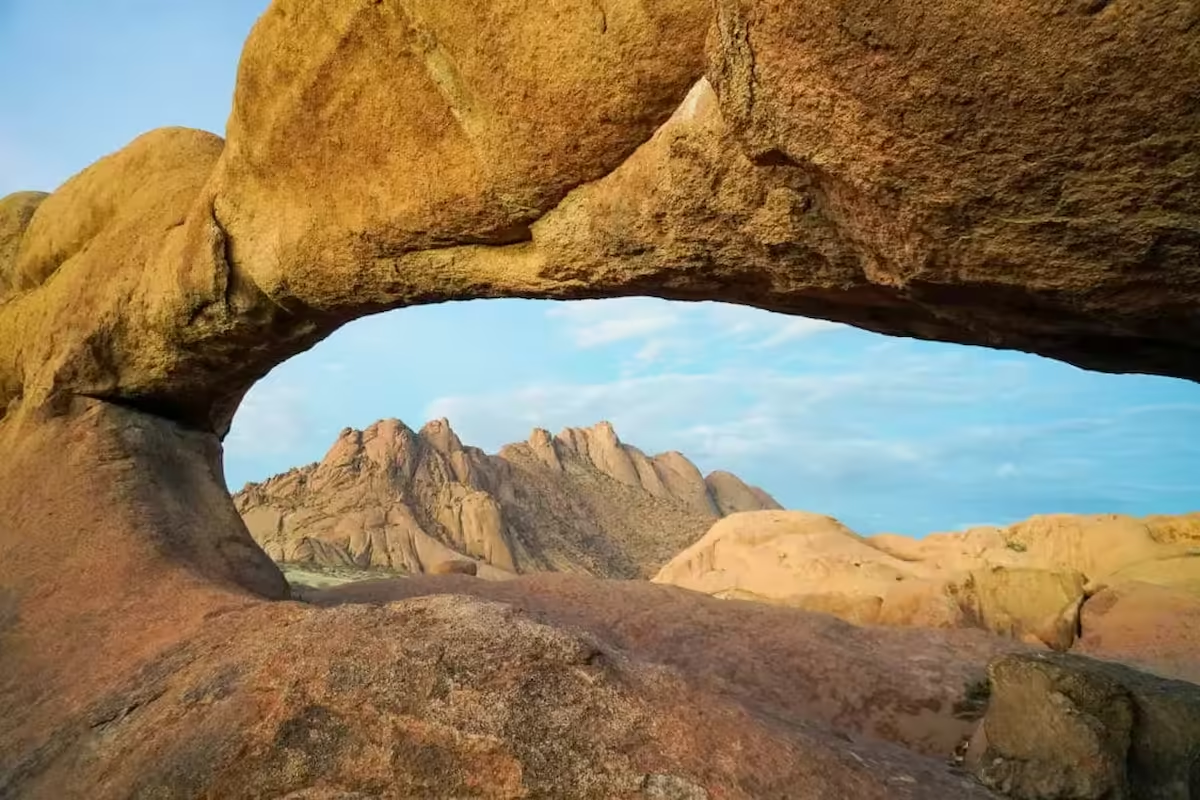
Adds rhino tracking and Twyfelfontein to dunes and coast.
From $3,150
Yes. Namibia supports a wide range of wildlife habitats, from Etosha's open waterhole ecosystem and desert-adapted wildlife in the northwest to the riverine wildlife of the Zambezi Region.
Etosha National Park, Sossusvlei, the Namib Desert, desert-adapted elephants and rhinos, Damaraland, the Skeleton Coast and the unusual possibility of building a substantial safari around a self-drive route.
Yes - lion, leopard, elephant, buffalo and rhinoceros all occur. Big Five viewing varies considerably by region, though, and should not be assumed to match the wildlife density of every East or southern African safari destination.
The dry season from roughly May to October is the most popular period for wildlife viewing, particularly in Etosha, because animals concentrate around dependable water. The green season offers excellent landscapes, birding and photography.
Around 10 to 14 days works well for a classic first itinerary combining Sossusvlei, the coast, Damaraland and Etosha. Five to seven days covers one region well; 15 days or more allows the remote northwest and the Zambezi Region.
Namibia is one of Africa's more established self-drive destinations, with a well-signed road network and plenty of accommodation. Long distances, gravel roads, wildlife, weather and remote areas still require proper preparation, and extra travel time should be built into every gravel-road day.
Not for every itinerary. Major routes can be travelled with a conventional vehicle, but a 4x4 becomes much more useful for remote areas, deep sand, rough tracks, northern conservancies and certain self-drive safari routes.
It can be. Costs depend heavily on accommodation level, vehicle type, guide services, domestic flights, season and route. Luxury fly-in safaris cost substantially more than camping-based self-drive journeys.
It can be - the variable is distance: a Windhoek-Sossusvlei-Swakopmund-Etosha loop covers 1,500-plus km, so self-drive fuel, two nights in Swakopmund and park entries (Etosha around US$10-15 per day per foreign adult) add up before accommodation. Luxury fly-in versions swap driving days for US$250-450 flight sectors and land far above US$800 per person per day.
Yes. The two are particularly complementary: Namibia adds desert and arid ecosystems while Botswana adds major wetland and river systems, so a combined trip moves through genuinely different country.
Yes. Namibia connects with Botswana and with the Zambezi Region before continuing toward Victoria Falls in Zimbabwe or Zambia.
Yes, especially for families interested in wildlife, landscapes and road travel. Itinerary distances should be adapted to the children's ages and tolerance for long drives, and fewer bases with shorter driving days usually works better.
In the dry river systems of northwestern Namibia, particularly the Kunene and Damaraland region. They are not a separate species - they are African elephants whose movements and diets have adapted to arid conditions.
Etosha is the most reliable place, and rhino can also be seen in other conservation landscapes, including parts of northwestern Namibia where desert-adapted black rhinos are protected.
Sossusvlei is better described as a desert and landscape destination than a conventional wildlife safari destination. It is usually combined with Etosha or Damaraland on a broader Namibia itinerary.
Windhoek to Sossusvlei, Swakopmund, Damaraland and Etosha, then back to Windhoek. It covers the desert, the coast, the rock landscape and the strongest wildlife area without repeating itself.
They are not comparable. Etosha is about wildlife at waterholes; Sossusvlei is about dunes, pans and desert scenery. A first-time Namibia safari normally includes both rather than choosing between them.
East Africa is built around open savanna, large herds and long-distance migrations. Namibia is built around arid landscapes, low-density wildlife, desert adaptation and self-drive freedom. They answer different questions.
The country records 644 bird species. Etosha holds more than 400, the Skeleton Coast 306, and Mudumu and Nkasa Rupara each approach 430, making the Zambezi Region the strongest birding area.
Yes. Self-drive is the country's most common way to travel, and guided safaris add tracking, interpretation and logistical handling - particularly valuable in Damaraland, the Kunene and the remote conservancies.
Dry-season months give clear skies, lower vegetation and reliable waterhole activity for wildlife; the green season gives green landscapes, newborn animals, dramatic skies and excellent bird activity. Landscape photographers often prefer the low-angle light of the dunes at any time of year.
Yes, though access and driving conditions vary by section. The park runs roughly 500 km from the Ugab River toward the Kunene and reaches about 40 km inland, and fly-in options cover the most remote stretches.
It is Namibia's river and wetland corner in the far northeast, containing Bwabwata, Mudumu and Nkasa Rupara. It is worth visiting for anyone who wants a complete contrast to the desert - floodplains, woodland, elephant, buffalo, wild dog and exceptional birdlife.
Self-drive trips can be arranged with relatively little notice if accommodation is flexible. Guided trips, fly-in routes and remote luxury camps need much longer lead times, because capacity in the Kunene, the Skeleton Coast and Sossusvlei is limited.
Risk varies by region and season. The northern and northeastern areas, including the Zambezi Region, need more careful planning than the arid southwest. Obtain current medical advice before departure.
Lightweight neutral clothing, long trousers, a warm fleece for early starts, a hat, sunglasses, comfortable walking shoes, sunscreen, a scarf or buff, plus binoculars, a camera with spare batteries and a power bank. Self-drivers should add navigation, spare tyre equipment, extra water and a first-aid kit.
Tell us your travel dates, how many of you are travelling and which experiences matter most - Etosha, Sossusvlei, Damaraland, the Skeleton Coast, the Zambezi Region or a self-drive. A specialist replies within 24 hours.