Park guides
Key parks at a glance
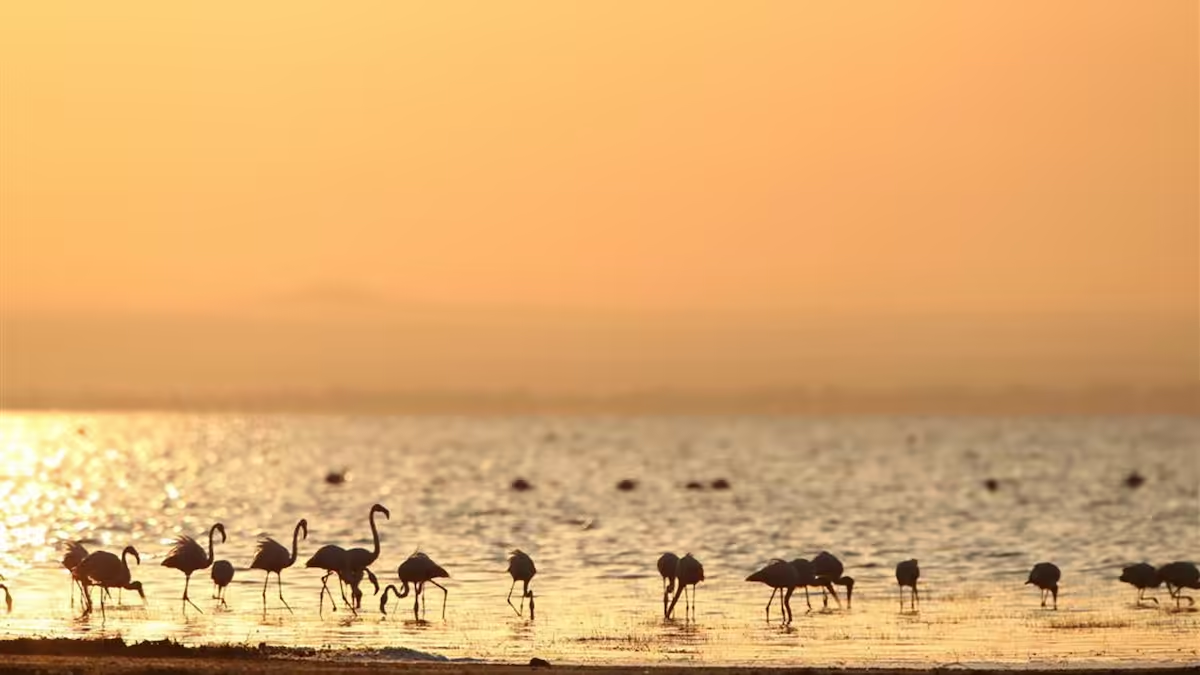
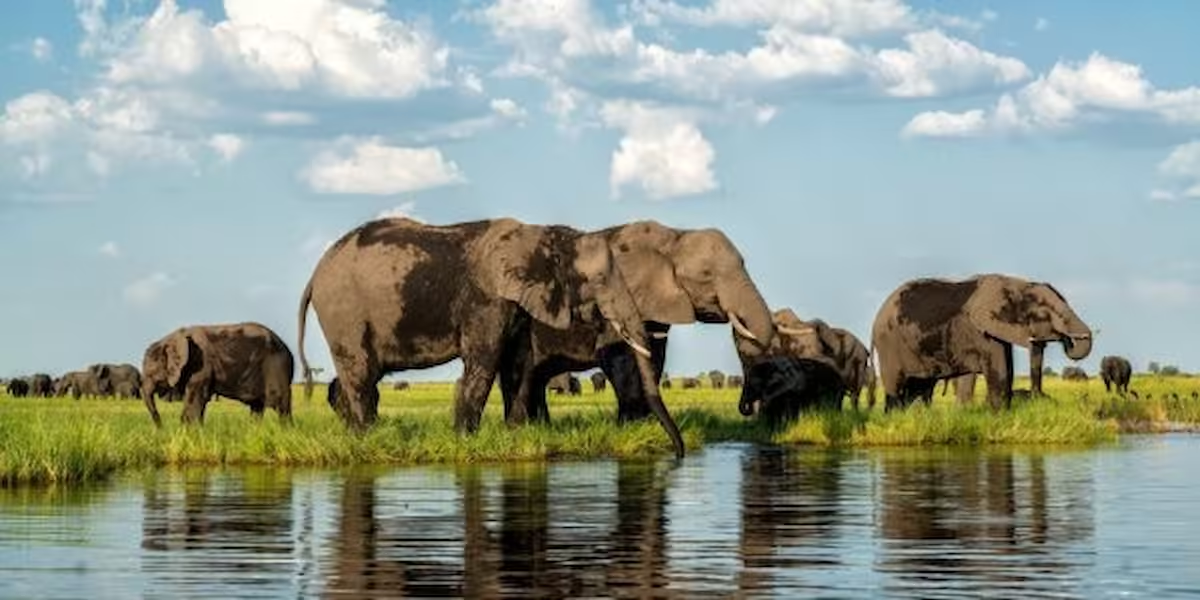
Tarangire (Tanzania)
3,000 elephants, ancient baobabs, dry-season river concentrations. 1–2 days. Best Jun–Oct. Safaris: 5-day · 7-day.
Amboseli (Kenya)
400+ elephants incl. great tuskers, Kilimanjaro backdrop (clearest dawn, Jan–Mar). 2 days. Safaris: 7-day Kenya.
Samburu (Kenya)
Special Five: Grevy's zebra, reticulated giraffe, gerenuk, Beisa oryx, Somali ostrich. 2–3 days.
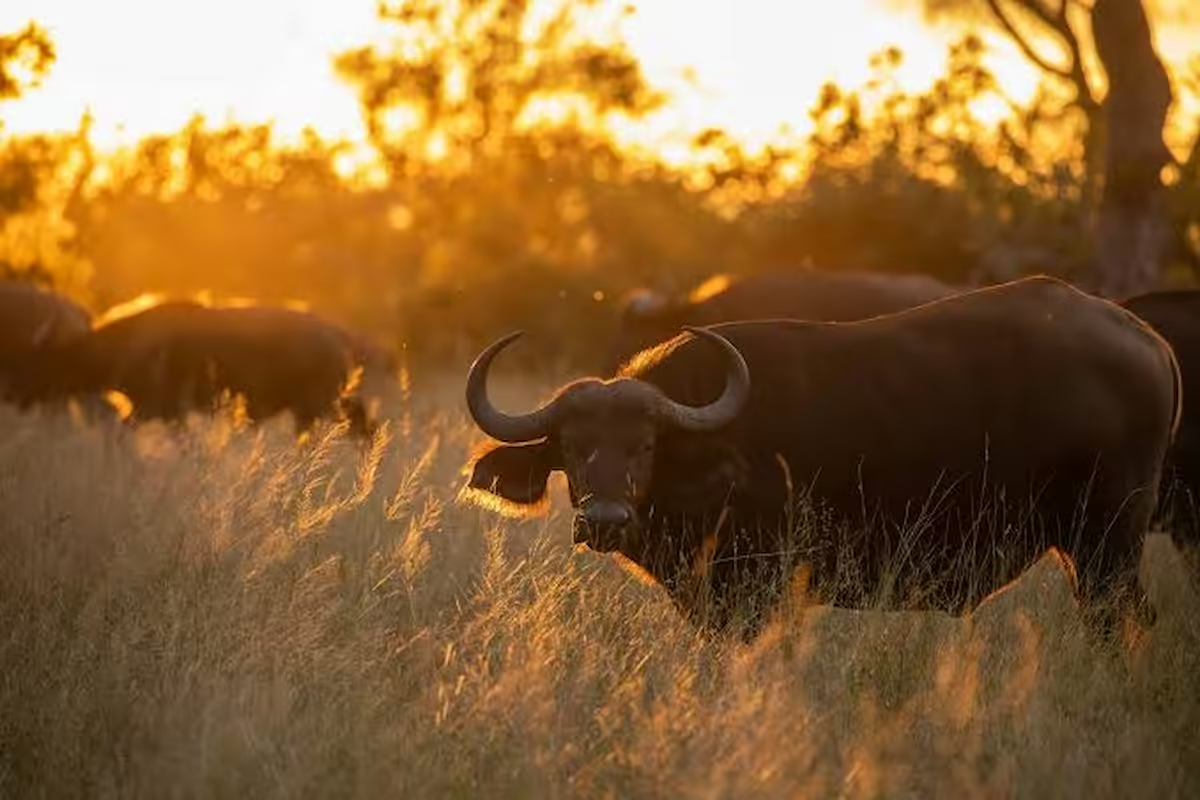
Kruger + Sabi Sand (South Africa)
Best leopard viewing (Sabi Sand off-road), Big Five, night drives in concessions. 3–5 days. Safaris: 5-day Kruger · 9-day.
Bwindi (Uganda)
Half the world's mountain gorillas; 1-hr visits, min age 15, permits $800. 2–3 days. Safaris: 3-day trek.
Etosha (Namibia)
Waterhole theatre: lions, black rhino, huge herds. Dry May–Oct. 2–3 days. Trips: 10-day loop.
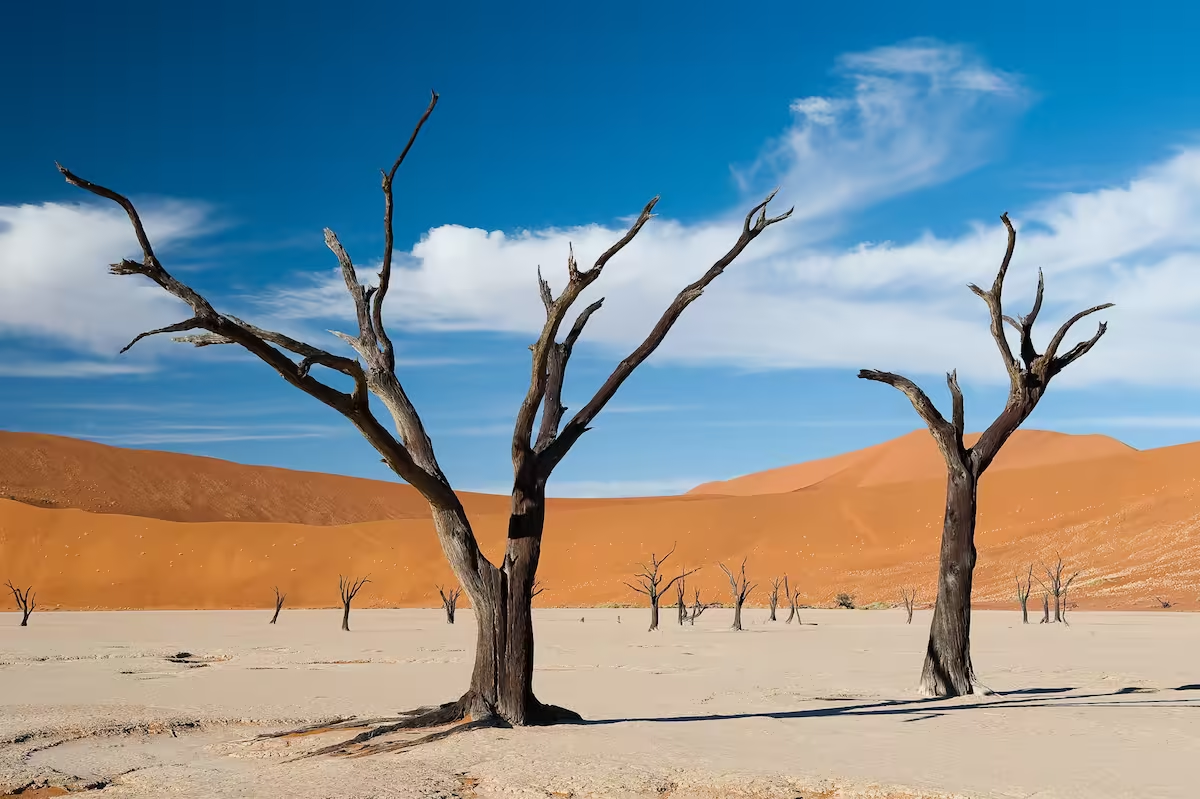
Sossusvlei (Namibia)
300m red dunes, Deadvlei, dawn light. Year-round; 1–2 days. Trips: 7-day.
Lake Manyara · Ruaha · Nyerere
Manyara: flamingos + tree lions (half–1 day). Ruaha: wild south, dogs (3+ days fly-in). Nyerere: boats + walking (2–3 days).
All parks → · Ask which parks fit your dates →
FAQs
Which park for first-timers?
Serengeti or Mara for density; Kruger for ease; Etosha for simplicity. Match park to travel month first.
How many parks per trip?
Two to three with two-night stays. Transit days cost wildlife days.
How do deposits and payments work?
A deposit of 20 to 30 percent confirms camps, permits and flights; the balance is due 60 days before travel. We accept bank transfer and major cards (card fees disclosed upfront). Full terms arrive in writing before you pay anything.
We accept bank transfer and Visa or Mastercard; card payments add the processor's 2-4 percent, disclosed line by line. Splitting the balance across two cards is possible at proposal stage, and paying early in green season occasionally unlocks camp flexibility worth a few percent - always against a written schedule, never against an informal promise.
Are your guides qualified?
Our driver-guides average a decade in their parks, hold national guiding licenses plus first-aid certification, and are assigned by specialty - Migration positioning, photography, birding or family pacing.
How do we get the best price without hurting the trip?
Travel green season, bring four or more travelers to split the vehicle, choose tented camps over lodges, and drive where flying saves little. Never cut guide quality, Migration-zone positioning or insurance.
The four levers that actually work: green season (published rates 20-40 percent below high season with fewer vehicles at sightings), four or more travelers splitting the vehicle, tented camps over permanent lodges of the same operator, and road transfers under two hours instead of flight sectors. The three that do not: cutting guide quality, cutting Migration-zone positioning, and dropping insurance - the last one being a false economy at US$100-300 for a multi-thousand-dollar trip.
What is the best month for this trip?
Dry-season months give the easiest wildlife viewing; green-season months cut cost 20 to 35 percent. Tell us your window and we confirm the wildlife logic.
What vaccinations and malaria prevention do we need?
Yellow fever certificates are required when arriving from endemic countries; malaria prophylaxis is recommended for most safari regions - discuss options with your doctor 6 to 8 weeks out. We brief every trip on water, sun and insect precautions.
CDC guidance for the region is precise. Yellow fever vaccination is recommended for all safari travelers and becomes a certificate requirement when you arrive via an endemic country such as Rwanda or Uganda. Routine boosters, hepatitis A, typhoid and hepatitis B round out the travel clinic list. Malaria transmission covers every game park below roughly 2,500 meters, the parasite is chloroquine resistant, and the preventatives that work are atovaquone-proguanil, doxycycline, mefloquine or tafenoquine, started before arrival and finished after. Book the clinic six to eight weeks out, and pack repellent with 20 percent DEET plus long sleeves for dusk.
What photography gear should we bring?
A 100 to 400mm zoom covers 90 percent of sightings; add a wide second body for landscapes. Beanbags beat tripods in vehicles. We provide charging setups and dust management briefings - tell us your kit and targets.