
South Africa | Park guide
Kruger & Sabi Sand
Big Five plus the continent's most reliable leopards - self-drive or suite.
Kruger National Park is one of Africa's most celebrated wildlife destinations, offering an extensive safari landscape where elephants, lions, leopards, rhinos, buffalo, giraffes, wild dogs and hundreds of bird species inhabit a vast network of savannas, riverine forests, woodlands and seasonal watercourses. Located in northeastern South Africa, Kruger provides opportunities for self-drive safaris, guided game drives, family holidays, photographic journeys and stays in private luxury lodges.
What makes a Kruger National Park safari particularly appealing is its flexibility. Travelers can explore the park independently along its public road network, stay in established rest camps, join guided drives, or choose exclusive lodges in private reserves bordering the park. Each approach creates a different experience, from an affordable wildlife-focused road trip to a highly personalized safari with expert guides and open safari vehicles.
Kruger is also much more than a place to see large mammals. Its cultural heritage includes archaeological sites, rock art and evidence of centuries of human settlement. Its conservation history includes important work in species recovery, wildlife management and the development of cross-border conservation initiatives.
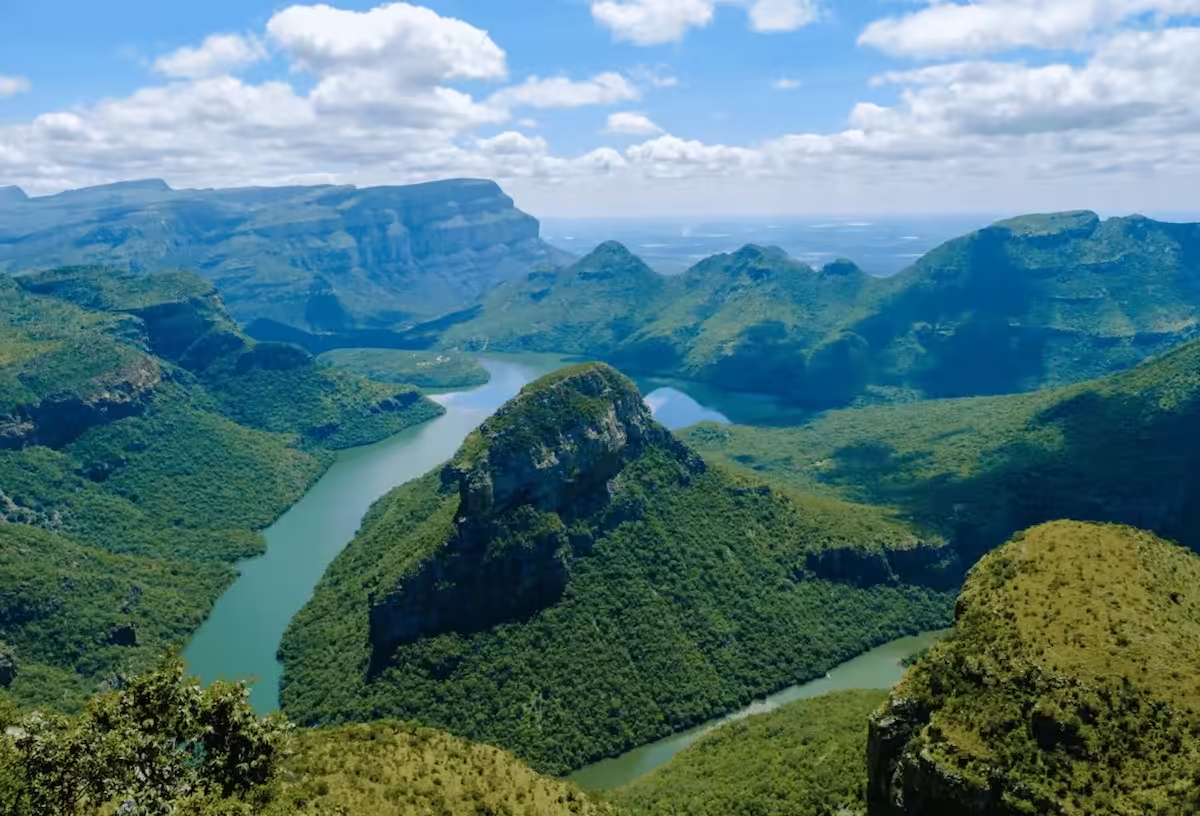
For travelers planning a South African safari, Kruger can serve as the main destination or as part of a wider journey combining private reserves, the Panorama Route, Cape Town or other parts of southern Africa.
Safaris visiting Kruger & Sabi Sand
Where is Kruger National Park?
Kruger National Park lies in northeastern South Africa, primarily across Limpopo and Mpumalanga provinces. The park extends along the country's borders with Mozambique to the east and Zimbabwe to the north, forming part of a much larger conservation landscape.
The park covers approximately 19,485 square kilometres, making it one of South Africa's largest national parks. Its size means that wildlife habitats, vegetation, rainfall, scenery and game-viewing conditions differ considerably between its northern, central and southern sections.
The southern region is particularly popular for wildlife viewing and has a concentration of visitor facilities. The central region is well known for its open savanna and grazing wildlife, while the north offers different vegetation, landscapes, birdlife and archaeological heritage.
Kruger is managed by South African National Parks (SANParks). Visitors can enter through designated gates, stay at public rest camps, explore authorized roads in their own vehicles, or book activities offered by the park and its accommodation operators.
The park is also connected to the wider Great Limpopo Transfrontier Conservation Area, which promotes conservation cooperation across South Africa, Mozambique and Zimbabwe.
Why visit Kruger National Park?
Kruger offers a broad safari experience that suits first-time visitors and experienced wildlife enthusiasts alike.
Its main attractions include the Big Five: lion, leopard, elephant, rhino and African buffalo; large populations of elephants, giraffes, zebras and antelope; opportunities to search for cheetahs, spotted hyenas and African wild dogs; a wide variety of birds, reptiles and smaller mammals; self-drive game viewing on the park's public road network; guided morning, sunset and night drives; walking trails and selected wilderness experiences; family-friendly accommodation and established rest camps; luxury private lodges in neighbouring private reserves; archaeological sites, rock art and cultural heritage; and a range of safari budgets, from camping to exclusive lodge stays.
SANParks lists approximately 147 mammal species and more than 500 bird species in its park overview, illustrating the destination's exceptional biological diversity. Species totals can vary between official listings and inventory updates.
Kruger's strongest advantage is the combination of scale, biodiversity, access and accommodation choice. Visitors can plan a trip around their budget and interests without needing to depend entirely on expensive fly-in lodges.
The landscape and ecosystems of Kruger
Kruger is not a uniform expanse of grassland. It is a large ecological mosaic shaped by rainfall, soil, geology, rivers and fire.
These differences influence where animals feed, which species thrive in particular habitats and how wildlife viewing changes from one part of the park to another.
Southern Kruger: river systems and diverse wildlife
The southern section is one of the most popular areas for visitors, with several established camps and a network of roads providing access to wildlife habitats.
Rivers and drainage lines create important areas of vegetation, while mixed woodland and savanna provide food and cover for numerous mammals.
The southern region is often a strong choice for first-time visitors because it offers accessible infrastructure and opportunities to search for a wide variety of wildlife within a manageable itinerary.
It is also an important area for visitors who want to combine the national park with private reserves such as Sabi Sand and Timbavati. These are separate conservation properties with their own access rules and safari arrangements.
Central Kruger: open savanna and grazing wildlife
Central Kruger includes extensive savanna and grassland habitats that support large herbivores.
Zebra, wildebeest, buffalo, giraffe and various antelope can be encountered here, while predators follow the distribution and movements of prey.
The region is particularly appealing to travelers interested in the relationships between grazers, predators and the seasonal availability of water and food.
Wildlife concentrations vary with rainfall and local conditions, so the central region should not be presented as a guaranteed location for any particular sighting.
Northern Kruger: woodlands, rivers and cultural heritage
Northern Kruger offers a different character, with distinctive vegetation, river systems, large trees and important archaeological sites.
The northern landscape is especially interesting for experienced safari travelers, birdwatchers and visitors who want to explore beyond the park's busiest southern circuits.
The Pafuri area, near the northern boundary, is known for its varied habitats and birdlife. The Luvuvhu River system contributes to a landscape that differs markedly from many of the park's central and southern areas.
The north can require more careful planning because distances are substantial and accommodation options are more dispersed. Visitors should allow sufficient time rather than trying to cover the entire park in a single day.
The Big Five of Kruger National Park
The Big Five are among the principal attractions of a Kruger safari. The term refers to lion, leopard, elephant, rhino and African buffalo.
It is important to explain that the term originated in the context of big-game hunting. Today, it is widely used in wildlife tourism to describe five iconic African mammals.
Seeing all five is possible during a well-planned visit, but it is never guaranteed. Each species behaves differently, occupies different habitats and may be difficult to locate at certain times.
African lion
Lions are among Kruger's most sought-after animals. They are social predators that live in prides, although adult males may also spend time apart from females and cubs.
Their movements are influenced by prey availability, territory, competition and breeding behaviour. Lions may be seen resting in shade during the heat of the day, moving along roads in cooler weather, or feeding after a successful hunt.
The open savannas of central Kruger can provide opportunities to observe lions, but sightings occur across the park and depend on local conditions.
Visitors should never leave their vehicles to approach lions or attempt to attract their attention. Remaining quiet and following park rules allows animals to behave naturally.
African leopard
Leopards are among the most rewarding animals to find in Kruger because they are powerful, elusive and often well camouflaged.
They use a range of habitats, including riverine vegetation, woodland and rocky areas. Leopards are usually solitary and may rest in trees or dense cover during the day.
Finding one can depend on patience, careful observation and the ability to recognize subtle signs such as tracks, alarm calls or unusual movements among other animals.
A skilled guide can help interpret these clues, but even experienced guides cannot guarantee a leopard sighting.
African elephant
Kruger supports a substantial elephant population, and elephants are frequently encountered across suitable habitats.
They move between feeding areas and water sources, browsing on trees and shrubs and grazing on grasses when conditions favour them.
Their behaviour changes with season, age, herd composition and local conditions. Family groups may travel together under the leadership of experienced females, while adult bulls may be seen alone or in bachelor groups.
Elephants can appear calm, but they are powerful wild animals. Drivers should maintain a safe distance, avoid blocking their path and follow instructions from park officials.
Rhinoceros
Kruger is an important stronghold for rhinoceros conservation, including both black and white rhinos. However, rhino poaching has placed serious pressure on populations, and the park's management includes extensive protection and monitoring work.
White rhinos are primarily grazers, while black rhinos are browsers that feed on shrubs and other woody vegetation. Their differing feeding habits influence how they use the landscape.
Rhinos may be encountered during game drives, but sightings are not assured. Visitors should not disclose sensitive information about rhino locations or attempt to approach them on foot.
Responsible tourism means respecting wildlife protection measures and allowing trained conservation personnel to manage encounters.
African buffalo
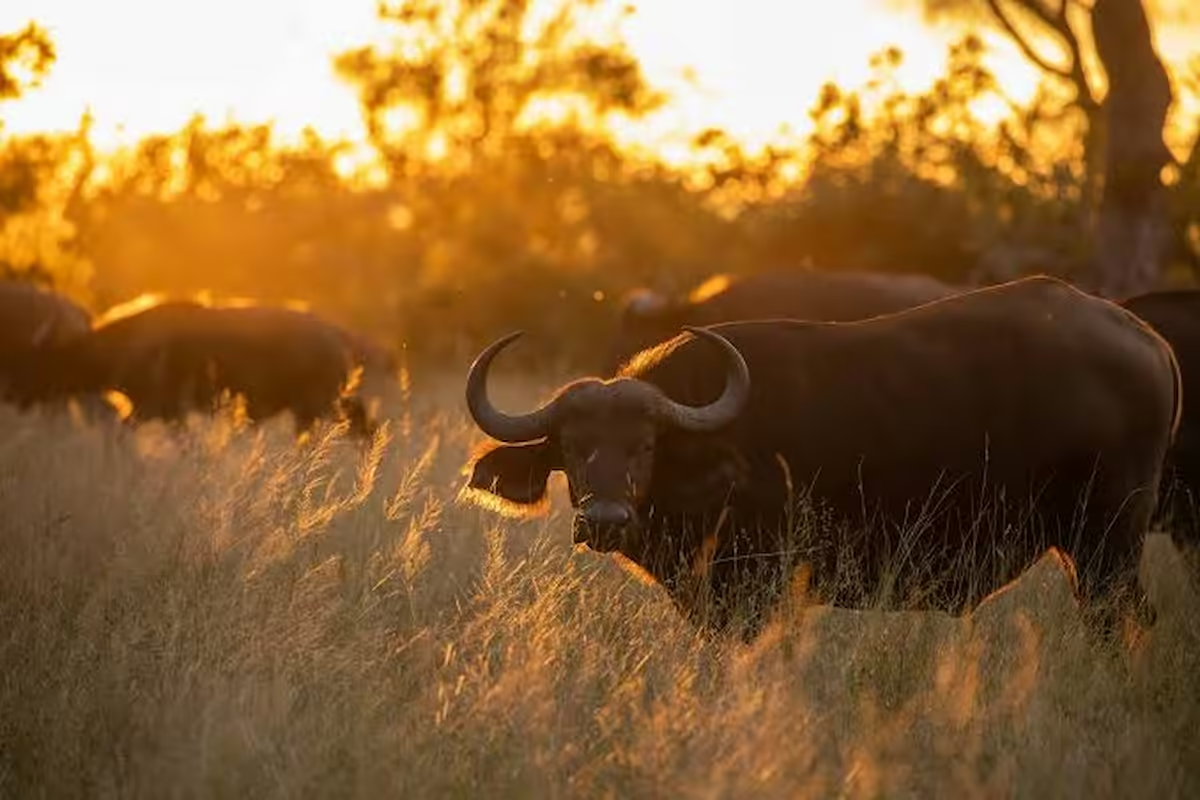
African buffalo are powerful herd animals that feed mainly on grasses and often depend on access to water.
Herd size and distribution vary with season, grazing conditions and local movements. Buffalo may be seen on open plains, near watercourses or in woodland clearings.
They form an important part of Kruger's predator-prey relationships and are also one of the Big Five animals sought by safari visitors.
Buffalo should always be treated as potentially dangerous. Drivers must not approach herds too closely or position vehicles in ways that restrict the animals' movement.
Other wildlife in Kruger National Park
Kruger's appeal extends well beyond the Big Five. Its diverse habitats support many mammals with different feeding strategies and ecological roles.
Cheetah
Cheetahs are adapted for high-speed hunting and generally favour areas where they can see and pursue prey. They may be encountered in more open habitats, but sightings depend on their movements and the availability of suitable conditions.
Cheetahs should not be confused with leopards. Their slender bodies, smaller heads, distinctive facial tear marks and spotted coats help distinguish them.
African wild dog
African wild dogs are endangered predators that hunt cooperatively in packs. They require extensive connected habitats and can cover large distances in search of prey.
A sighting can be particularly memorable because packs may travel quickly and interact socially before or after a hunt.
They are not consistently encountered in every part of Kruger, so travelers hoping to see them should allow sufficient time and understand that sightings remain unpredictable.
Spotted hyena
Spotted hyenas are intelligent social carnivores that both hunt and scavenge. They are an important part of the ecosystem because they consume carcasses and influence the movement and behaviour of other predators.
Visitors may encounter them resting, travelling or searching for food. Their behaviour is more complex than the common stereotype of a scavenger, and observing their interactions can add depth to a wildlife experience.
Giraffe, zebra and antelope
Kruger supports a variety of herbivores, including giraffes, zebras, impala, kudu, waterbuck, wildebeest, warthogs and other species.
These animals provide much of the ecological foundation for the park's predator populations.
Their distribution changes according to food, water, habitat and seasonal conditions. A safari that takes time to observe common species can reveal interesting behaviour, rather than focusing exclusively on rare or iconic animals.
Birdwatching in Kruger National Park
Kruger is an excellent destination for birdwatchers, with a diverse range of woodland, savanna, riverine and wetland habitats.
The park's birdlife includes raptors, hornbills, kingfishers, storks, rollers, bee-eaters, vultures, owls and numerous smaller species.
Birdwatching can be rewarding even when large mammals are difficult to locate. A slow drive along a river or through woodland may reveal species that would otherwise be overlooked during a fast-paced safari.
Birds of particular interest
Depending on habitat and season, birdwatchers may search for Martial Eagle, Bateleur, African Fish Eagle, Saddle-billed Stork, Ground Hornbill, Southern Carmine Bee-eater, Lilac-breasted Roller, various kingfishers, vultures and other large raptors.
These are examples of species of interest rather than a checklist of guaranteed sightings. Distribution differs within the park, and some species are seasonal or difficult to locate.
Where should birdwatchers go?
The northern region and riverine habitats can be particularly rewarding for specialist birding, while southern and central Kruger offer varied woodland and savanna species.
Visitors with a specific target list should plan around the species' habitat and seasonal presence rather than assuming that every part of Kruger offers the same birding opportunities.
A specialist guide can help with identification by call, habitat and behaviour.
Game drives in Kruger National Park
Game drives are the core safari activity for many visitors.
Travelers can drive themselves on authorized public roads or join guided drives offered through SANParks camps and other authorized operators.
Self-drive safaris
Kruger is one of Africa's most accessible major wildlife destinations for self-drive travelers.
Visitors can explore designated roads at their own pace, stop at authorized viewpoints and picnic sites, and spend time searching for animals.
Self-driving requires patience and a willingness to accept uncertainty. Some drives may produce several excellent sightings, while other stretches may be quiet.
Visitors must observe speed limits, remain inside their vehicles except at designated places, respect opening and closing times, and follow all park regulations.
Guided morning drives
Morning drives allow visitors to explore the park during the cooler part of the day, when many animals are active.
SANParks describes its guided morning drives as lasting approximately three to three-and-a-half hours, with departure times related to the seasonal opening hours of the park.
A guide can explain animal behaviour, tracks, vegetation and the ecological relationships that shape the safari experience.
Sunset and night drives
Sunset drives offer opportunities to observe wildlife as the light changes and nocturnal animals begin to emerge.
Night drives use spotlights to search for nocturnal species that are rarely seen during ordinary daytime game drives.
These activities can add considerable variety to a Kruger visit, especially for travelers who are self-driving during the day and want to experience the park with a guide after normal public-road hours.
Availability, departure times and minimum-age restrictions depend on the activity and camp. Visitors should confirm current details with SANParks before booking.
Walking safaris
Selected camps and wilderness areas offer guided walking experiences, subject to availability and the rules of the relevant activity.
Walking provides a different perspective on the bush, with attention shifting from distant animals to tracks, insects, plants, sounds and smaller ecological details.
Walking in wildlife areas requires strict compliance with guide instructions. Visitors must never attempt to walk independently in areas where this is not permitted.
The best time to visit Kruger National Park
Kruger can be visited throughout the year, but the dry and wet seasons create different safari conditions.
May to September: dry-season wildlife viewing
The cooler dry season is traditionally favoured for game viewing.
As vegetation thins and surface water becomes more restricted in some areas, animals may become easier to locate near rivers and waterholes. Cooler daytime conditions can also make long game drives more comfortable.
Nights and early mornings can be cold, particularly in the middle of winter, so warm clothing is important for open-vehicle activities.
This period is best suited to first-time safari visitors, wildlife photography, game drives and travelers prioritizing animal visibility.
October to March: green season
The rainy season generally brings warmer weather, more lush vegetation and changing wildlife conditions.
New growth can make the landscape especially attractive, while summer rainfall supports seasonal changes in plant and animal activity. Birdwatching can also be rewarding, including opportunities to observe seasonal visitors.
The main trade-off is that thicker vegetation may make some animals harder to see. Afternoon thunderstorms can affect driving conditions, and temperatures can be high.
This period is best suited to landscape photography, birdwatching, green scenery and travelers who enjoy a more seasonal safari.
Which month is best?
There is no single best month for every traveler.
For straightforward wildlife visibility, many visitors prefer the dry winter months. For lush scenery and seasonal birdlife, the summer months can be attractive.
The choice should also take account of accommodation availability, family travel dates, preferred activities and whether the itinerary includes neighbouring private reserves.
How long should you spend in Kruger?
Because Kruger is so large, the number of days available makes a major difference to the experience.
2 to 3 days: short safari
A short visit can provide a rewarding introduction, especially when based in one part of the park.
Focus on a limited area rather than trying to drive from the far south to the far north. Allow time for game viewing instead of spending most of the trip travelling between camps.
4 to 5 days: recommended for many visitors
Four or five days provide a better balance of game drives, rest and exploration.
Travelers can stay in one or two areas, compare different habitats and include guided activities alongside self-driving.
This duration is particularly suitable for first-time visitors who want a meaningful safari without committing to a long road trip.
6 to 8 days: deeper exploration
A longer stay allows travelers to explore more of the park's ecological variety.
It may include southern, central or northern areas, depending on the route, as well as additional guided drives and birdwatching.
This is a good option for wildlife photographers, repeat visitors and people who prefer to spend time observing animals rather than rushing between destinations.
8 days or more: Kruger and private reserves
Travelers with more time can combine public areas of Kruger with neighbouring private reserves such as Sabi Sand or Timbavati.
This creates a useful contrast between self-drive exploration and guided lodge-based safaris, although each reserve has its own rules, pricing and access arrangements.
Accommodation in Kruger National Park
Kruger offers a wide range of accommodation, allowing visitors to choose between practical self-catering stays, campsites and more comfortable safari units.
SANParks manages numerous rest camps and smaller camps throughout the park. Facilities vary, so travelers should compare the specific camp rather than assuming all locations offer the same services.
Main rest camps
Main rest camps generally provide the most developed visitor facilities, with different combinations of accommodation, shops, restaurants, fuel and activity booking services.
- Skukuza
- Lower Sabie
- Satara
- Letaba
- Olifants
- Pretoriuskop
- Crocodile Bridge
- Shingwedzi
- Punda Maria
The best camp depends on the section of the park you want to explore, the wildlife habitats of interest and the amount of driving you are comfortable with.
Bushveld camps and smaller camps
Smaller camps can offer a quieter experience with fewer facilities and a stronger sense of being surrounded by the landscape.
They may suit experienced visitors who value atmosphere and location over convenience. Availability and services differ by camp, and visitors should plan meals, supplies and activities accordingly.
Camping
Camping is a popular way to experience Kruger on a lower budget.
Designated campsites provide access to the park's wildlife areas while allowing travelers to manage their own itinerary. Facilities vary between locations, and visitors should check the exact campsite's services before travelling.
Private lodges in neighbouring reserves
Luxury lodges in private reserves bordering Kruger offer a different style of safari.
These stays often include guided open-vehicle drives, meals and other activities within the property's package. Some private reserves allow off-road driving for wildlife viewing under their own rules, whereas public roads inside Kruger are subject to park regulations.
The key distinction is that a private reserve bordering Kruger is not the same as accommodation inside Kruger National Park. The experience, activity rules and pricing can be different.
Kruger National Park for families
Kruger is well suited to many family safaris because visitors can select accommodation, travel pace and activities according to their needs.
- Self-drive flexibility
- Rest camps with different accommodation types
- Shorter game drives
- Wildlife viewing from the vehicle
- Educational opportunities about animals and ecosystems
- Birdwatching and nature observation
- A range of budgets
However, not every guided activity is suitable for young children. SANParks applies age restrictions to some activities, and children under six are not permitted on its listed guided game drives.
Parents should confirm the rules for each activity, choose accommodation with suitable facilities and avoid overly long driving days.
For families visiting Kruger for the first time, a stay of three to five nights in one or two carefully selected areas is often more comfortable than trying to cover too much of the park.
Kruger National Park history and heritage
Kruger has a complex history that extends beyond its modern identity as a wildlife destination.
The park's origins date to the proclamation of the Sabie Game Reserve in 1898 under President Paul Kruger. The modern Kruger National Park was officially established in 1926, bringing earlier protected areas into a unified national park.
Tourism developed gradually. Early infrastructure included roads and simple rest huts, followed by the establishment of more developed rest camps.
Over time, the park became an important centre for wildlife management, research, tourism and conservation policy.
Its history must also be understood in the wider context of the people who lived in and around the region. Protected areas have affected local communities in different ways, including through displacement, changing access to land and resources, and later initiatives intended to improve community participation and benefits.
Archaeological sites
Kruger preserves important archaeological and cultural sites.
Masorini is associated with iron-smelting and trading activities, while Thulamela is a significant archaeological settlement in the northern part of the park.
The landscape also contains rock art and evidence of long periods of human occupation.
These sites provide a broader understanding of the region's history and show that Kruger is not simply a wilderness without a human past.
Conservation milestones
Kruger has played a significant role in South African conservation, including rhino conservation, wildlife research, anti-poaching efforts and cross-border initiatives.
The park is a key part of the Great Limpopo Transfrontier Conservation Area, which links protected areas in South Africa, Mozambique and Zimbabwe.
These initiatives recognize that ecosystems and wildlife movements often extend beyond national boundaries, requiring cooperation among different authorities and communities.
Kruger vs Greater Kruger vs private reserves
These terms are often confused, but they describe different safari settings.
Kruger National Park
The public national park is managed by SANParks. Visitors can explore designated roads in their own vehicles, stay at public camps and join approved activities.
This is often the best choice for independent travelers, families seeking flexibility and visitors who want a range of budgets.
Greater Kruger
Greater Kruger is a broader tourism and conservation term commonly used for the national park and neighbouring private reserves that form a connected wildlife landscape.
It is not a single national park with one uniform set of rules. Individual reserves have their own management, access arrangements and visitor experiences.
Sabi Sand and Timbavati
Sabi Sand and Timbavati are separate private reserves bordering Kruger.
They are especially known for guided lodge-based safaris, with activities and vehicle access determined by each reserve's regulations.
Travelers choosing a private reserve should compare what is included in the lodge rate, the number of guided activities, the accommodation style and the rules governing wildlife viewing.
Which should you choose?
Choose public Kruger if you want flexibility, self-driving and a broad range of budgets.
Choose a private reserve if you prefer a lodge-based safari with guides, included activities and a more structured experience.
Combining both can provide the strongest contrast, provided the budget and available time allow it.
Kruger National Park safari packages
The following are suggested itinerary frameworks. Final routing should be based on the selected gate, accommodation, flight arrangements and the amount of time available for game viewing.
3-day Kruger safari
- Day 1: arrive through a suitable entrance gate, settle into the chosen camp and enjoy an afternoon drive if arrival times permit
- Day 2: spend the day exploring nearby wildlife areas, adding a guided morning or sunset drive if available
- Day 3: enjoy a final morning drive or self-drive session before departure
Best for travelers combining Kruger with another South African destination.
5-day classic Kruger safari
- Day 1: arrive and settle into the southern section
- Day 2: explore nearby riverine and woodland habitats
- Day 3: transfer to a second camp, allowing time for wildlife viewing along the way
- Day 4: explore the new area's habitats and join a guided activity
- Day 5: enjoy a final morning safari before departure
Best for first-time visitors who want more time to explore without rushing.
7-day Kruger wildlife safari
- Day 1: arrive and settle into the park
- Day 2: explore the surrounding area on a self-drive or guided game drive
- Day 3: continue wildlife viewing and add an evening activity if available
- Day 4: transfer to another region of the park
- Day 5: explore the new habitat and focus on wildlife photography
- Day 6: continue game viewing or add a specialist birding activity
- Day 7: final morning safari and departure
Best for travelers who want to compare habitats and spend more time observing wildlife.
6-day Kruger and private reserve safari
- Day 1: arrive at a public rest camp in Kruger
- Day 2: explore the park by self-drive
- Day 3: continue wildlife viewing and transfer toward the selected exit
- Day 4: enter a neighbouring private reserve and settle into a safari lodge
- Day 5: join guided game drives and enjoy the lodge's included activities
- Day 6: enjoy a final activity before departure
Best for travelers who want to experience both independent exploration and guided lodge-based safari.
Conservation and responsible tourism
Kruger's long-term value depends on maintaining functioning ecosystems while managing the pressures associated with tourism, surrounding land use, water availability, fire, poaching and human-wildlife conflict.
SANParks identifies biodiversity conservation, water-resource management, ecosystem restoration, engagement with neighbouring communities and sustainable community benefits among its management principles.
Visitors can contribute to responsible tourism by following park regulations, respecting wildlife distances, staying on authorized roads, disposing of waste correctly and avoiding behaviour that disturbs animals.
They should also respect archaeological sites and cultural heritage. Removing objects, damaging rock art or disturbing historic remains undermines the protection of the park's shared natural and cultural resources.
Responsible safari travel is not simply about seeing wildlife. It is also about helping maintain the conditions that allow wildlife and ecosystems to persist.
Practical tips for visiting Kruger
Book accommodation early
Popular camps and school-holiday dates can be in high demand. Reserve accommodation before building a complicated route around specific camps.
Do not underestimate distances
Kruger is very large. Travel between camps can take several hours once wildlife stops, speed limits and road conditions are considered.
Follow gate times
Entry and camp gate hours change seasonally. Plan drives so you return before the applicable closing time.
Carry warm clothing
Early-morning and night drives can be cold, particularly during the dry winter season.
Bring binoculars
Binoculars improve wildlife and bird viewing, especially when animals are distant or partly hidden by vegetation.
Check malaria advice
SANParks identifies Kruger as a malaria-endemic area. Consult a qualified travel-health professional before travel for advice on prevention and destination-specific precautions.
Choose the right travel style
Self-drive travel offers flexibility, while guided drives can provide interpretation and access to activities outside normal public-road driving hours.
Respect wildlife
Never feed animals, leave the vehicle outside designated areas, block an animal's movement or encourage wildlife to approach.
Suggested internal links
South Africa Safari > Etosha National Park > Chobe National Park > Okavango Delta > Africa Safari Packages.
Private reserves around Kruger: Greater Kruger > Sabi Sand > Timbavati.
Kruger National Park FAQs
Sabi Sand or Timbavati?
Sabi Sand for peak leopard density; Timbavati for value with traversing rights. Both allow night drives and walks.
Do we need a visa?
Most visitors need one: Tanzania offers visas on arrival for many nationalities, Kenya uses an eTA applied for online before travel, Uganda an e-visa. We confirm the current rule for your passport before you fly.
One decision per country, and they differ. Tanzania sells visas on arrival for most passports - US$50, US$100 for United States citizens - or by eVisa in advance. Kenya has issued only the eTA since 2024, at US$32.50 online at least three days before departure. Uganda runs an e-visa printed before you fly, and the US$100 East African Tourist Visa folds Kenya, Uganda and Rwanda into a single stamp. Six months of passport validity covers all three. Send us passport details at proposal stage and we confirm every rule for your nationality before you commit to flights.
Traveling solo - how do single supplements work?
All itineraries run solo. Expect a 20 to 50 percent supplement where lodges charge per room; vehicles cost the same whether one or six ride. Ask for the honest supplement math per trip.
Is a balloon flight worth adding?
Once, yes: a dawn flight over the Serengeti or Mara with a bush breakfast runs 550 to 600 dollars and minimum ages apply. Book at proposal stage - seats sell out months ahead in season.
How far ahead should we book?
Peak Migration and gorilla-permit months need 6 to 12 months. Green season often works with 2 to 4 months notice.
How much should we tip?
As a guideline: 15 to 25 dollars per day for your driver-guide (per group, not per person), 10 to 15 dollars per day into camp communal tip boxes, and 20 to 30 dollars for a gorilla porter. Restaurants 10 percent where service is not included.
Is Kruger National Park worth visiting?
Yes. Kruger is particularly valuable because it combines a large, biologically diverse landscape with flexible travel options. Visitors can self-drive, stay in public rest camps, join guided activities or choose private lodges in neighbouring reserves. This makes the park suitable for a wide range of budgets and safari styles.
It is also an excellent destination for travelers who want to spend several days observing wildlife rather than moving between many separate parks. The main consideration is time: because Kruger is so large, a short visit should focus on one area rather than trying to cover the whole park.
Can you see the Big Five in Kruger?
All five Big Five species occur in Kruger: lion, leopard, elephant, rhino and African buffalo. Seeing all five during one visit is possible, particularly when travelers allow several days for game drives.
However, no itinerary can guarantee all five sightings. Leopards can be elusive, rhinos may be difficult to locate, and animal movements depend on habitat, season and other ecological factors. A longer stay increases opportunities to search for different species, but wildlife remains unpredictable.
How many days are enough for Kruger?
Two or three days can provide a rewarding introduction, particularly for visitors who have limited time. Four to five days usually provide a more balanced experience, allowing travelers to explore more than one area and include guided activities.
Six to eight days can be worthwhile for wildlife photographers, birdwatchers and travelers who want to explore different habitats. The right duration depends on whether Kruger is the main purpose of the trip or one stop within a wider South African itinerary.
What is the best time to visit Kruger National Park?
The dry season, generally from May to September, is traditionally preferred for wildlife visibility because vegetation is thinner and animals may concentrate around rivers and waterholes. Cooler temperatures can also make game drives more comfortable.
The wet season, generally from October to March, offers greener scenery, warmer weather and seasonal birdlife. Animals may be harder to spot in thick vegetation, but the landscape can be especially attractive for photography. Neither season is universally best; the choice depends on the traveler's priorities.
Is Kruger suitable for a self-drive safari?
Yes. Kruger is one of Africa's major destinations for self-drive safaris, with a network of designated roads and public rest camps. Visitors can plan their own daily routes and spend as much time as they wish at authorized viewing points.
Self-driving requires patience, awareness and strict compliance with park rules. Travelers must remain within authorized areas, follow speed limits and return before gate closing times. Those who prefer expert interpretation or activities outside normal public-road hours can add guided drives.
What is the difference between Kruger and Greater Kruger?
Kruger National Park is the public national park managed by SANParks. Greater Kruger is a broader term commonly used for Kruger and neighbouring private reserves that form part of a connected conservation landscape.
Private reserves such as Sabi Sand and Timbavati have their own management and activity rules. They often offer guided lodge-based safaris, while the public national park is particularly well suited to self-driving and a wide range of accommodation budgets.
Is Kruger good for families?
Yes. Kruger's variety of accommodation and self-drive options makes it a strong choice for many families. Parents can plan shorter drives, select camps with suitable facilities and adjust the pace to suit children's ages.
Some guided activities have minimum-age restrictions, so families should check the rules before booking. For a first visit with children, staying in one or two areas for several nights is often more comfortable than undertaking long transfers every day.
Can you combine Kruger with Cape Town?
Yes. A Kruger safari can be combined with Cape Town, although the journey generally requires a domestic flight or a substantial overland transfer. A well-planned itinerary often allocates several days to Kruger and several more to Cape Town rather than trying to combine both in a rushed schedule.
This pairing offers a strong contrast between wildlife and landscapes in the northeast and the coast, city, mountains and cultural attractions of the Western Cape.
Are private lodges inside Kruger National Park?
Some luxury accommodation is located inside the public national park, while many well-known private safari lodges are situated in neighbouring reserves. These are not the same setting.
The distinction matters because access rules, wildlife activities, pricing and inclusions can differ. Before booking, confirm whether the lodge is inside Kruger itself or in a private reserve, and check which activities are included in the rate.
Is Kruger a malaria-risk area?
Yes. SANParks identifies Kruger as being within a malaria-endemic area. Travelers should consult a qualified travel-health professional before departure to discuss appropriate prevention based on their travel dates, itinerary and personal circumstances.
Use insect repellent and follow current local guidance. Do not rely on season alone as a guarantee that malaria exposure is impossible.
What should I pack for a Kruger safari?
Pack neutral, comfortable clothing, lightweight layers, a warm jacket for early and evening drives, a hat, sunscreen, insect repellent, binoculars and a camera if desired. Comfortable walking shoes are useful around camps and for permitted activities.
Travelers should also carry necessary personal medication, identification and booking details. For self-drive visitors, check vehicle requirements and carry the supplies appropriate to the route and season.
Put Kruger & Sabi Sand in the right place
Season, zone and camp selection by a specialist.