5-Day Kruger Safari: Sabi Sand Concession
Off-road leopard viewing, night drives and walks in a private Sabi Sand concession.
From $2,850

South Africa safari hub
Big Five country in Kruger and Greater Kruger, elephant country in Addo, the red dunes of Kgalagadi, and a cape, coastline and winelands to finish on.
One country where you can track the Big Five in the morning and stand on Table Mountain that evening.
A South Africa safari offers an unusually broad range of wildlife and travel experiences within one country. You can track lion, leopard, elephant, rhino and buffalo in the Kruger region, watch elephants gather around waterholes in Addo Elephant National Park, follow predators through the dry riverbeds of Kgalagadi, or combine a private game reserve with Cape Town and the Garden Route.
South Africa is also one of the easiest safari destinations to combine with a wider holiday. A trip can begin with several days in Cape Town, continue through the Winelands or Garden Route, and finish with a Big Five safari in Kruger or an Eastern Cape reserve.
The country also offers different styles of safari. Travellers can choose from self-drive wildlife trips, guided national-park safaris, private game reserves, luxury safari lodges, family-friendly safari holidays and specialist photographic experiences.
All South Africa safari packages →
South Africa's greatest safari advantage is variety.
The country contains several distinct wildlife regions rather than one single safari ecosystem. The Lowveld around Kruger has extensive savanna and woodland habitats. The Eastern Cape combines wildlife viewing with coastal and semi-arid landscapes. The Kalahari offers open red dunes and dry riverbeds, while the Waterberg brings mountains, cliffs and bushveld.
This means a South Africa safari can be designed around what you actually want to see and how you prefer to travel, rather than around a fixed route.
Kruger alone records around 148 mammal species, with hundreds of bird species alongside a wide range of large predators and herbivores.
African safaris → Southern Africa safari →
Three combinations that make the country worth more than one trip.
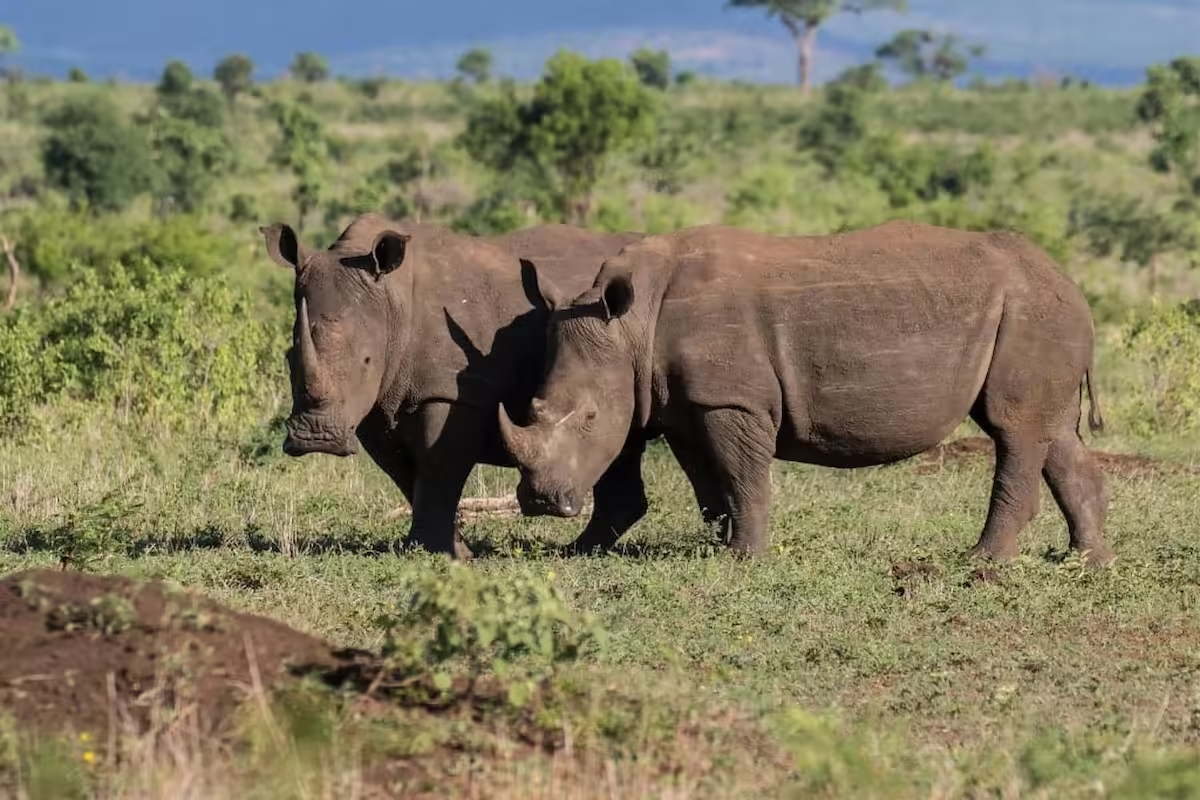
Lion, leopard, elephant, rhino and buffalo across two million hectares, with private traversing in Sabi Sand for off-road leopard viewing. Kruger guide → Greater Kruger reserves →
Table Mountain, the Atlantic seaboard, penguins at Boulders and Stellenbosch tastings - the best city-to-bush pairing in Africa.
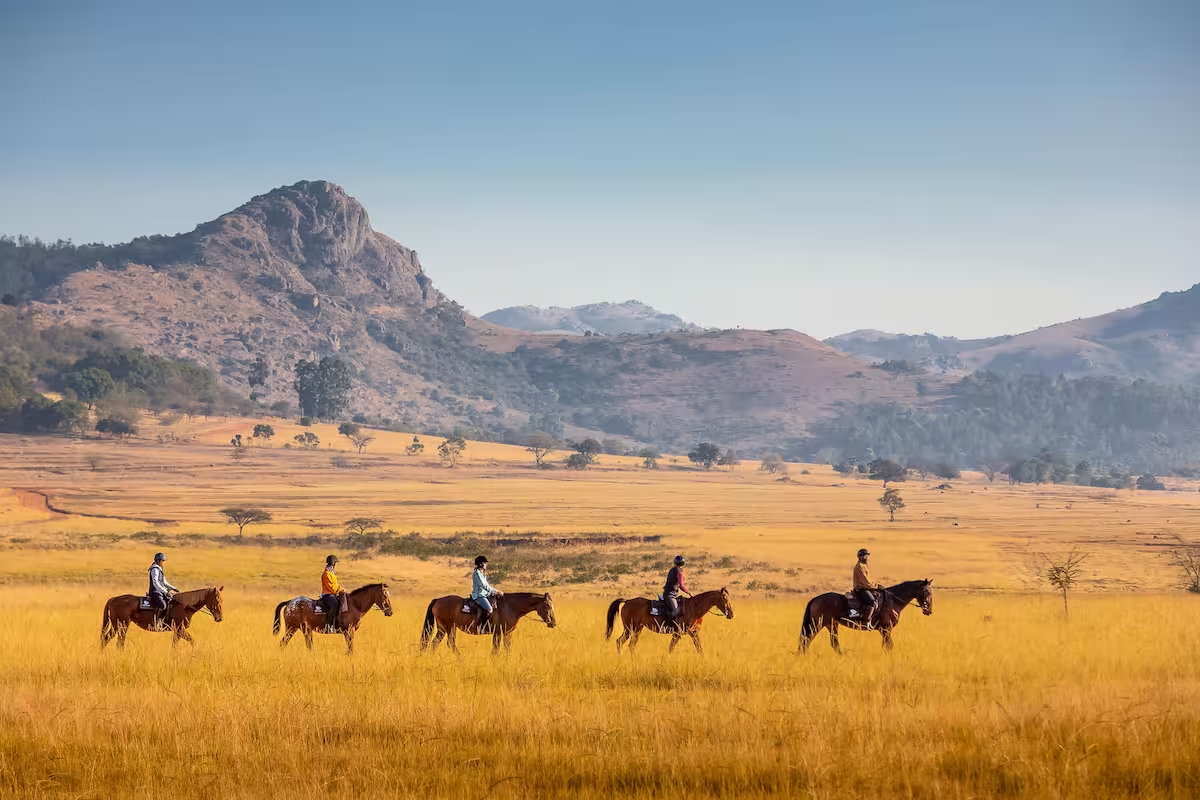
Indigenous forest, lagoons and coastline, then elephants in the Eastern Cape - a road trip that ends in a Big Five reserve. Family safaris →
Three we book most often. Every other duration and route lives on the packages page.
Off-road leopard viewing, night drives and walks in a private Sabi Sand concession.
From $2,850
Three safari nights plus three Cape nights - the express way to see both.
From $3,900
Cape, Winelands, Garden Route self-drive and a private reserve - the complete circuit.
From $6,700
Everything on this page, grouped. Jump straight to the part you need.
Eight destinations that are not interchangeable. Each offers a different landscape, wildlife experience and travel style.
Two million hectares of savanna and woodland, and the most complete Big Five circuit in the country.
Private reserves that connect ecologically with Kruger, for a lodge-focused safari with off-road driving.
South Africa's best-known private reserve, and its most reliable leopard viewing.
More than 600 elephants near Gqeberha, across five of the country's nine biomes.
Red dunes, dry riverbeds and black-maned lions on the South Africa and Botswana border.
Waterberg mountains, cliffs and a major Cape vulture breeding colony.
Wildlife and archaeology together at the meeting point of South Africa, Botswana and Zimbabwe.
Pilanesberg, Madikwe, Phinda, iSimangaliso and KwaZulu-Natal.
The central safari destination for most South Africa itineraries.
The park covers nearly two million hectares and is one of the country's flagship protected areas. It records 148 mammal species and 546 bird species. Its wildlife includes elephant, black and white rhino, buffalo, lion, leopard, cheetah, African wild dog, spotted hyena, giraffe, zebra, hippo and numerous antelope species.
Kruger's scale is important when planning a safari. It is not a small wildlife reserve where every sighting happens within a few minutes. Different parts of the park have different habitats, roads and wildlife patterns.
A safari can therefore focus on the southern Kruger, central regions or northern wilderness areas depending on the length of the trip and species of interest.
Kruger also provides a useful option for travellers who want to combine independent exploration with guided activities. Visitors can drive themselves through the national park while staying at SANParks camps, or stay in private lodges and reserves around the park.
Kruger National Park guide → Game drives →
The concept that matters most when you are comparing South Africa safari options.
Several private reserves border or connect ecologically with Kruger, creating a broader wildlife landscape. The Sabi Sand Nature Reserve, for example, forms part of the Greater Kruger ecosystem and removed its final game fences with Kruger in 1993, allowing wildlife to move between the two areas.
This creates a major difference between a conventional national-park safari and a private-reserve safari.
Private reserves generally provide a more lodge-focused experience, with guided drives, smaller safari vehicles and activities that may not be available in the same way inside a public national park.
The Timbavati forms another important part of the Greater Kruger conservation landscape. It is particularly interesting for travellers who want a private-reserve safari but do not necessarily need to stay in Sabi Sand.
A Timbavati safari can be combined with Kruger or other Lowveld destinations to create a broader wildlife itinerary.
One of South Africa's best-known private wildlife areas, bordering Kruger National Park.
It is particularly associated with leopard viewing and Big Five wildlife, with wildlife moving freely across the connected Greater Kruger open ecosystem.
The reserve also operates significant conservation and community programmes, including wildlife monitoring, anti-poaching work, rhino protection, habitat monitoring and community initiatives involving surrounding villages.
A very different South Africa safari experience, in the Eastern Cape near Gqeberha.
Addo is particularly famous for elephants. More than 600 elephants live in the park, and Addo is a Big Five destination.
Addo is also unusual because the park encompasses five of South Africa's nine biomes, including Albany Thicket, Fynbos, Forest, Nama Karoo and the Indian Ocean Coastal Belt. This ecological variety makes Addo more than an elephant-viewing destination.
Leopard can be difficult to see because of their secretive behaviour, while lions are more often encountered during early morning, sunset and night drives.
The park is also close to Gqeberha airport, making it relatively straightforward to incorporate into a South Africa itinerary.
The Kalahari - red dunes, dry riverbeds and predators, for travellers who want something completely different.
The park extends across South Africa and Botswana and covers more than 3.6 million hectares. Its landscape is dominated by red dunes, sparse vegetation and the dry Auob and Nossob riverbeds.
Kgalagadi is particularly known for predator viewing.
The dry riverbeds and sparse vegetation make predator viewing and photography unusually straightforward here.
Kgalagadi is also a strong destination for birders, particularly those interested in raptors, with more than 270 bird species recorded on the current checklist.
Waterberg mountains and cliffs in Limpopo - a different visual character from the open Lowveld plains.
Marakele National Park lies in the Waterberg region of Limpopo. Its mountainous landscape creates a different visual character from the open plains of some Lowveld safari areas.
The park lists 91 mammal species and more than 300 bird species. Wildlife includes elephant, rhino, lion, leopard, cheetah, wild dog, brown hyena, buffalo, sable, kudu, eland and other antelope.
Marakele is also notable for its birdlife. The park is home to a major Cape vulture breeding colony, and the Waterberg cliffs create conditions used by raptors for soaring.
Wildlife and archaeology together, at the far northern tip of South Africa.
Mapungubwe lies in South Africa's far north near the borders with Botswana and Zimbabwe. The park combines wildlife with archaeological and cultural significance.
Large game species occur across the park, while the surrounding landscape is influenced by the movement of wildlife across the three-country region. A wide variety of smaller mammals, reptiles and birds also occur here.
Seven more that turn up regularly in a multi-region itinerary.
A convenient wildlife destination for travellers combining safari with Johannesburg and surrounding attractions.
A malaria-free Big Five landscape in North West Province, suitable for lodge-based safari experiences. Madikwe guide →
The Eastern Cape's elephant park near Gqeberha, with self-drive routes, a malaria-free setting and the wider Big Seven coast. Addo guide →
The southern Kalahari's red dunes and dry riverbeds, known for black-maned lions and self-drive wilderness routes. Kgalagadi guide →
A private wildlife destination in KwaZulu-Natal that can be combined with the Indian Ocean coast.
A coastal conservation destination in KwaZulu-Natal where safari, wetlands, beaches and marine wildlife can be combined.
An important region for travellers who want to combine wildlife with the Drakensberg, Indian Ocean coastline and Zulu cultural experiences.
Kruger and the Greater Kruger private reserves are the major destinations for this type of safari.
A South Africa safari should not be built around the assumption that every game drive will produce all five species. Wildlife is free-ranging, sightings depend on location and season, and some animals are naturally more difficult to find.
Leopard, for example, can be particularly elusive - they are naturally secretive animals, and Kruger supports them alongside a much wider community of predators and herbivores.
A better itinerary considers the entire wildlife experience rather than treating the Big Five as a checklist.
Game drives → African safaris →
South Africa's wildlife extends far beyond the Big Five.
Kgalagadi is particularly interesting for smaller desert-adapted mammals, while Kruger offers an exceptionally broad mammal community.
Habitats ranging from savanna and forest to wetlands, coast and open Kalahari.
The range of habitats means birdwatchers can encounter savanna species, raptors, waterbirds, forest birds, coastal species and migrants.
More than 500 bird species have been recorded in Kruger, more than 400 in Addo and around 300 in Garden Route National Park.
Marakele is particularly notable for Cape vultures and other raptors, while Kgalagadi offers excellent opportunities for observing birds of prey against the open Kalahari landscape.
One of the most popular ways to design a South Africa holiday.
Cape Town → Cape Winelands → Safari → Johannesburg
Cape Town → Garden Route → Addo → Cape Town
Cape Town → Kruger → Johannesburg
This combination works because South Africa's major cities and safari regions are connected by domestic air routes and established tourism infrastructure.
For travellers who want both city and wildlife, a Cape Town and Kruger itinerary can be structured around:
The itinerary can be shortened or extended depending on international flight schedules.
The Garden Route is particularly useful for travellers who want a road-trip style South Africa holiday.
Garden Route National Park incorporates the Tsitsikamma, Wilderness and Knysna areas, with indigenous forests, fynbos, lakes, rivers and coastline. The park lists 77 mammal species and 300 bird species.
The route can continue east toward Addo Elephant National Park. A sample journey could be:
Cape Town → Hermanus → Garden Route → Knysna → Tsitsikamma → Addo → Gqeberha
This is particularly suitable for travellers who want wildlife without spending their entire holiday in a traditional safari environment.
7-Day South Africa: Kruger + Cape Town →
The Garden Route is not primarily a Big Five destination. It adds everything a safari does not.
Garden Route National Park offers hiking, birding, kayaking, water activities and forest excursions, making it a useful complement to a dedicated wildlife safari.
A South Africa safari can include much more than sitting in a vehicle.
Morning and afternoon game drives are the foundation of most safari itineraries. Private reserves can add flexibility around wildlife sightings and often structure activities around lodge-based schedules.
Night drives reveal a different side of the bush. Nocturnal species become active, while predators such as lions and hyenas can behave differently from daytime encounters. Addo, for example, offers night-drive experiences through its activity programme.
Walking allows travellers to interpret tracks, plants, insects and smaller wildlife that can easily be overlooked from a vehicle. Walking activities vary by reserve and park and should always be undertaken with appropriately trained guides.
Kruger is particularly suitable for self-drive travellers. Visitors can explore the park using their own vehicles and stay at public rest camps, while guided activities can be added where available.
South Africa offers excellent opportunities for wildlife photography because of the combination of accessible parks, diverse species and specialist photographic guides. Photographic safaris can be built around predators, birds, elephants, rhinos, leopards, wildlife behaviour, landscapes and night photography.
All activities → Game drives → Walking safaris →
For serious photographers, the choice between a national park and a private reserve matters.
A private reserve can offer specialist photographic guiding and lodge-based safari schedules, while national parks such as Kruger provide a much larger landscape and the possibility of self-drive photography.
Specialist photographic safaris with trained photographic guides run across the private reserves, and are worth building into the itinerary rather than arranging on the ground.
Photographic safaris → Safari photography guide →
A year-round safari destination, but the experience changes significantly with the seasons.
The dry winter months are particularly suitable for wildlife viewing in the Lowveld. Vegetation becomes less dense, water becomes more concentrated and animals are more likely to gather around remaining water sources.
The dry season runs roughly from April to September across Kruger, when sparse vegetation and restricted water availability make winter particularly favourable for game viewing. It is a strong period for Big Five viewing across most safari regions.
Advantages
Considerations
The warmer months bring rainfall to many safari regions. The rainy season generally runs from October to March. The bush becomes greener and flowering vegetation appears, although thicker foliage can make wildlife harder to spot.
Advantages
Considerations
Best time for an African safari →
The price depends heavily on where you stay and how you travel.
A self-drive Kruger safari using public camps can cost considerably less than a private-reserve luxury lodge.
For an accurate quote, the safari should be priced around the exact travel dates, number of travellers, preferred park and accommodation level.
Three different ways of travelling the same country.
A luxury South Africa safari often centres on private reserves rather than simply choosing the most expensive room inside a national park.
Sabi Sand is particularly suited to this style, with numerous private lodges operating across the reserve. A luxury itinerary can combine Cape Town, the Winelands and Sabi Sand with a Johannesburg departure, or run Cape Town, the Garden Route and an Eastern Cape private reserve.
South Africa is particularly well suited to family safari holidays because itineraries can combine wildlife with cities, beaches, road trips and other activities.
For families, safari planning should consider minimum age requirements for walking activities, child-friendly accommodation, driving times, family rooms, private vehicles, swimming-pool safety, malaria considerations, meal arrangements and shorter game drives for younger children.
Addo can be particularly useful in family itineraries because it can be combined with an Eastern Cape road trip and does not require a long transfer from Gqeberha.
A South Africa honeymoon safari can combine wildlife with Cape Town, the Winelands, the Garden Route or the Indian Ocean coast.
A classic honeymoon structure is Cape Town → Winelands → Private Safari Reserve. A longer journey can continue Cape Town → Garden Route → Addo → Private Eastern Cape Lodge, or Cape Town → Sabi Sand → Johannesburg.
Private lodges are particularly suited to honeymoon trips because of their secluded accommodation, private dining options and lodge-based safari experience.
Luxury safaris → Family safaris → Honeymoon safaris →
Two genuinely different experiences, and most strong itineraries mix them.
Self-drive safari is one of the distinctive advantages of South Africa. Kruger allows visitors to explore the park in their own vehicles, subject to park regulations and road conditions.
A self-drive safari allows travellers to control their own schedule, stop at sightings, choose accommodation, travel independently and combine safari with road trips.
However, self-drive is not automatically the same experience as a guided safari. A professional guide can interpret tracks, animal behaviour and calls, and may know local wildlife patterns that an independent visitor could miss.
For first-time travellers, a combination can work well: self-drive national park + guided private-reserve safari.
A guided safari is useful for travellers who want wildlife interpretation rather than simply transportation through a park.
A good safari guide can help identify tracks, calls, plants, birds, predator behaviour, animal communication, seasonal wildlife patterns and smaller species.
For specialist interests such as photography or birding, choosing a guide with relevant expertise can make a substantial difference to the experience.
From simple campsites to some of Africa's most exclusive private safari lodges.
Useful for self-drive travellers, budget-conscious travellers, families, longer stays and independent travellers.
Useful for guided safaris, couples, families and mid-range travel.
Useful for luxury safaris, honeymoons, photography, private guiding and special occasions.
The right accommodation depends more on the style of safari you want than simply the number of stars.
Where to stay in South Africa →
It depends on whether safari is the entire holiday or one component of a larger trip.
Suitable for a short Kruger, Greater Kruger or Eastern Cape safari.
Allows more time for different habitats and multiple game-drive periods.
A strong length for combining two safari areas or adding a city component.
Allows a broader South Africa itinerary such as:
Five routes we build most often, from a short Kruger break to a full circuit.
5-Day Kruger Safari: Sabi Sand Concession →
7-Day South Africa: Kruger + Cape Town →
9-Day Cape, Winelands and Kruger →
12-Day Grand South Africa + Garden Route →
14-Day Ultimate South Africa + Eswatini → All South Africa packages →
The best gateway depends on the safari region.
The major gateway for Kruger, Pilanesberg, Madikwe, Limpopo, northern South Africa and Cape Town.
Best suited to Cape Town holidays, the Winelands, the Garden Route, the Western Cape and combined Cape + safari itineraries.
Useful for southern Greater Kruger, Sabi Sand, Kruger and Lowveld lodges. Skukuza Airport and Kruger Mpumalanga International Airport are the two important air gateways for Sabi Sand.
Useful for central Greater Kruger, Timbavati and private Lowveld reserves.
Useful for Addo Elephant National Park, Eastern Cape safari and Garden Route extensions. Addo is approximately 30 minutes from Gqeberha and its airport.
Wildlife tourism is closely connected with conservation across South Africa.
National parks such as Kruger operate large-scale wildlife protection and ecological management programmes. Private reserves also contribute through wildlife monitoring, anti-poaching operations, habitat management and community partnerships.
Sabi Sand operates aerial wildlife surveys, habitat assessments, invasive-species management, rhino protection programmes and community initiatives.
A responsible safari should therefore consider more than the quality of wildlife sightings.
The objective is not simply to see wildlife but to experience it without compromising the ecosystem or the people living around it.
Health requirements depend on the traveller, itinerary and areas visited.
Before travelling, check current advice from an appropriate medical professional and the relevant health authorities.
Malaria risk also varies by destination and season, so travellers should obtain current medical advice for their specific safari region. The Lowveld around Kruger and the northern reserves carry risk; Madikwe, Pilanesberg and most Eastern Cape reserves are considered malaria-free.
Visa requirements depend on nationality.
Visitors who require visas must obtain them before travelling; visas are not issued at South African ports of entry. Some nationalities are exempt from visa requirements.
Travellers should check their nationality-specific requirements before booking flights because entry rules can change.
Yellow fever requirements can also apply to travellers arriving from or transiting through designated yellow-fever-risk countries. The current requirements and country lists are published by the South African authorities and should be checked before travel.
Pack according to the season and safari region.
Add a warm fleece, beanie, gloves, warm socks and a windproof jacket. Early morning game drives can be surprisingly cold during the South African winter.
Three comparisons that come up in almost every planning conversation.
South Africa is particularly strong for
East Africa is particularly associated with
Neither approach needs to be treated as interchangeable. The right destination depends on the wildlife, landscapes, activities and travel style the traveller wants.
Kruger is a destination within South Africa, while a South Africa safari can encompass several different regions.
Choose a Kruger-focused itinerary if the priority is
Choose a broader South Africa itinerary if you also want
South Africa generally provides more options for combining safari with cities, road trips and diverse accommodation.
Botswana is particularly associated with the Okavango Delta, Chobe, Moremi, Kalahari landscapes, water-based safari and remote wilderness camps.
South Africa can be particularly practical for travellers looking for a first safari or a holiday combining wildlife with major urban and coastal attractions.
Southern Africa safari → East Africa safari →
A first safari does not need to cover every park. A focused itinerary is usually easier to enjoy.
First safari guide → Family safaris →
All South Africa safari packages → Or send us your dates
The three above are a shortlist. The rest of the collection - the short Kruger fly-ins, the Cape and winelands combinations and the long multi-region circuits - sits below.
From $4,900 pp
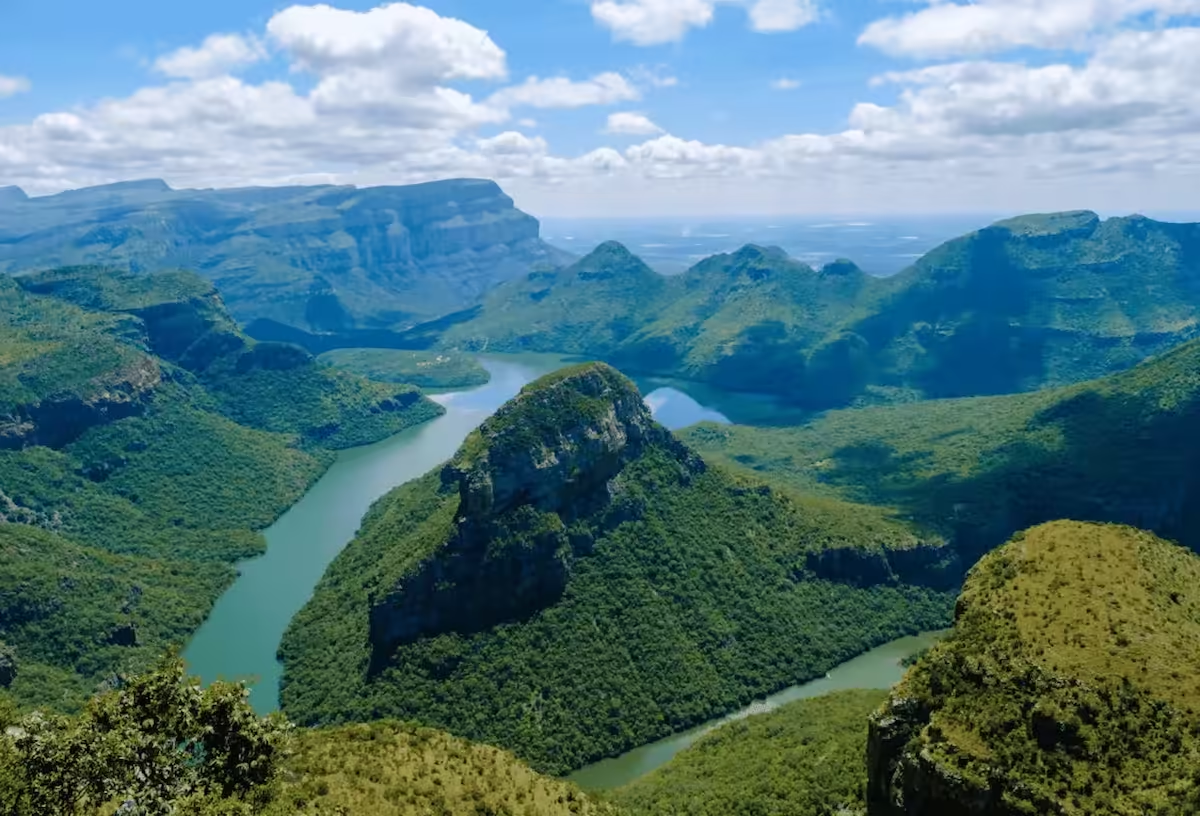
Adds Panorama Route and Eswatini culture to the grand loop.
From $7,750
Yes. South Africa offers several safari formats, including guided safaris, private reserves and self-drive national-park trips. This flexibility makes it possible to build an itinerary around different budgets and travel styles.
The answer depends on the type of safari being planned. Kruger and Greater Kruger focus strongly on large-scale wildlife viewing, Sabi Sand is known for private-reserve and leopard-focused experiences, Addo is particularly strong for elephant viewing and Eastern Cape combinations, while Kgalagadi offers a very different desert-predator experience.
Kruger, Greater Kruger and several private reserves offer Big Five safari experiences. Addo is also a Big Five destination.
Kruger gives you scale, self-drive freedom and public rest-camp accommodation across two million hectares. Sabi Sand and the other Greater Kruger reserves give you off-road driving, smaller vehicles, night drives and walks, and more reliable leopard viewing. Many trips use both.
Yes. Kruger allows visitors to explore the park in their own vehicles, subject to park rules and access conditions. It is one of the few places in Africa where a self-drive safari is genuinely straightforward.
The price depends heavily on where you stay and how you travel. A self-drive Kruger safari using public camps costs considerably less than a private-reserve luxury lodge. Pricing should be built around exact travel dates, number of travellers, preferred park and accommodation level.
The spread is wider here than anywhere else: a self-drive Kruger circuit with SANParks rest camps runs roughly US$150-250 per person per day, while Sabi Sand or Timbavati private-reserve lodges start near US$600 and pass US$1,500 in peak. Conservation levies (around US$10-40 per adult per day in public parks) and the choice between self-drive and private vehicle do more to move the total than room category.
Yes. Private reserves such as Sabi Sand offer luxury lodges, guided game drives and specialist safari experiences, with private vehicles, dedicated guides and scenic flights.
Yes. Family itineraries can combine wildlife with road trips, cities, beaches and other attractions. The appropriate reserve should be selected based on children's ages and the lodge's activity policies, and malaria-free reserves such as Madikwe, Pilanesberg and the Eastern Cape are the usual starting point.
Yes. Cape Town can be combined with Kruger, Greater Kruger, Eastern Cape reserves or Addo depending on the itinerary. Most combinations work through domestic air routes between Cape Town and the safari regions.
Yes. The Garden Route adds indigenous forests, lagoons, hiking, beaches and marine wildlife, and Garden Route National Park sits on the way through to Addo. It complements rather than competes with a Big Five safari.
For many Lowveld safari areas, the dry winter period from roughly May to September provides strong wildlife-viewing conditions because vegetation is thinner and animals often concentrate around water.
The dry season from April to September is the most reliable window. Sparse vegetation and restricted water availability make winter particularly favourable for game viewing, although mornings and nights are cold.
Elephant, buffalo, lion, leopard, black rhino, zebra, kudu, eland, red hartebeest, bushbuck and spotted hyena. Addo records more than 600 elephants and is a Big Five destination.
Yes, if you want something different from green Lowveld country. Kgalagadi is built around red dunes, sparse vegetation and the dry Auob and Nossob riverbeds, with black-maned lions, cheetah, brown hyena and more than 270 bird species. It suits photographers, predator enthusiasts and self-drive travellers.
Three to five nights can work for a dedicated short safari, while seven to fourteen days allows a safari to be combined with Cape Town, the Garden Route or other regions.
On the standard circuits with normal precautions, yes: door-to-door transfers, vetted lodges and guides through the day. Cities need big-city sense, so we brief every arrival and route around problem areas.
It depends on nationality. Visitors who require visas must obtain them before travelling, because visas are not issued at South African ports of entry, and some nationalities are exempt. Check your specific requirements before booking flights.
South Africa issues no visas at the border, so if your passport needs one, arrange it beforehand through a mission or the eVisa portal where offered. The United States, United Kingdom, EU and Schengen states, Australia, New Zealand, Japan, Singapore and the SADC neighbors enter visa-free for up to 90 days. The passport itself carries the strictest rules in the region: two blank pages, validity for 30 days beyond departure, an unabridged birth certificate for under-18s, and consent affidavits when a child travels with one parent. Yellow fever certificates are required if arriving from an endemic country - standard practice on multi-country circuits.
It varies by destination and season. The Lowveld around Kruger and northern reserves carry risk, while Madikwe, Pilanesberg and most Eastern Cape reserves are considered malaria-free. Obtain current medical advice for your specific region.
Neutral-coloured lightweight shirts, long trousers, a fleece or warm jacket, comfortable walking shoes, a hat, sunglasses, a lightweight rain jacket, plus binoculars, a camera, spare batteries, a power bank and a headlamp. Add a beanie, gloves and warm socks for winter safaris - early morning game drives are cold.
More than 500 bird species have been recorded in Kruger, more than 400 in Addo and around 300 in Garden Route National Park. Marakele stands out for Cape vultures and other raptors, and Kgalagadi is strong for birds of prey over open Kalahari ground.
Night drives run in permitted areas and are a standard part of most Kruger and Greater Kruger itineraries. They are one of the clearest differences between a public rest-camp stay and a private lodge stay.
Yes. Southern Africa lends itself to multi-country itineraries, particularly when combining wildlife areas around the borders of South Africa, Botswana, Zimbabwe and Namibia.
Yes. The combination of accessible parks, diverse species and specialist photographic guides makes it one of the easier countries to photograph well. Private reserves offer specialist photographic guiding, while Kruger gives you a far larger landscape and self-drive flexibility.
Kruger is the national park itself, covering nearly two million hectares with public rest camps and self-drive access. Greater Kruger refers to the private reserves that border or connect ecologically with it, including Sabi Sand and the Timbavati, where game fences have been removed and wildlife moves between the areas.
The Garden Route works year-round. Summer, from roughly November to March, brings the longest days and the best conditions for beaches, hiking and marine wildlife. Winter is quieter and greener, and pairs well with a dry-season Kruger safari.
Tell us your travel dates, how many of you are travelling and which experiences matter most - Kruger, Sabi Sand, Addo, Kgalagadi, Cape Town, the Garden Route or a self-drive. A specialist replies within 24 hours.