
Tanzania | Park guide
Tarangire National Park
River, baobabs and up to 3,000 elephants - the north's great dry-season gathering.
Tarangire National Park is one of northern Tanzania's most distinctive safari destinations, famous for its large elephant herds, ancient baobab landscapes, seasonal wildlife concentrations and the Tarangire River that becomes a critical source of water during the dry months. Covering approximately 2,850 km² according to the current Tanzania National Parks Authority (TANAPA) park information, Tarangire was established as a national park in 1970. Its combination of riverine habitats, seasonal swamps, open grasslands, acacia and baobab woodland makes it noticeably different from the vast grassland landscapes associated with the Serengeti.
For travelers planning a Tanzania safari, Tarangire is more than simply a convenient first stop on the northern safari circuit. It is a seasonal ecosystem in which wildlife responds to changing water and food availability across a much larger landscape. During the dry season, animals from surrounding areas concentrate around permanent water sources inside and around the park, producing some of northern Tanzania's most rewarding elephant and large-herbivore encounters. During the rains, many animals disperse beyond the park into surrounding seasonal ranges.
Safaris visiting Tarangire National Park
What makes Tarangire National Park special?
Tarangire has a character of its own.
The first thing many visitors notice is the elephants. Large family groups can be encountered moving through open grassland, woodland and beneath enormous baobabs. TANAPA describes Tarangire as being particularly famous for its elephant concentrations and identifies the park as one of Tanzania's important birding destinations.
The second defining feature is the landscape. Instead of one dominant scenery type, Tarangire combines open plains, woodland, riverine vegetation, seasonal wetlands, termite-mound areas and hills covered with baobabs. This diversity creates a safari landscape that changes considerably as you move through the park.
The third is seasonality.
Tarangire should not be understood simply as a park where wildlife stays in one place throughout the year. It forms part of the much larger Tarangire–Manyara ecosystem. Research using long-term wildlife observations and elephant tracking has demonstrated seasonal movements between Tarangire and surrounding wet-season dispersal areas.
This is one of the reasons Tarangire can feel dramatically different depending on when you visit.
Where is Tarangire National Park?
Tarangire National Park is located in northern Tanzania and forms part of the country's northern safari circuit.
The park lies within the broader Tarangire–Manyara ecosystem and is positioned south of Arusha. Its landscape sits within the eastern branch of the Great Rift Valley region, with elevations varying across the park. TANAPA gives an altitude range of approximately 900–1,250 metres and average annual rainfall of about 650–700 mm.
The park's position makes it particularly useful for travelers combining several northern Tanzania destinations. A common safari sequence is Arusha → Tarangire → Ngorongoro → Serengeti.
However, Tarangire can also be visited independently, as a shorter safari from Arusha, or incorporated into a tailor-made itinerary with other destinations.
The Tarangire River: the lifeline of the park
The park takes its name from the Tarangire River, which passes through the protected area. Its importance becomes especially clear during the dry season.
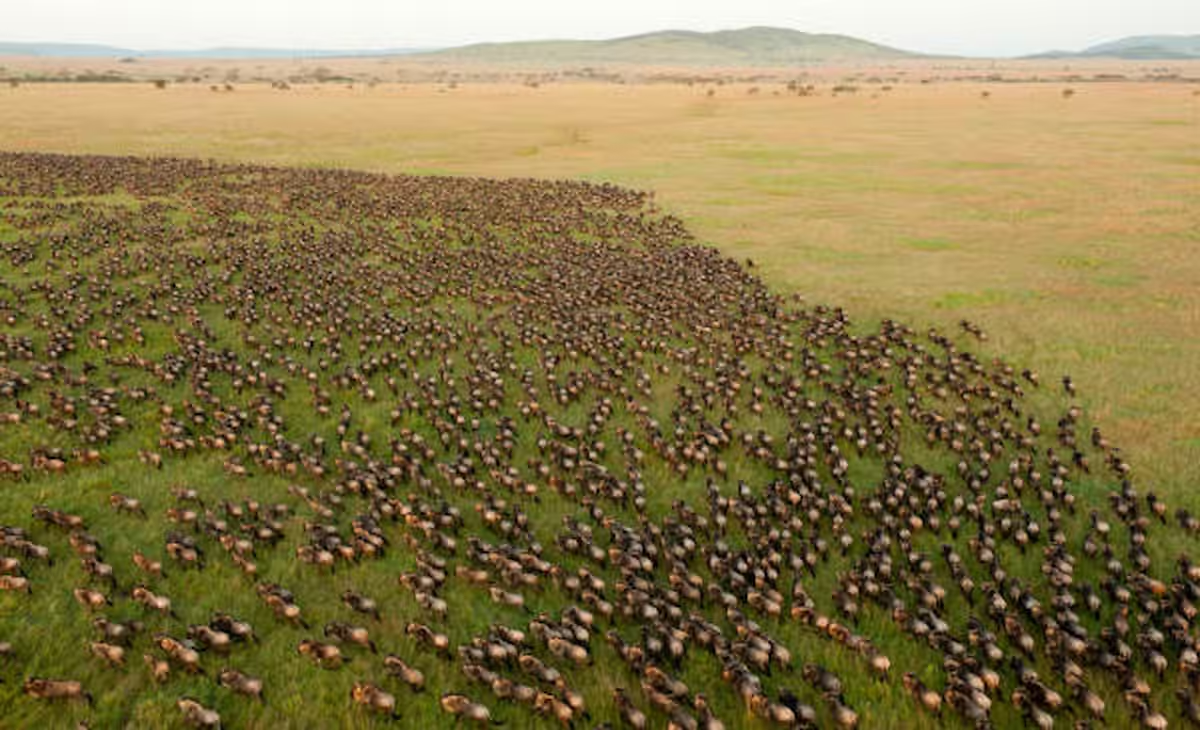
As seasonal water sources disappear from surrounding landscapes, wildlife increasingly concentrates around dependable water sources. Historical ecological studies documented major concentrations of elephants, zebra, wildebeest and buffalo around the Tarangire River during the dry months.
This creates an important safari principle: Tarangire's wildlife spectacle is strongly connected to water.
Rather than simply searching randomly across the landscape, experienced guides understand how animal distribution changes according to water availability, vegetation and seasonal conditions. The river therefore influences both the ecology of the park and the way visitors experience it.
Tarangire's landscape and habitats
One of Tarangire's greatest strengths is habitat diversity. The park contains a mixture of:
- Open savanna
- Acacia and other woodland
- Baobab-dominated areas
- Riverine vegetation
- Seasonal wetlands
- Grasslands
- Shrubland
- Termite-mound landscapes
- Swamp systems
TANAPA specifically highlights riverine forests, termite-mound plains, open flats, acacia woodland and the Silale Swamp among the park's important landscapes.
This habitat variety is important because different species use different parts of the landscape. Grazers can take advantage of grasslands and seasonal vegetation, browsers feed among trees and shrubs, elephants move across multiple habitat types, and birds exploit everything from woodland and grassland to wetland environments.
For safari photography, the changing habitats also create considerably more variety than simply photographing animals against open grass.
The baobabs of Tarangire
The baobab is one of the visual symbols of Tarangire National Park. These enormous trees rise above the surrounding savanna and give the park a landscape that is immediately recognizable. Their massive trunks and unusual silhouettes create some of the most memorable photographic compositions in northern Tanzania.
TANAPA describes Tarangire's baobabs as ancient landscape features, with some reaching approximately 30 metres in height and having trunks more than 10 metres wide.
Baobabs are also ecologically important. Their trunks, branches, flowers, fruits and cavities can provide resources or habitat for a variety of organisms. TANAPA's general park material notes that hollow baobabs have historically provided shelter and that the trees support a range of smaller wildlife interactions.
For photographers, the combination of an elephant herd and a giant baobab is one of Tarangire's signature scenes.
Why is Tarangire famous for elephants?
If there is one animal most strongly associated with Tarangire, it is the African savanna elephant. TANAPA describes the park as being renowned for its large elephant herds and currently promotes it as the "Paradise of Elephants".
But the importance of Tarangire's elephants extends beyond the animals visitors see inside the park. Elephants use a much larger landscape.
Research involving GPS-tracked elephants found substantial seasonal movements between Tarangire National Park and areas outside the park. Some tracked elephants had very large home ranges, demonstrating why conservation of wildlife corridors beyond national park boundaries is essential.
Another long-term study identified five elephant transit corridors connecting Tarangire with northern and southeastern wet-season dispersal areas. These routes corresponded with migration routes documented decades earlier.
This means that a Tarangire elephant safari is part of a much larger ecological story. The animals you see may not remain inside the park throughout the year.
Wildlife in Tarangire National Park
Tarangire supports a broad range of large mammals and smaller species. Commonly encountered wildlife includes:
- African elephants
- African buffalo
- Giraffes
- Zebras
- Wildebeest
- Impala
- Common waterbuck
- Eland
- Gerenuk in suitable areas
- Greater kudu in suitable habitats
- Oryx
- Dik-dik
- Warthogs
- Baboons
- Vervet monkeys
- Mongoose species
- Hyenas
- Lions
- Leopards
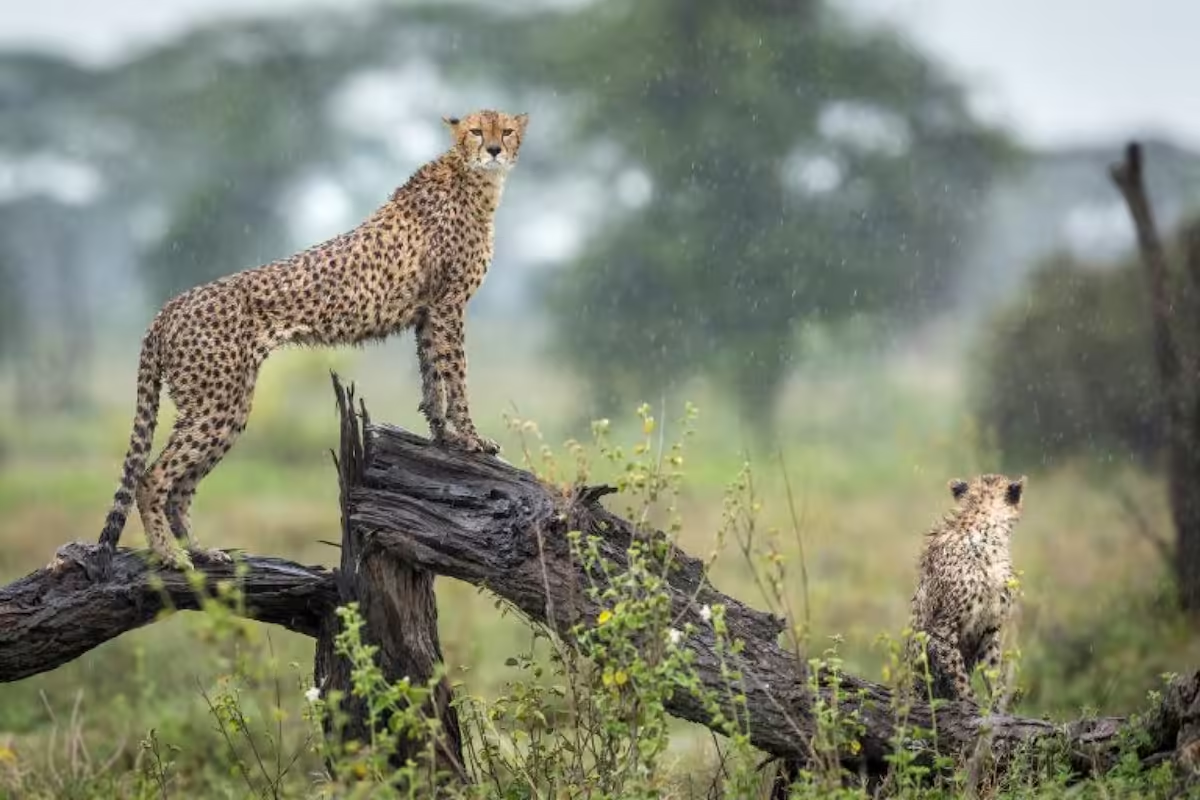
- Cheetahs
The exact species encountered and the quality of sightings vary with season, habitat and the movement of wildlife.
Tarangire is therefore not a place where every safari guarantees a particular animal. Instead, its strength is the combination of high wildlife concentration during the dry season, distinctive habitat and excellent opportunities for elephant viewing.
Predators in Tarangire
Tarangire is not only about herbivores. The park and the wider Tarangire ecosystem support several large carnivore species, including:
- Lion
- Leopard
- Cheetah
- Spotted hyena
- Striped hyena
- African wild dog
Research into large carnivores in the Tarangire ecosystem found that these major carnivore species have persisted despite the pressures associated with a fragmented landscape containing protected areas and village lands.
Lion and leopard sightings can occur during game drives, while cheetahs are generally less predictable. African wild dogs are considerably more difficult to encounter and should be treated as an exceptional sighting rather than an expected feature of a standard Tarangire safari.
This distinction matters when planning a safari. Tarangire can offer predator sightings, but travelers whose highest priority is maximizing opportunities for particular big-cat encounters may want to combine Tarangire with other northern Tanzania destinations.
Lions
Lions use Tarangire's open and semi-open habitats, where concentrations of herbivores provide opportunities for hunting. They may be found near areas where prey animals gather, particularly during the dry season.
Leopards
Leopards are much more elusive. They favor areas providing cover, including woodland and riverine environments. Their solitary and secretive behavior means that seeing one is never something a responsible safari operator should guarantee.
Cheetahs
Cheetahs can occur within the wider Tarangire ecosystem but are less frequently encountered than elephants, zebra, giraffe, buffalo or impala. Their preference for relatively open habitat means sightings can depend strongly on local conditions and prey distribution.
Tarangire's birdlife
Tarangire is an important destination for birdwatchers. TANAPA currently describes the park as having more than 550 bird species, while independent bird checklist databases record even higher numbers depending on taxonomy and the way records are compiled. Avibase's current Tarangire checklist, for example, lists 594 species under its current taxonomy.
Tarangire is therefore best described as having more than 550 recorded bird species, rather than one fixed number presented as universally definitive.
Potential highlights include:
- Kori bustard
- Ostrich
- Secretarybird
- Yellow-collared lovebird
- Ashy starling
- Lilac-breasted roller
- Hornbills
- Bee-eaters
- Eagles
- Vultures
- Storks
- Kingfishers
- Ground hornbills
- Various weavers and finches
The birding experience is particularly interesting because the park's different habitats support different bird communities. For a traveler who enjoys both mammals and birds, Tarangire can therefore offer considerably more than a conventional Big Five-focused safari.
The Silale Swamp
The Silale Swamp is one of Tarangire's important seasonal wetland systems. TANAPA identifies the swamp and surrounding river loops as dry-season wildlife areas where elephants, buffalo and birds can concentrate.
The ecological importance of such wetlands becomes especially obvious as the surrounding landscape dries. Water and green vegetation attract herbivores, and herbivores in turn attract predators. This creates an interconnected food web rather than a collection of isolated wildlife sightings.
Tarangire's seasonal wildlife cycle
Understanding Tarangire's seasons is essential when deciding when to visit. The park experiences a bimodal rainfall pattern, with short rains generally beginning around November and December and longer rains occurring from March through May. TANAPA identifies June through October, together with January and February, within its dry-season pattern.
However, wildlife movement does not follow a simple calendar perfectly. Rainfall can vary from year to year, and wildlife responds to actual conditions on the ground.
Dry season: June to October
This is generally the period for which Tarangire is most famous. As water becomes scarce outside the park, animals concentrate around permanent water and remaining productive habitats.
Historical research found large concentrations of elephant, zebra, wildebeest and buffalo during the dry season, while many herbivores dispersed outside the park during the wetter months. For visitors, this can mean:
- Larger visible wildlife concentrations
- Excellent elephant encounters
- Better visibility through thinner vegetation
- Strong predator-prey opportunities
- Dry, comfortable safari conditions
- Excellent photographic light and landscapes
The peak dry-season months can also be busier than the greener months.
November to December: short rains
The short rains begin changing the landscape. New vegetation starts appearing, water becomes more widely distributed and wildlife begins responding to improved conditions. This can reduce the concentration effect around permanent water compared with the height of the dry season.
However, the park remains highly rewarding. For photographers, the combination of fresh vegetation, dramatic skies, fewer vehicles in some areas and active wildlife can be attractive.
January to February
These months can be particularly interesting because Tarangire is not simply "wet season" or "dry season". TANAPA's current description places January and February within the park's dry-season pattern, while the wider ecosystem continues to respond to seasonal rainfall.
Wildlife distribution can therefore vary considerably depending on recent rainfall. This is an important reason not to expect a fixed wildlife pattern for a particular week without considering the actual conditions.
March to May: long rains
The long rains generally bring greener conditions. The surrounding ecosystem becomes more productive and many herbivores can disperse away from the permanent water sources that make Tarangire so concentrated during the dry season.
For some travelers this is a disadvantage if the primary goal is maximum wildlife concentration. For others it is an advantage: the landscape becomes greener, the air can feel fresher, migratory movements become more dispersed, and visitor numbers can be lower.
A traveler who prioritizes solitude, photography and landscape over concentrated dry-season wildlife may find this period appealing.
Best time to visit Tarangire National Park
Best overall wildlife viewing: June to October
For travelers whose main priority is wildlife concentration, June to October is generally the strongest period to consider. The principal reason is ecological rather than simply climatic: water becomes increasingly limited outside the park, encouraging animals to concentrate around reliable water and remaining productive habitats.
Best for elephants
The dry season is particularly strong for elephant viewing. Large groups may be encountered around water and along riverine areas.
Best for birding
Tarangire is productive for birdwatching across much of the year, with different species and conditions depending on season. Dedicated birders should plan around their target species rather than assuming one month is universally best.
Best for green landscapes
The wetter months bring greener vegetation and different photographic conditions.
Best for fewer crowds
The shoulder and wetter periods can provide a quieter safari experience, although exact visitor density varies by date, route and accommodation.
Tarangire safari activities
1. Game drives
Game drives are the primary way most travelers experience Tarangire. A good safari is not simply about driving until an animal appears. The guide interprets:
- Tracks
- Animal behavior
- Vegetation
- Water availability
- Bird alarm calls
- Predator activity
- Seasonal wildlife movements
- Recent sightings
The combination of these factors determines where to spend time. Tarangire's dry-season concentration makes it particularly suitable for slow, observation-focused game drives.
2. Guided walking safaris
Walking provides a completely different perspective. Instead of focusing only on large mammals, travelers become more aware of tracks, insects, plants, birds, animal signs, smaller mammals, sounds and smells, and the structure of the landscape.
TANAPA lists guided walking safaris among Tarangire's visitor activities and states that walking activities must be accompanied by authorized personnel.
Walking is particularly valuable for travelers who want to understand the ecosystem rather than simply photograph animals from a vehicle.
3. Hot-air balloon safari
A balloon safari offers an aerial perspective over Tarangire. The experience is particularly suited to travelers who value landscape photography and want to see the relationship between woodland, open plains, river systems and wildlife from above.
TANAPA lists balloon safaris among Tarangire activities and its current fee guidance includes a park balloon operation fee. Availability should be confirmed for the specific travel dates and accommodation.
4. Photographic safaris
Tarangire is exceptionally well suited to photography. The combination of elephants, baobabs, golden grass, open plains, riverine vegetation, dramatic skies, birds, termite mounds and seasonal wetlands creates a wide range of compositions.
Photographers should not treat Tarangire merely as an elephant destination. The landscape itself is one of the main photographic subjects.
5. Bush meals and sundowners
Some Tarangire safari experiences can include bush meals and sundowners. These experiences are less about wildlife density and more about slowing the pace of the safari.
A sundowner allows travelers to experience the changing light over the landscape, while a bush meal can turn lunch or dinner into part of the safari experience. TANAPA currently lists both bush meals and sundowners among visitor experiences.
How many days do you need in Tarangire?
One day
A one-day Tarangire safari can work well for travelers with limited time. It is particularly practical when traveling from Arusha and continuing toward another northern Tanzania destination. However, a day visit limits the opportunity to explore different parts of the park and experience the changing rhythm of morning, midday and afternoon wildlife activity.
Two days
Two days is a stronger option for travelers who want Tarangire to be more than a quick introduction. It provides time for multiple game drives, different habitats, more relaxed elephant encounters, photography, a possible walking experience and a more flexible response to wildlife sightings.
Three days or more
Three or more days can make sense for photographers, birders, families who prefer slower travel, or travelers staying in a camp where the surrounding experience is part of the attraction. For a conventional northern Tanzania safari, however, many travelers prefer to allocate additional nights to destinations such as Ngorongoro and Serengeti.
How to get to Tarangire National Park
By road
Tarangire is accessible by road from Arusha. TANAPA's current visitor guide describes the journey as approximately 2.5–3 hours by road from Arusha, using the route via Makuyuni and Minjingu before entering the park's road network.
Road access makes Tarangire particularly convenient for northern Tanzania safari itineraries. It is also one reason the park works well as an opening destination before continuing toward the Ngorongoro Conservation Area and Serengeti.
By air
Charter and scheduled safari flights can also be used. TANAPA identifies Kuro Airstrip inside the park as an air-access option. Flying can be useful for luxury safaris, travelers with limited time, fly-in safari itineraries and travelers connecting several remote camps. Flight availability and routing should always be checked for the exact travel dates.
Where to stay in Tarangire
Tarangire offers several accommodation styles.
Lodges
Lodges provide a more traditional safari-hotel experience, generally with permanent rooms, dining areas and established facilities. They can be particularly comfortable for families, first-time safari travelers, travelers wanting more conventional accommodation and travelers combining safari with other northern Tanzania destinations.
Tented camps
Tented camps can provide a more intimate connection with the landscape. The experience varies considerably between properties, from comfortable permanent tented accommodation to more exclusive luxury camps.
Camping
For travelers who want a more adventurous experience, TANAPA provides public and special camping options within the park system. The choice between these accommodation categories should be based on the type of safari the traveler wants - not simply price.
Luxury safari in Tarangire
Luxury in Tarangire is not necessarily about having the largest room. A well-designed luxury safari can combine:
- A secluded camp
- Prime wildlife location
- Private or dedicated safari vehicle
- Expert guide
- Flexible daily schedule
- High-quality meals
- Bush dining
- Walking experiences
- Balloon flights
- Personalized photography
- Seamless transfers
For a luxury itinerary, location can be as important as the accommodation itself. Staying close to productive wildlife areas can reduce unnecessary driving and create more time for actual safari experiences.
Family safaris in Tarangire
Tarangire can work particularly well for families because it combines abundant wildlife with a relatively compact safari experience. Children can become especially interested in elephants, giraffes, zebras, monkeys, birds, baobabs and termite mounds.
However, the ideal family safari should be paced around the ages and interests of the children. Younger children may benefit from shorter game drives, flexible meal times and accommodation with family-friendly facilities. Older children can often appreciate longer drives, photography, walking experiences and wildlife tracking.
A family itinerary should therefore be designed around the family rather than simply placing children into an adult itinerary.
Tarangire for first-time safari travelers
Tarangire is an excellent introduction to Tanzania because wildlife viewing can be strong without requiring the enormous distances involved in exploring some of Tanzania's larger ecosystems. The landscape is also visually diverse.
A first-time visitor can experience elephants, giraffes, zebra, buffalo, antelope, predators, birds, baobabs, wetlands and open savanna within one destination.
It also provides a useful introduction to an important safari concept: wildlife is not static. Animals move according to water, food, breeding conditions and landscape connectivity.
Tarangire and conservation
The conservation story of Tarangire extends beyond its official boundaries. This is particularly important because many wildlife species use the broader ecosystem rather than remaining permanently inside the national park.
Elephant research has demonstrated seasonal movements between the park and surrounding areas, while long-term corridor research has identified routes connecting the park with wet-season dispersal areas. The relationship between wildlife and people therefore becomes a central conservation issue.
Human-elephant conflict around Tarangire
Elephants do not recognize national park boundaries. As elephant populations move into surrounding landscapes, they can come into contact with agricultural areas and villages.
Recent research in communities northeast of Tarangire documented regular human-elephant interactions in some villages around Manyara Ranch and Randilen Wildlife Management Area. Another study of the Kwakuchinja Wildlife Corridor documented substantial land-use change between 2002 and 2017, including increased agriculture and reduced woodland cover. The corridor historically connects Tarangire and Lake Manyara and is used by wildlife including elephants.
This demonstrates why protecting Tarangire cannot be reduced to protecting the park boundary. The wider landscape matters.
Why wildlife corridors matter
A wildlife corridor allows animals to move between different seasonal habitats. For Tarangire, this is particularly important because animals may need different areas during wet and dry seasons. Research has identified long-term elephant transit corridors and demonstrated that some routes have remained important over decades.
For visitors, this may seem like an invisible part of the safari. But it is one of the most important stories behind the wildlife they see. A photograph of an elephant herd in Tarangire represents only one moment in an animal's much larger seasonal movement across northern Tanzania.
Tarangire vs Serengeti
Tarangire and Serengeti are both exceptional, but they offer different safari experiences. Choose Tarangire for:
- Elephants
- Baobabs
- Distinctive woodland scenery
- Dry-season wildlife concentration
- A more intimate park experience
- Strong birding
- Shorter safari itineraries
Choose Serengeti for:
- Vast open plains
- The Great Migration
- Extensive predator-prey landscapes
- Large-scale wilderness
- Longer safari exploration
For many travelers, the best answer is not choosing one. It is combining them - which is exactly how the classic northern circuit works.
Tarangire vs Ngorongoro
Ngorongoro offers a very different geographical experience. The crater is a dramatic enclosed volcanic landscape with a dense concentration of wildlife, while Tarangire is a much broader savanna ecosystem shaped strongly by seasonal movement and water availability.
Tarangire is particularly distinctive for elephants, baobabs and seasonal wildlife movement. Ngorongoro is particularly distinctive for crater landscapes, dense wildlife and dramatic geological scenery.
Combining the two creates a much more varied northern Tanzania safari.
Recommended Tanzania safari combinations
3-day safari: Tarangire + Ngorongoro
A short itinerary focused on two highly contrasting destinations: 3-Day Tanzania Safari.
4-day safari: Tarangire + Ngorongoro + Serengeti
A fast-paced introduction to the northern circuit: 4-Day Tanzania Safari.
5–6 days: Tarangire + Ngorongoro + Serengeti
Allows more time in each destination and reduces the feeling of rushing between parks: 5-Day Tanzania Safari or 6-Day Tanzania Safari.
7+ days
Tarangire + Ngorongoro + Serengeti, with additional nights allocated according to the traveler's priorities:
- More Serengeti for wildlife and migration
- More Tarangire for elephants and photography
- More time in Ngorongoro for crater exploration
- Additional cultural or community experiences where appropriate
Sample 2-day Tarangire safari
Day 1: Arusha to Tarangire
Travel from Arusha toward Tarangire National Park. Enter the park and begin the first game drive, focusing on the riverine areas and habitats where wildlife activity is strongest. Continue with an afternoon game drive before heading to the selected lodge or camp.
Day 2: Tarangire full-day safari
Spend the day exploring different sections of the park. Depending on season and wildlife conditions, the route may include river areas, woodland, open plains and the Silale Swamp region. Continue with an afternoon game drive before departing for Arusha or continuing toward the next destination.
Sample 3-day Tarangire safari
Day 1: Arusha to Tarangire
Afternoon game drive after arriving from Arusha.
Day 2: full-day Tarangire exploration
Morning and afternoon wildlife viewing, with time for photography or an optional additional activity.
Day 3: morning game drive
Breakfast and departure toward Arusha or the next northern Tanzania destination.
This itinerary works particularly well for travelers who want to experience Tarangire properly rather than treating it as a short stop.
What should you pack for a Tarangire safari?
Useful items include:
- Binoculars
- Camera and spare batteries
- Sun protection
- Lightweight clothing
- Warm layers for early mornings
- Comfortable closed shoes
- Insect repellent
- Reusable water bottle
- Sunglasses
- Hat
- Small day bag
Neutral and earth-toned clothing is practical for safari. During wet periods, waterproof protection becomes more useful, particularly for camera equipment. TANAPA also recommends binoculars, sunscreen and appropriate clothing in its visitor guidance.
Is Tarangire safe?
Tarangire is a protected wildlife area, and safari safety depends heavily on following park regulations and the instructions of your guide. Wild animals should never be approached, fed or disturbed. Elephants and buffalo deserve particular respect because of their size and strength.
Visitors should remain inside the vehicle except at designated areas or when participating in an authorized walking activity. TANAPA specifically advises visitors to follow guide and ranger instructions, remain on designated tracks and avoid disturbing wildlife.
Tarangire National Park: strengths and limitations
Why visit Tarangire?
- Exceptional elephant viewing - large elephant herds are one of the park's defining attractions
- Distinctive scenery - baobabs, river systems, woodland and open savanna create highly varied landscapes
- Excellent dry-season wildlife - seasonal concentration around water can produce outstanding game viewing
- Bird diversity - with more than 550 recorded bird species, Tarangire is valuable for birdwatchers as well as mammal-focused safari travelers
- Easy northern-circuit integration - its location makes it practical to combine with Ngorongoro and Serengeti
- Good for shorter safaris - travelers with limited time can experience Tarangire without committing to a long itinerary
What are Tarangire's limitations?
Tarangire is not the right destination for every safari objective.
During the wetter periods, wildlife disperses more widely across the ecosystem, which can reduce the concentrated wildlife viewing that makes the park particularly famous. Travelers whose absolute priority is the Great Migration should allocate time to the Serengeti rather than expecting Tarangire to provide the same phenomenon. Travelers looking for a very large, open-plains wilderness may also prefer Serengeti.
And travelers specifically focused on mountain gorillas, desert landscapes or southern African waterways need a different destination entirely. The strength of Tarangire is its own identity.
Who should visit Tarangire?
- First-time Tanzania safari travelers
- Elephant enthusiasts
- Wildlife photographers
- Families
- Birdwatchers
- Couples
- Honeymoon travelers
- Luxury safari travelers
- Short safari travelers
- Travelers combining several northern Tanzania parks
- Travelers who appreciate landscapes as much as wildlife
It is particularly attractive to people who want a safari experience that feels different from the classic Serengeti image of endless grass plains.
Plan a Tarangire safari around your priorities
A good Tarangire itinerary should begin with the traveler's objective.
Someone visiting Tanzania for the first time may want Tarangire as the opening destination before continuing to Ngorongoro and Serengeti. A photographer may want additional time around productive wildlife areas and more flexibility during the day. A family may need shorter drives and a slower pace. A birdwatcher may want to prioritize habitat diversity and spend more time identifying species rather than rushing between mammal sightings. A luxury traveler may prefer a secluded camp, private vehicle and flexible daily schedule.
This is why a Tarangire safari cannot be one fixed itinerary. The strongest safari is one built around when you are traveling, what you want to see, how you like to travel and how much time you have.
Tarangire National Park in the bigger Tanzania safari picture
Tarangire is best understood as part of a connected northern Tanzania landscape. Its elephants, herbivores and predators interact with habitats extending beyond the national park. Seasonal movements demonstrate that the wildlife experience is shaped by a much larger ecosystem than the park boundary alone.
That makes Tarangire an important starting point for understanding Tanzania's safari landscapes. It is not simply "the elephant park before Serengeti". It is a major ecosystem with its own seasonal rhythm, wildlife movements, habitats and conservation challenges.
And that is precisely what makes a Tarangire safari worth experiencing.
FAQs
Why is Tarangire best in dry season?
Water shrinks to the river, pulling elephants, buffalo and predators into one corridor - game viewing per hour rivals anywhere in the north.
Can Tarangire fill a full day?
Easily: river loops morning and afternoon, picnic at picnic sites, plus night-drive options from outside-park lodges.
Is Tarangire good for birding?
Superb - 500-plus species including endemic yellow-collared lovebirds, Kori bustards and seven owl species.
TANAPA identifies more than 550 bird species in the park, making Tarangire one of Tanzania's important birding destinations. Independent checklist databases currently record even more species depending on taxonomy and the records used.
How many days do we need in Tarangire National Park?
1 to 2 days.
One day can provide a useful introduction, two days allows a more relaxed experience, and three or more days can suit photographers, birders and travelers who prefer a slower safari.
When is the best time to visit Tarangire National Park?
Best June to October when herds crowd the river; green season brings birds, babies and value.
What pairs well with Tarangire National Park?
Combine with Ngorongoro Crater and Lake Manyara on any northern itinerary.
Is Tarangire National Park worth visiting?
Yes. Tarangire offers a distinctive combination of elephant herds, baobab landscapes, seasonal wildlife concentrations, diverse habitats and strong birdlife. It is also one of the most practical parks to include in a northern Tanzania safari.
What is Tarangire National Park famous for?
Tarangire is particularly famous for elephants, baobabs and dry-season concentrations of wildlife around the Tarangire River and other permanent water sources.
What animals can I see in Tarangire?
Potential sightings include elephants, buffalo, giraffes, zebra, wildebeest, impala, waterbuck, eland, antelope, warthogs, baboons, lions, leopards, cheetahs and hyenas. Wildlife varies according to season and location.
Can you see the Big Five in Tarangire?
Tarangire can provide sightings of several of the traditionally defined Big Five, particularly elephant, buffalo and lion, with leopard also possible. Seeing every Big Five species on a single visit is not guaranteed.
Are there elephants in Tarangire all year?
Elephants use the wider Tarangire ecosystem throughout the year, but their distribution changes seasonally. Research has documented movements between the park and surrounding wet-season areas.
When is the best time to see elephants?
The dry season is generally the strongest period for concentrated elephant viewing because water availability becomes increasingly important and wildlife gathers around permanent water sources.
Can I visit Tarangire on a day trip from Arusha?
Yes. Tarangire is accessible by road from Arusha, and TANAPA currently describes the road journey as approximately 2.5–3 hours depending on conditions and routing.
Is Tarangire good for families?
Yes. The combination of elephants, giraffes, zebras, birds and varied landscapes can be very engaging for children. The itinerary should be adapted to the children's ages and tolerance for long game drives.
Is Tarangire good for photography?
Very much so. Elephants against baobabs, wildlife around water, golden grasslands, birds, termite mounds and changing light create diverse photographic opportunities.
Can I do a walking safari in Tarangire?
Guided walking experiences are available, subject to park regulations and authorized guides or rangers.
Can I take a balloon safari in Tarangire?
Balloon safaris are among the experiences offered in Tarangire, subject to operator and date availability.
Can Tarangire be combined with Serengeti?
Yes. Tarangire, Ngorongoro and Serengeti form one of the classic northern Tanzania safari combinations.
Is Tarangire better than Serengeti?
Neither is universally better. Tarangire is especially strong for elephants, baobabs, seasonal concentrations and a more varied woodland-and-savanna environment. Serengeti is stronger for vast plains, large-scale predator-prey dynamics and the Great Migration.
How far ahead should we book?
Peak Migration and gorilla-permit months need 6 to 12 months. Green season often works with 2 to 4 months notice.
Is this trip suitable for children?
With a private vehicle and pools at stops, yes for most routes. Gorilla trekking has a strict minimum age of 15.
How much should we tip?
As a guideline: 15 to 25 dollars per day for your driver-guide (per group, not per person), 10 to 15 dollars per day into camp communal tip boxes, and 20 to 30 dollars for a gorilla porter. Restaurants 10 percent where service is not included.
Can dietary needs be handled in bush camps?
Yes - vegetarian, vegan, gluten-free and most allergies are routinely catered with advance notice. Remote camps need 30 days notice for specialist supplies; tell us at proposal stage.
Camps cook from scratch, so most requests are a kitchen question rather than a supply one. Vegetarian, vegan and gluten-free are routine; halal and kosher products have to be imported in the remotest valleys, which is where the 30-day notice applies - Skeleton Coast, northern Uganda, the deeper Okavango camps. Menus are planned per group before the first grocery run, so tell us at proposal stage rather than on arrival. Guides carry your dietary notes on every drive, and camps refill filtered water wherever possible instead of trucking in bottles.
Can older travelers or limited mobility join?
Often yes: game drives are vehicle-based, many lodges have ground-floor rooms with walk-in showers, and we grade walking and trekking honestly. Tell us constraints and we design around them - except gorilla trekking, which demands real hill fitness.
What is included in the from-price?
Private 4x4 and driver-guide, accommodation, park and concession fees, listed transfers and most meals. International flights, visas, insurance and tips are excluded.
On our quotes the from-price covers the private 4x4 and driver-guide, accommodation, park and concession fees, listed transfers and most meals; it excludes international flights, visas, insurance, tips and premium drinks. Balloon flights, night drives and gorilla permits appear as optional line items you switch on.
Put Tarangire National Park in the right place
Season, zone and camp selection by a specialist.