
Africa-wide safari hub
Southern Africa Safari: Botswana, Namibia & South Africa (2026/27)
Okavango water wilderness, Namib dunes, Etosha waterholes, Kruger leopards, Cape Town and Victoria Falls — three countries, three completely different safaris.
What Is a Southern Africa Safari?
A Southern Africa safari is a wildlife and wilderness journey through the southern part of the African continent, with Botswana, Namibia, and South Africa among the region's most important safari destinations.
The term covers a wide range of travel styles. A traditional safari may involve early-morning and afternoon game drives in search of elephants, lions, leopards, buffalo, rhinoceros, giraffes, zebras, antelopes, and other wildlife. In Botswana, the experience can extend onto waterways through a traditional mokoro or boat safari. In Namibia, wildlife viewing can be combined with enormous desert landscapes, geological formations, and long scenic journeys. In South Africa, travelers can choose between national parks, private reserves, self-drive safaris, guided game drives, and luxury lodges.
This variety means Southern Africa can accommodate very different types of travelers. A first-time safari visitor might focus on the Big Five. A wildlife photographer may prioritize private concessions and specific habitats. A family may look for accessible lodges and shorter travel distances. A traveler interested in landscapes may combine Etosha and Sossusvlei. Someone seeking a luxury wilderness experience may focus on Botswana's private concessions and Okavango camps.
Why Go on a Southern Africa Safari?
Southern Africa stands out because several different safari environments can be experienced within the same broad region.
Exceptional Wildlife Diversity
The region supports large populations of African elephants, lions, leopards, buffalo, rhinoceros, giraffes, zebras, hippos, crocodiles, antelopes, wild dogs, cheetahs, hyenas, and many other mammals. Chobe alone has recorded more than 460 bird species.
Contrasting Ecosystems
Permanent wetlands, seasonal floodplains, open savannah, woodland, riverine forests, semi-desert, salt pans, sand dunes, dry grasslands, mountain landscapes, and coastal wilderness — often within the same itinerary.
Different Ways to Experience Wildlife
Safari does not always mean sitting inside a vehicle: 4x4 game drives, walking safaris, boat safaris, mokoro excursions, fishing, birdwatching, night drives, scenic flights, cultural visits, and desert excursions.
Country deep-dive
Botswana Safari
Botswana is one of the defining destinations for a Southern Africa safari, particularly for travelers interested in remote wilderness, wetlands, large wildlife populations, and water-based safari experiences.
Botswana has devoted about 38% of its land area to national parks, reserves, and wildlife management areas, according to the Botswana Tourism Organisation. Many protected areas remain relatively open, allowing wildlife to move across large landscapes. The country's safari geography is particularly varied: the Okavango Delta creates a vast wetland environment in the north, Chobe combines riverfront habitats with woodland and floodplains, while the Central Kalahari offers a much drier and more expansive landscape.
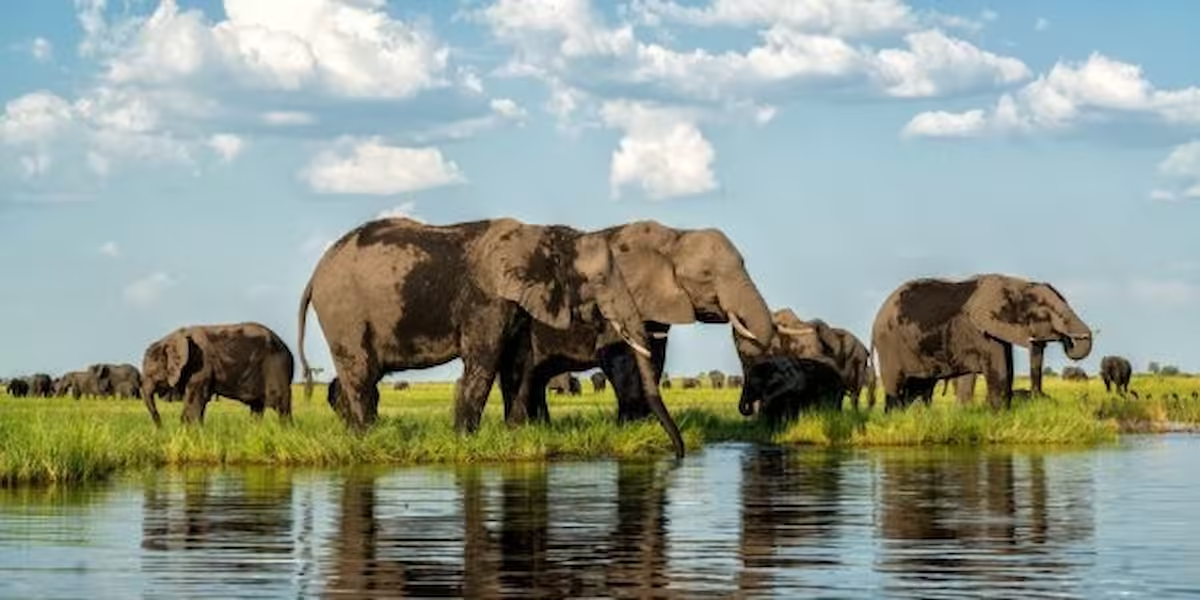
Okavango Delta
UNESCO World Heritage inland delta. Mokoro channels, 120+ mammals, elephants to lions in one wetland system.
Chobe National Park
11,700 km² of riverfront, woodland and floodplains. Elephants and buffalo from both vehicle and boat.
Moremi Game Reserve
Floodplains, lagoons, woodland and grassland. The transition between wet and dry habitats with predators.
Central Kalahari
52,800 km² of vast open spaces, grasslands and desert-adapted wildlife. Solitude at the scale of the Kalahari.
Okavango Delta Safari
The Okavango is an inland delta fed by water originating in the Angolan highlands. Instead of flowing into an ocean, the river spreads across the Kalahari Basin, creating a complex network of channels, lagoons, floodplains, islands, seasonal marshes, and dryland habitats. The Botswana Tourism Organisation describes the Delta as containing three broad geographical areas: the Panhandle, the Delta itself, and surrounding drylands. Its size changes seasonally, and the relationship between water availability and wildlife movement is central to the safari experience.
The Delta supports elephants, buffalo, giraffes, zebras, hippos, crocodiles, lions, leopards, cheetahs, rhino, antelopes, and numerous bird species — more than 120 mammal species and hundreds of bird species in the wider Okavango region.
One of the most distinctive ways to explore the Delta is by mokoro, a traditional dugout canoe. A mokoro excursion is fundamentally different from a conventional game drive: travelers move quietly through channels bordered by reeds and aquatic vegetation, creating opportunities to observe smaller wildlife, birds, aquatic habitats, and landscapes from water level. Game drives remain an important part of many Okavango itineraries, particularly in the drier areas and private concessions where wildlife can move between wetlands and woodland.
Chobe National Park Safari
The Chobe River is especially important during the dry season, when elephants and buffalo congregate around the available water. This creates one of the major differences between a Chobe safari and a conventional land-only safari: wildlife can be observed both from vehicles and from boats. A Chobe River safari allows visitors to observe elephants entering the water, hippos, crocodiles, waterbirds, and other animals along the riverbanks. The perspective from the water can also provide different photographic opportunities from those available during a game drive.
Savuti, Linyanti & Central Kalahari
The Savuti and Linyanti areas are associated with seasonal water systems, woodland, grassland, and predator-prey interactions — elephants, buffalo, lions, leopards, wild dogs, hyenas, and numerous antelope species. The Central Kalahari Game Reserve provides a dramatic contrast to the Okavango Delta: enormous open spaces, grasslands, scrub, and pans. After good summer rainfall, parts of the reserve can support concentrations of wildlife around fresh grazing. The experience here is less about permanent waterways and more about vast landscapes, solitude, and desert-adapted wildlife.
Country deep-dive
Namibia Safari
Namibia gives a Southern Africa safari a completely different character — desert landscapes, wildlife, photography, road journeys, and enormous open spaces.
The country's protected-area network covers more than 17% of its terrestrial area, according to Namibia's Ministry of Environment and Tourism. The network includes Etosha, Namib-Naukluft, Skeleton Coast, and several other national parks.
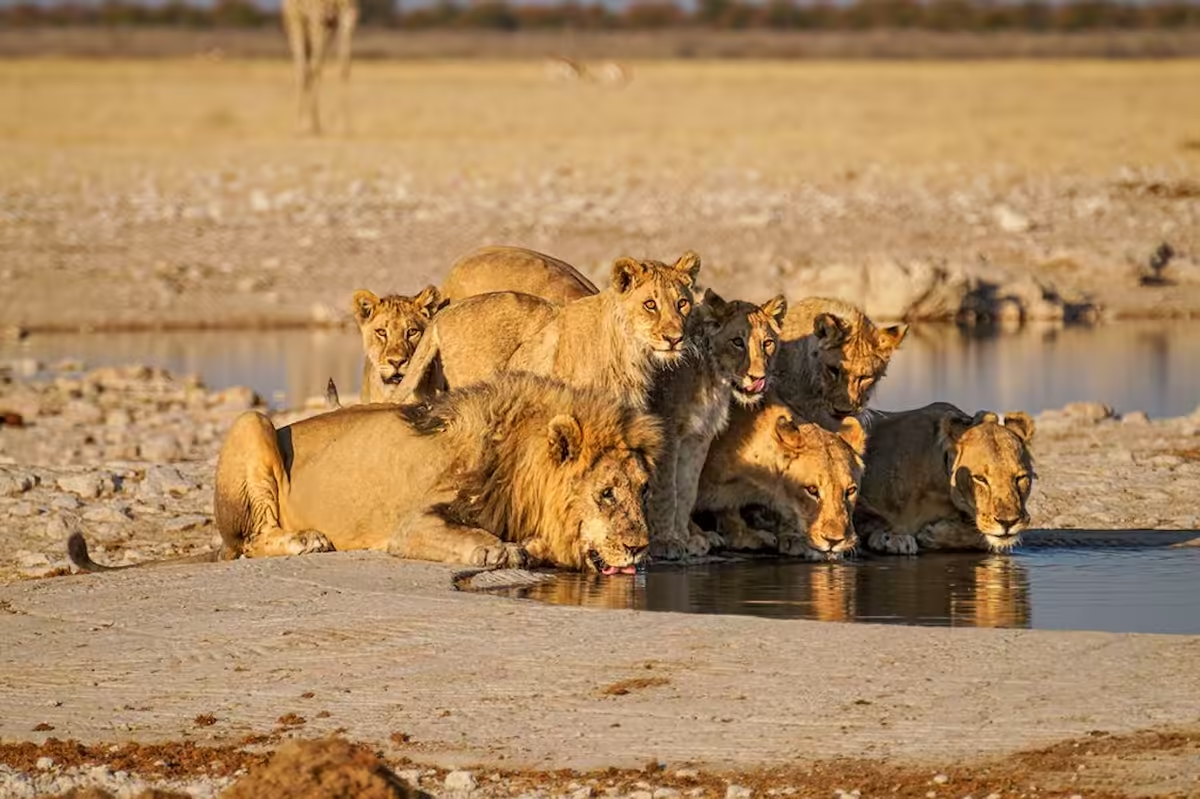
Etosha National Park
114 mammal species, 400+ birds. Floodlit waterholes, black and white rhino, and the enormous Etosha Pan.
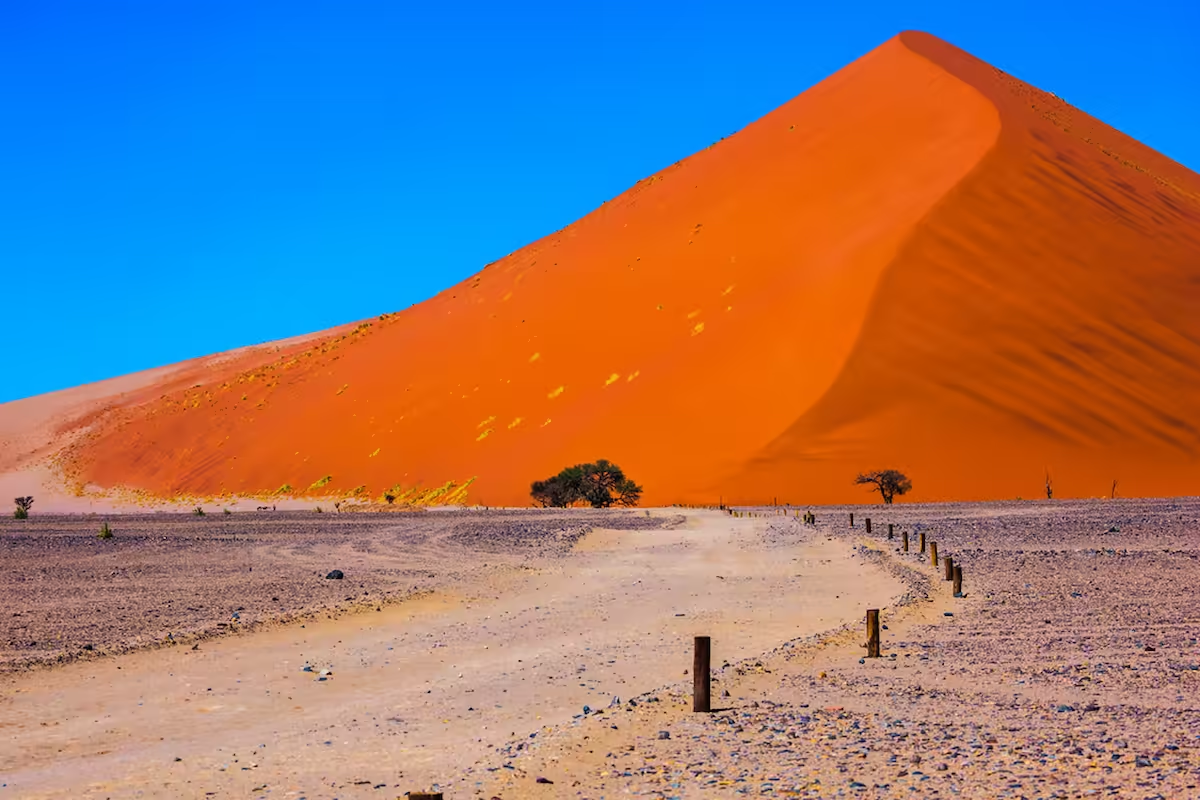
Sossusvlei & Namib Desert
Enormous red-orange sand dunes, Dead Vlei, Sesriem Canyon and the Namib Sand Sea.
Skeleton Coast
Desert, Atlantic coastline, rugged terrain, shipwrecks, and desert-adapted elephants along riverine landscapes.
Desert-Adapted Wildlife
Elephants, rhinos, lions and giraffes surviving in extremely arid environments — a conservation success story.
Etosha National Park Safari
Etosha is Namibia's flagship wildlife destination, dominated by the enormous Etosha Pan — a shallow salt depression surrounded by open landscapes, woodland, and waterholes. The park is home to elephants, black and white rhinoceros, lions, leopards, giraffes, zebras, springbok, wildebeest, gemsbok, and the endemic black-faced impala.
Waterholes are particularly important to wildlife viewing. During dry periods, animals may congregate around reliable water sources, giving visitors opportunities to observe several species within the same area. Some waterholes are also floodlit, allowing visitors to observe nocturnal wildlife under controlled conditions. Etosha also has an important conservation history, including black-rhino conservation and the reintroduction of white rhinoceros.
Sossusvlei, Skeleton Coast & Desert-Adapted Wildlife
Sossusvlei is not a conventional wildlife destination, but it is one of the major reasons travelers choose Namibia. The area is famous for enormous red-orange sand dunes, dry pans, stark landscapes, and distinctive desert scenery. The Namib-Naukluft region includes the Namib Sand Sea, Sossusvlei, Dead Vlei, Sesriem Canyon, and the Naukluft mountains. Combining Sossusvlei with Etosha creates a very different journey from a traditional safari circuit.
Skeleton Coast combines desert, Atlantic coastline, rugged terrain, wildlife, and historic shipwrecks. The country's tourism authorities highlight the presence of large mammals in desert environments, including elephants, rhinos, lions, and giraffes. This makes a Namibia safari more than a conventional Big Five trip — it can also be an opportunity to understand how wildlife survives under extreme environmental conditions.
Country deep-dive
South Africa Safari
South Africa offers one of the most developed and diverse safari tourism systems in Southern Africa — large public national parks, private game reserves, luxury lodges, self-drive options, guided safaris, and extensive tourism infrastructure.
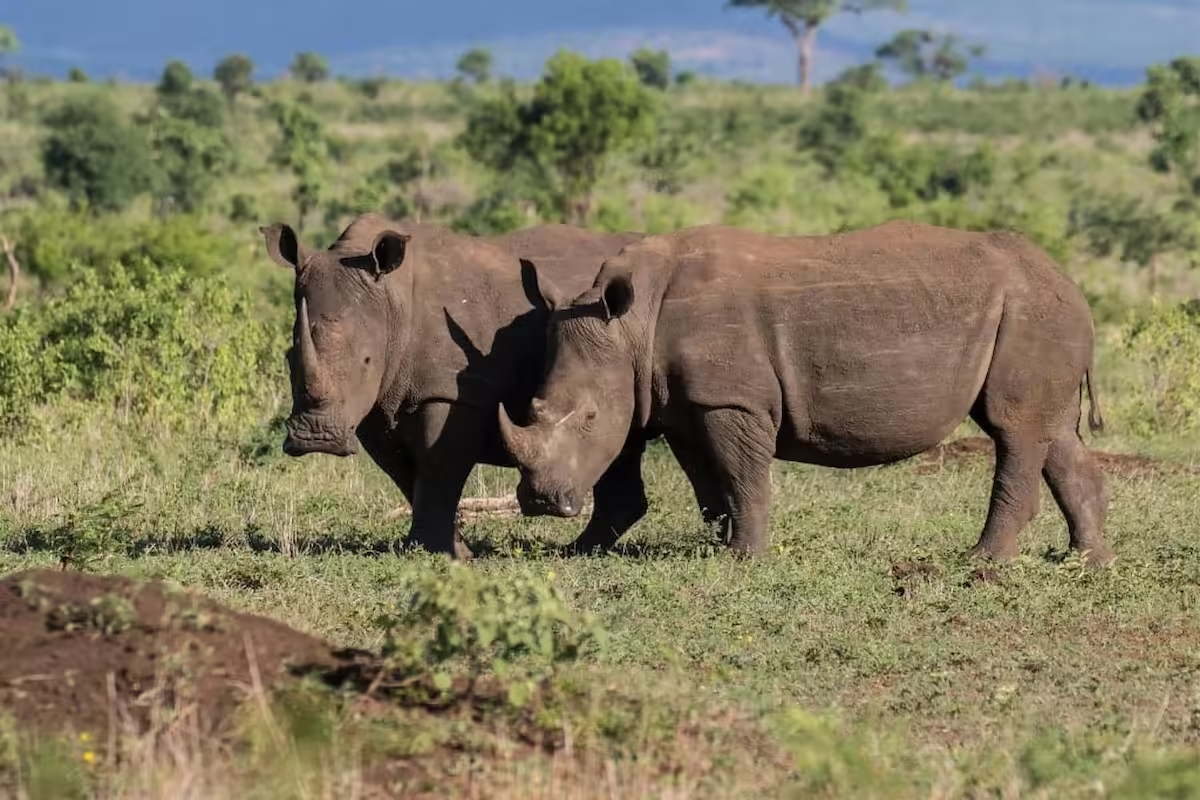
Kruger National Park
Nearly 2 million hectares. 140+ mammal species, hundreds of birds, the Big Five, and archaeological heritage sites.
Private Game Reserves
Smaller vehicles, guided walks, exclusive wilderness. Luxury, personalized guiding, and intimate safari settings.
Safari + Cape Town
Table Mountain, Winelands, Garden Route, whale watching — combine wildlife with a broader holiday.
Self-Drive Safaris
Extensive self-drive opportunities in national parks. SANParks notes many Kruger visitors travel independently.
Kruger National Park Safari
Kruger is the centerpiece of many South Africa safari itineraries. SANParks describes Kruger as covering nearly two million hectares and supporting exceptional biological diversity — hundreds of bird species and more than 140 mammal species, alongside significant cultural and archaeological resources.
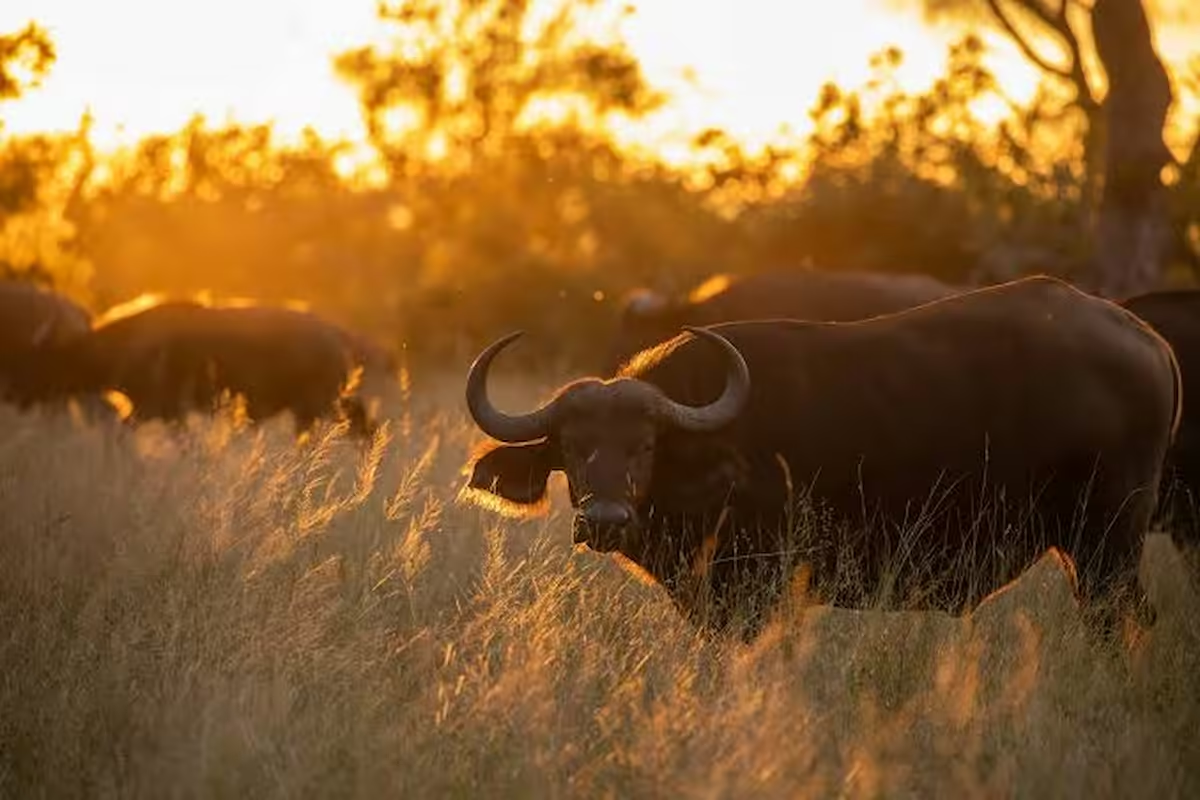
The Big Five (lion, leopard, African elephant, African buffalo, rhinoceros) are well known here, but focusing only on the Big Five overlooks the broader ecological experience. Kruger supports giraffes, zebras, hippos, wild dogs, hyenas, antelopes, monkeys, birds, reptiles, amphibians, fish, and a large variety of plant species. The park also contains archaeological and cultural heritage sites, including rock paintings and locations such as Masorini and Thulamela.
Game Drives & Private Reserves
Kruger offers both self-drive and guided safari options. Guided morning and sunset drives provide visitors with the opportunity to explore the park with trained guides who interpret animal behavior, tracks, vegetation, and the wider ecosystem. A knowledgeable guide can help explain why an animal is behaving in a particular way, how species interact, how seasonal changes affect wildlife, and how the ecosystem functions as a whole.
Private reserves in South Africa can provide a different safari experience from public national parks — smaller vehicles, guided activities, walking experiences, and accommodation designed around a more exclusive wilderness experience. Private reserves appeal to travelers prioritizing luxury, personalized guiding, photography, or a more intimate safari setting.
Botswana vs Namibia vs South Africa for Safari
The differences between the three countries become clearer when comparing the experiences they provide.
Botswana
- Okavango Delta wetlands
- Mokoro excursions
- Boat safaris
- Remote wilderness
- Chobe elephants
- Wildlife-rich private concessions
- Kalahari landscapes
- Luxury safari camps
Especially for travelers who want to experience how water shapes wildlife distribution.
Namibia
- Etosha National Park
- Sossusvlei
- Namib Desert
- Skeleton Coast
- Desert-adapted wildlife
- Dramatic landscapes
- Road-trip style travel
- Photography
Especially for travelers who want to combine wildlife with dramatic landscapes.
South Africa
- Kruger National Park
- Private game reserves
- Big Five wildlife
- Self-drive safaris
- Broad range of accommodation
- Family safari options
- Cape Town combinations
- Well-developed infrastructure
Especially for travelers wanting convenience, variety, and city pairing.
Big Five Safari in Southern Africa
The term Big Five safari refers to opportunities to see the lion, leopard, elephant, buffalo, and rhinoceros. These animals are among the most sought-after species on African safaris, but a responsible itinerary should never promise that all five will be seen.
Wildlife is unpredictable. Animals move according to food, water, territory, weather, breeding cycles, and interactions with other species. Even in an area with healthy populations, sightings can vary from one day to another.
South Africa's Kruger supports all five of the traditional Big Five. Namibia's Etosha supports lion, rhino, elephant and giraffe (officially identified sources). For travelers specifically seeking rhinoceros, leopard, or wild dog, destination selection becomes particularly important.
Wildlife You Can See
Southern Africa supports an extensive range of mammals and birds. The important point is that wildlife differs between ecosystems.
Large Mammals
African elephant, lion, leopard, cheetah, African buffalo, black rhinoceros, white rhinoceros, African wild dog, spotted hyena.
Grazers
Giraffe, zebra, wildebeest, kudu, sable, roan antelope, impala, springbok, gemsbok, waterbuck, warthog.
Aquatic & Reptiles
Hippo, crocodile, and the aquatic wildlife of the Okavango and Chobe river systems.
Birdlife
Chobe has 460+ recorded species. Okavango and Kruger support hundreds of bird species each. Meerkats in the Kalahari.
Southern Africa Safari Activities
A Southern Africa safari can involve far more than conventional game drives.
Game Drives
The foundation of most itineraries. Open-sided 4x4 vehicles in Botswana; guided and self-drive in Kruger.
Mokoro Safari
A signature Okavango experience — quiet travel through shallow waterways, channels and aquatic habitats.
Boat Safari
Particularly valuable in Okavango and Chobe. Elephants, hippos, crocodiles and waterbirds from the river.
Walking Safari
Interpret animal tracks, plants, insects, bird calls and geological features — things easy to miss from a vehicle.
Birdwatching
Chobe (460+ species), Okavango wetlands, Kruger hundreds of species — a major birding destination.
Photography Safari
Consider light, vehicle access, landscape, water, seasonal vegetation, distance from animals, guide experience.
Night Drives
Some private reserves and parks offer nocturnal wildlife viewing — including floodlit Etosha waterholes.
Scenic Flights
Aerial views of the Okavango Delta, desert landscapes and the scale of the Kalahari.
Best Time for a Southern Africa Safari
There is no single best time because Botswana, Namibia, and South Africa experience different seasonal patterns. The right travel period depends on what you want to see and where you want to go.
Dry Season
Often popular for game viewing — animals concentrate around remaining water and vegetation becomes less dense. But the Okavango's flood cycle is influenced by Angolan rainfall, not local rain.
Wet / Green Season
Grasslands become greener, temporary water sources appear, migratory birds become prominent. Excellent landscape photography. Don't assume dry season is the only worthwhile period.
Country Differences
Namibia requires a different approach — temperatures, road conditions, waterhole concentrations. Kruger can be visited year-round; SANParks recommends careful planning because the park is extremely large.
Southern Africa Safari Cost
The cost varies significantly. A useful comparison should consider the entire travel package rather than simply the nightly accommodation rate.
The final price can be influenced by: number of countries, safari days, accommodation category, private or shared safari, domestic/regional flights, transfers, park and conservation fees, guide services, game drives, boat safaris, mokoro excursions, walking activities, meals, travel season, and group size.
Botswana's remote safari model can involve light aircraft transfers and high-end camps, while Namibia can involve longer road journeys and South Africa offers a wider range of public and private safari accommodation. A "Botswana safari price" and a "South Africa safari price" should not be compared without examining what is included.
Luxury & Family Safaris
Luxury Southern Africa Safari
Private or semi-private game drives, exclusive camps, large tented suites, private decks, fine dining, personalized guiding, bush breakfasts, sundowners, spa treatments, private vehicles, and scenic flights. Botswana is particularly associated with luxury wilderness camps in remote areas, while South Africa has a large selection of luxury lodges and private reserves. Namibia offers high-end desert lodges positioned around the Namib and Etosha.
Family Southern Africa Safari
South Africa offers a particularly broad range of family-oriented safari options. Botswana can provide exceptional wilderness experiences, but some remote camps have age restrictions for walking and water-based activities. Namibia works well for families who enjoy road travel and landscapes, although distances between destinations should be considered carefully. A shorter number of well-selected destinations can often be more comfortable than changing camps every night.
How Long Should a Southern Africa Safari Be?
3–5 Days
One primary destination: a short Kruger safari or focused Botswana wilderness experience.
6–9 Days
More than one area without an excessively rushed itinerary.
10–14 Days
Okavango + Chobe, Etosha + Sossusvlei, Kruger + Cape Town, or Botswana + Victoria Falls.
2–3 Weeks
Multi-country: Botswana-Namibia-South Africa. Longer does not automatically mean better.
Tip: Travel time between destinations needs to be considered alongside the number of nights spent actually experiencing each area.
Botswana, Namibia & South Africa Combined
A possible structure for a multi-country Southern Africa safari:
1. Botswana
Begin with the Okavango Delta for wetland wildlife, mokoro excursions, boat experiences, and game drives. Continue toward Chobe for river-based wildlife viewing and large elephant concentrations.
2. Namibia
Travel onward to Etosha for game viewing around its waterholes. Then continue to the Namib Desert and Sossusvlei for a dramatic change of scenery.
3. South Africa
Finish with Kruger National Park or a private reserve for Big Five wildlife. A longer itinerary can then continue to Cape Town for urban, coastal, culinary, and cultural experiences.
Southern Africa Safari & Victoria Falls
Victoria Falls can be incorporated into many Southern Africa itineraries — accessible from the Zambezi region and complementing a Botswana safari particularly well.
A popular route: Okavango Delta → Chobe → Victoria Falls — a journey combining wetlands, wildlife, river experiences, and one of Africa's most famous natural landmarks. Botswana Tourism identifies Kasane as a gateway to nearby Victoria Falls in Zimbabwe and Livingstone in Zambia.
Safari Accommodation
Safari Lodges
Permanent properties with rooms or suites, dining facilities, lounges, and other guest services.
Tented Camps
More immersive wilderness atmosphere — from simple accommodation to highly luxurious permanent camps.
Mobile Camps
Move according to the safari route, providing a more flexible wilderness experience.
Public Rest Camps
Kruger offers numerous public rest camps as well as private options — a broad accommodation range for very different budgets.
Getting Around
4x4 Vehicles
The primary form of transport for many game drives.
Small Aircraft
Remote Botswana camps connected through light aircraft, reducing long overland journeys.
Road Safaris
Namibia is particularly suited to road-based itineraries with many destinations connected by vehicle.
Self-Drive
South Africa provides extensive self-drive opportunities, particularly in Kruger. SANParks notes many visitors travel independently.
Conservation
A safari destination depends on healthy ecosystems. Tourism contributes to conservation through park fees, employment, private concessions, community programs, and funding for wildlife management.
- Botswana: 38% of land area devoted to protected areas and wildlife management
- Namibia: 17%+ protected — community-based natural-resource management and human-wildlife conflict management
- South Africa: SANParks identifies conservation and socio-economic transformation as central components of its work
Responsible safari behavior: Follow guide instructions, maintain appropriate distances, never feed wild animals, avoid disturbing animals, respect park regulations, avoid littering, respect local communities, support responsible operators, follow photography guidelines, and avoid purchasing illegal wildlife products.
Photography
Botswana
Wildlife, water, reflections, wetlands, elephants, predators, and dramatic African skies.
Namibia
Landscape photography — dunes, deserts, salt pans, mountains, and enormous open spaces.
South Africa
Extensive wildlife photography opportunities, especially in Kruger and private reserves.
Photographers should consider more than camera equipment: vehicle position, guide quality, time of day, habitat, season, animal behavior, and time spent in each location all have a major impact.
What to Pack
Clothing
- Lightweight clothing
- Warm layers for early mornings
- Comfortable walking shoes
- Sun hat
- Lightweight rain jacket
Essentials
- Sunglasses & sunscreen
- Insect repellent
- Binoculars
- Camera & extra batteries
- Power bank
- Reusable water bottle
- Small daypack
- Personal medication
Country Notes
Namibia: Sun protection and hydration are critical in the arid environment. Botswana: Consider light-aircraft luggage restrictions if flying between remote camps.
Health & Safety
- Consult a travel-health professional before departure regarding vaccinations, malaria prevention, and destination-specific considerations
- Kruger National Park is in a malaria-endemic area — SANParks advises visitors to consult a travel doctor
- Remain inside designated vehicles where required, follow guide instructions, avoid approaching animals
- Never assume an apparently calm animal is harmless
- A safari is an opportunity to observe wildlife in its natural environment, not to interact directly with it
Responsible Tourism
Responsible tourism should be considered when selecting both an itinerary and a safari operator.
Travelers can support conservation and local communities by choosing tourism businesses that employ local staff, respect wildlife regulations, support conservation programs, work responsibly with communities, minimize environmental impact, avoid unethical wildlife interactions, and follow protected-area regulations.
Namibia's conservation framework specifically includes community-based natural-resource management and human-wildlife conflict management, demonstrating the importance of involving communities in conservation.
How to Choose Between Botswana, Namibia & South Africa
Instead of asking which country is universally best, consider which experience matches your priorities.
Choose Botswana if you want:
- Okavango Delta
- Mokoro safaris
- Water-based wildlife
- Remote wilderness
- Large elephant populations
- Luxury safari camps
- Low-density wilderness
Choose Namibia if you want:
- Etosha National Park
- Sossusvlei
- Namib Desert
- Skeleton Coast
- Desert-adapted wildlife
- Dramatic landscapes
- Road-trip travel & photography
Choose South Africa if you want:
- Kruger National Park
- Big Five wildlife
- Private reserves
- Self-drive options
- Broad accommodation range
- Family safari options
- Cape Town combinations
Planning Your Southern Africa Safari
The strongest itineraries begin with the experience rather than the map.
1. Wildlife Priorities
Elephants, predators, rhino, wild dogs, birds, or a broad range?
2. Travel Dates
Seasonal conditions influence wildlife viewing, landscapes, water levels, and accommodation prices.
3. Safari Style
Private? Shared? Self-drive? Luxury lodge? Tented camp? Mobile camp?
4. Preferred Activities
Mokoro → Okavango. Desert → Namibia. Big Five → Kruger or private reserve.
5. Travel Pace
Avoid itineraries that spend more time moving between airports than experiencing destinations.
6. Budget & Interests
Accommodation, flights, park fees, activities, and season all influence the total price. Include beaches, cities, wine regions or waterfalls from the start.
Frequently Asked Questions
What is the best country for a Southern Africa safari?
Botswana, Namibia, and South Africa offer different safari experiences rather than identical products. Botswana is strongly associated with the Okavango Delta and water-based wilderness experiences; Namibia combines wildlife with desert landscapes; and South Africa provides extensive game-viewing opportunities, including Kruger and private reserves.
Is Botswana or South Africa better for safari?
The two destinations offer different experiences. Botswana is particularly associated with remote wilderness, the Okavango Delta, Chobe, and water-based safari activities, while South Africa offers extensive national-park and private-reserve options, including Kruger and self-drive opportunities.
Is Namibia good for a safari?
Yes. Namibia combines wildlife viewing in destinations such as Etosha with some of Southern Africa's most distinctive desert landscapes. Etosha supports more than 100 mammal species and hundreds of bird species, while the Namib-Naukluft region includes Sossusvlei and other major desert attractions.
Can I combine Botswana, Namibia and South Africa?
Yes. The three countries can form a multi-country Southern Africa safari, although the itinerary should be designed around flight connections, road distances, available time, season, and the destinations that matter most to the traveler.
How many days do I need?
A short trip of three to five days can focus on one destination. A 10- to 14-day journey provides more flexibility, while two to three weeks or more can make a multi-country itinerary more practical.
Where can I see the Big Five?
Kruger National Park is one of the major destinations for the traditional Big Five, while Botswana also provides opportunities to encounter these species in different ecosystems. Namibia supports several Big Five species, although wildlife composition differs between parks.
What is the best time to go?
There is no single best period for the entire region. The ideal dates depend on the country, specific park, wildlife priorities, landscape interests, and whether you want dry-season game viewing or greener wet-season scenery.
How much does it cost?
Safari prices vary according to accommodation, season, transportation, park fees, activities, number of travelers, and whether the safari is private or shared. Remote luxury camps can have very different costs from public camps or self-drive itineraries.
Can I combine with Victoria Falls?
Yes. Victoria Falls can be incorporated into several Southern Africa itineraries. Botswana's Kasane area provides an important access point for travelers visiting Victoria Falls and the wider Zambezi region.
Is it suitable for families?
Yes, although the appropriate destination and accommodation depend on children's ages and the activities planned. South Africa offers a particularly broad range of family-oriented safari options, while Botswana's remote camps may have age restrictions for particular activities.
Start Planning Your Southern Africa Safari
Whether you are looking for a Botswana safari, Namibia safari, South Africa safari, Okavango Delta safari, Kruger safari, Big Five safari, desert adventure, luxury wilderness experience, or a multi-country Southern Africa journey, the region provides a wide range of ways to build a safari around your interests.
The most effective itinerary is not necessarily the one that includes the largest number of countries. It is the one that gives enough time to experience the environments that matter most to you.