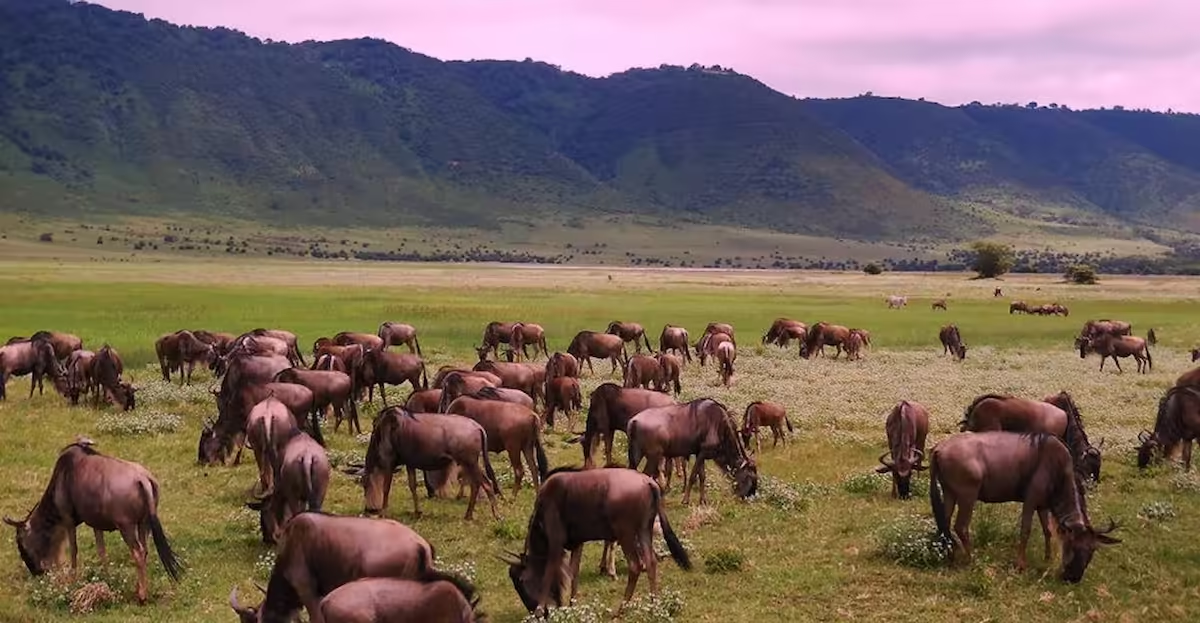
7-Day Tanzania Migration Safari
Arusha → Tarangire → Central Serengeti → Northern Serengeti → Ngorongoro → Arusha.
From $3,200

Migration planning hub
More than a million wildebeest moving through the Serengeti-Mara: where the herds are by month, and how to plan a safari around them.
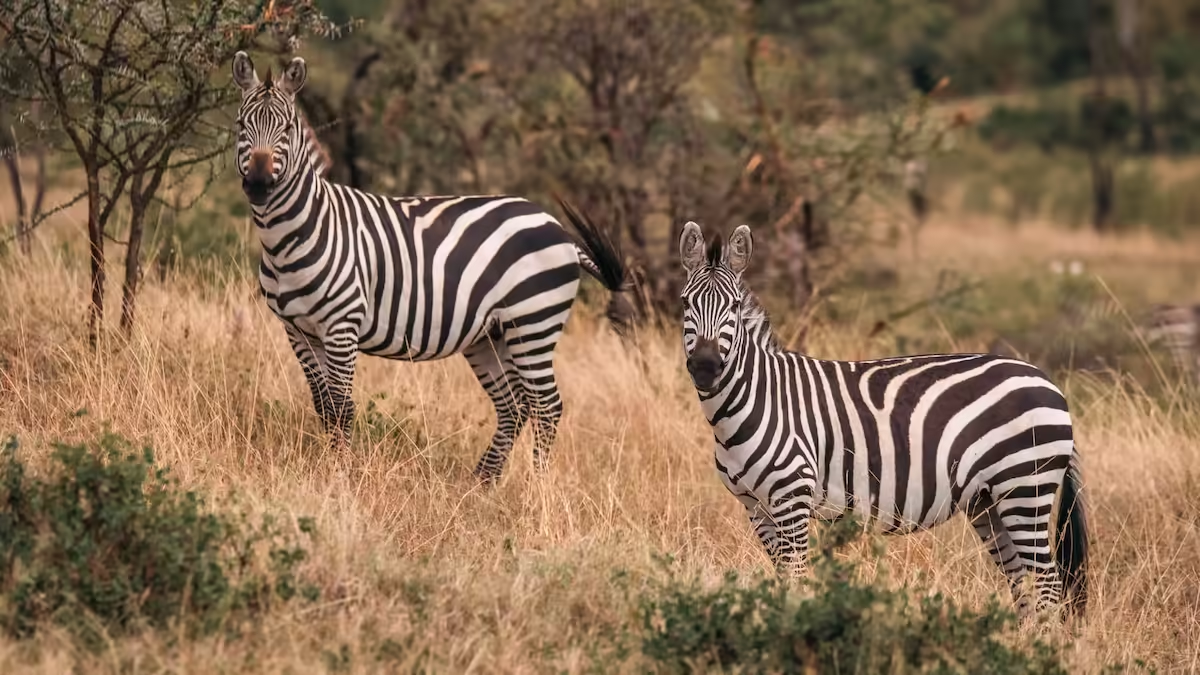
The Great Migration is the annual movement of huge herds of wildebeest, zebra and gazelles through the connected Serengeti-Mara ecosystem of Tanzania and Kenya.
It is not one event, on one date, in one place. The migration is a continuous annual cycle of roughly 1,000 kilometres, involving more than a million wildebeest and hundreds of thousands of other grazing animals. The ecosystem runs beyond the boundaries of Serengeti National Park, into the surrounding protected areas and across the Kenya-Tanzania border, which is why the southern plains of Tanzania and the Maasai Mara in Kenya are two ends of the same system rather than two separate wildlife destinations.
The herds move because of a short list of needs:
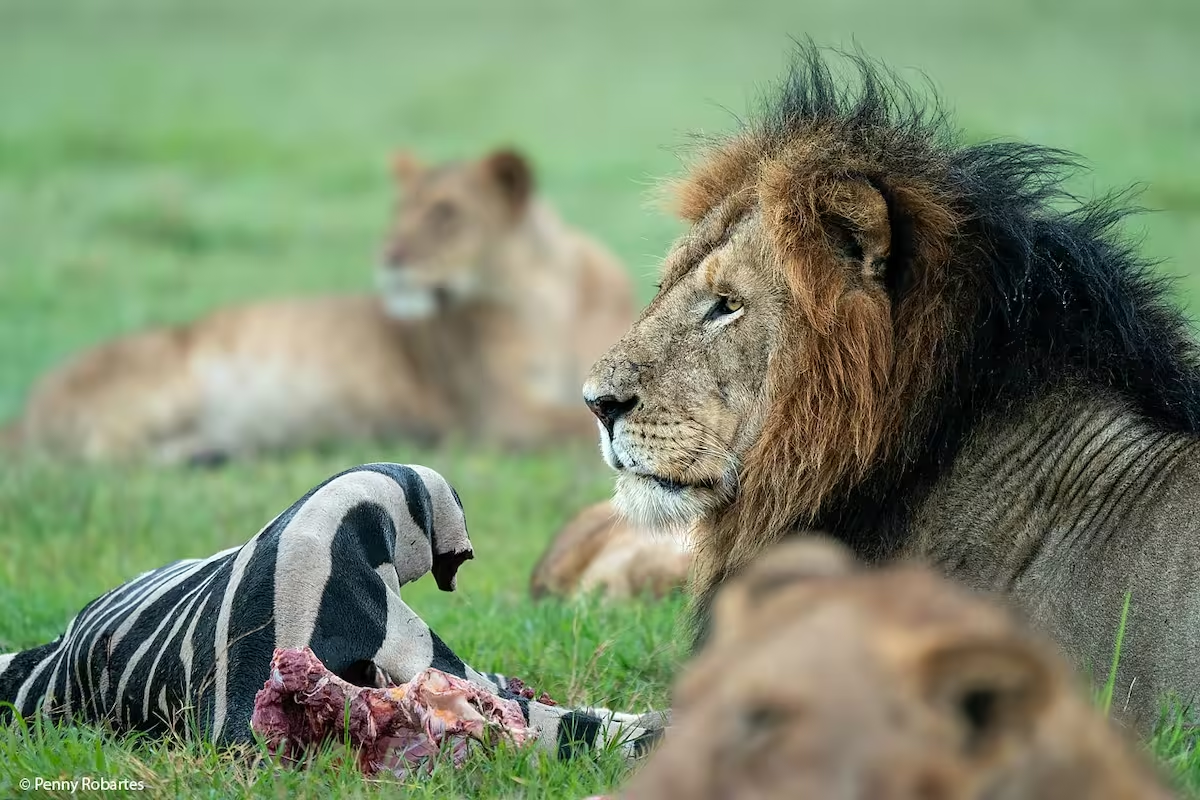
They are followed the whole way by predators:
The result is not one spectacle but an entire year of changing wildlife concentrations. That distinction matters when planning a safari: calving, the northward push and the river crossings each require a different region and a different month. The year-round cycle → Where to go → Migration FAQs →
Three itineraries we build most often. Every other duration and route sits in the collection below.
Arusha → Tarangire → Central Serengeti → Northern Serengeti → Ngorongoro → Arusha.
From $3,200
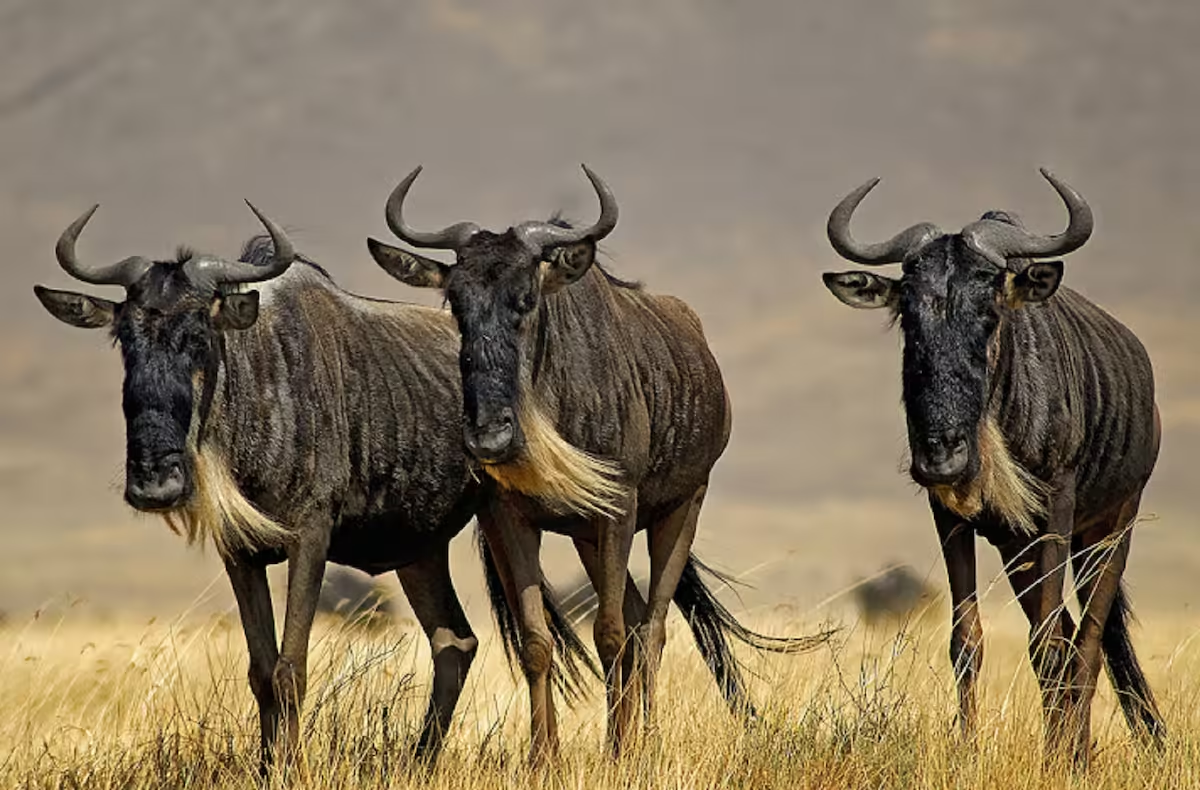
Arusha → Ndutu and the southern Serengeti → Ngorongoro → Arusha, built for the calving season.
From $2,300
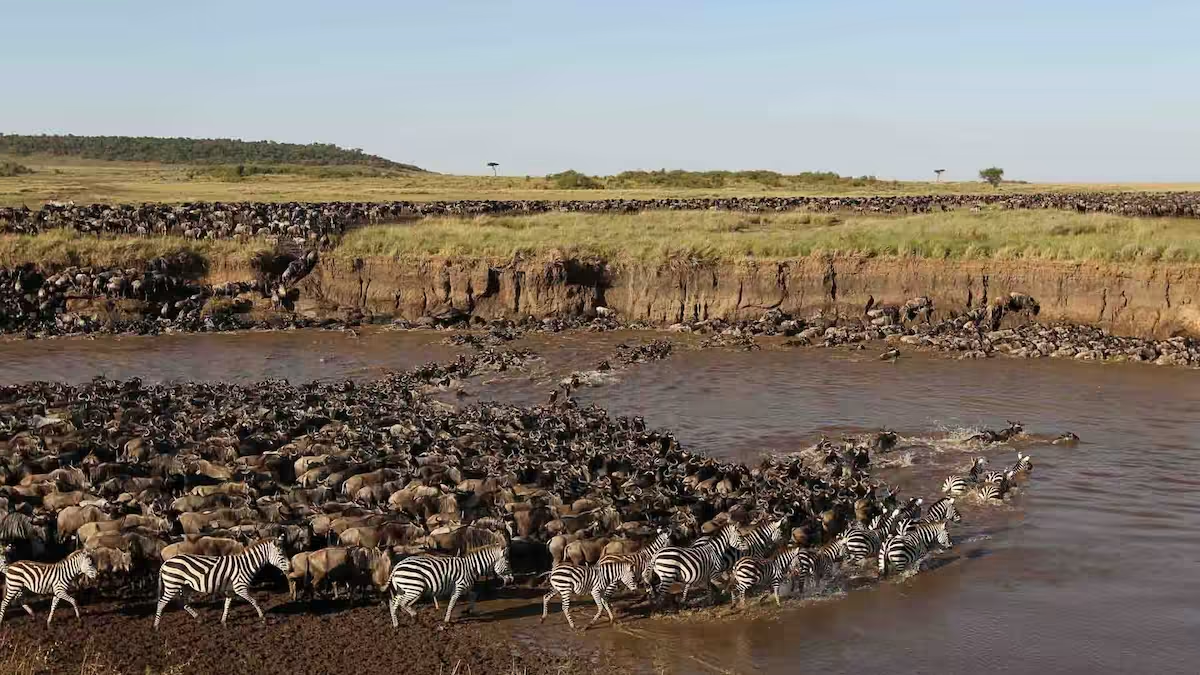
Arusha → Serengeti → Ngorongoro → Zanzibar, with the safari portion adjusted to the expected location of the herds.
From $4,750
The animals move throughout the year. The only real question is where they are in a given month.
One of the biggest misconceptions about a migration safari is that the migration is only the Mara River crossings. Crossings are one part of a cycle that never stops running, so a trip built only around a crossing date is a trip built on the smallest part of the story.
A simplified annual cycle looks like this:
Exact timing changes from year to year, because rainfall decides where fresh grazing becomes available. January and February are the core calving months, and June to October is the dry-season window when the herds are in the north of the ecosystem.

For travelers interested in newborn wildebeest and predator activity, the southern Serengeti and the adjoining Ngorongoro plains are the areas that matter.
The herds gather on the short-grass plains whenever conditions give them enough to eat, and this period is known for:
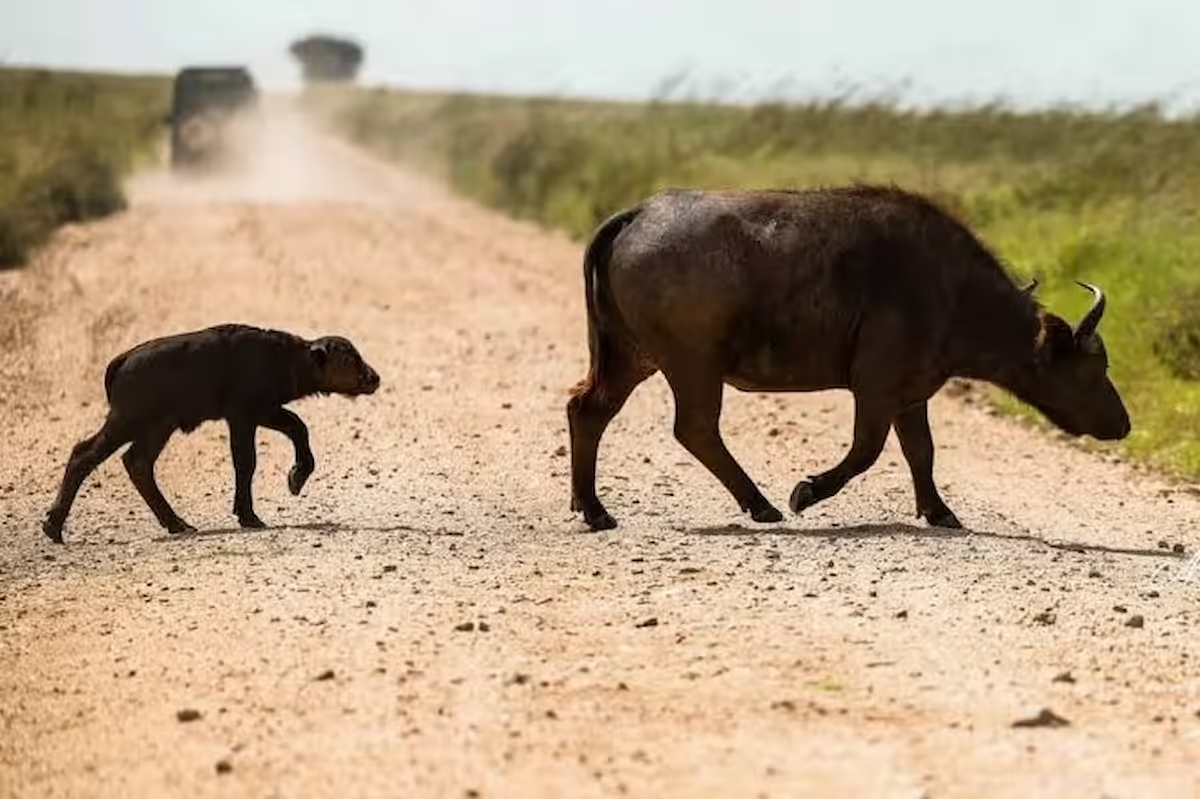
Calving season is not simply about seeing babies. Concentrating vulnerable young animals creates intense predator-prey interactions involving lions, cheetahs, hyenas and other predators, which is why the same small area can produce a different sighting on every drive.
Consider:
The precise location of the herds changes with rainfall and grazing conditions, so the camps that work in a strong season can be in the wrong place in a weak one. Calving itinerary ideas →
As the short-grass areas become less productive, the migration begins moving north and west.
This period can be overlooked, because it does not have the same attention as calving or river crossings. It can still provide a different safari, and often a quieter one:
The migration does not suddenly leave one region and appear in another. It is a gradual movement across the ecosystem, and the route between two zones is often where the animals are on a given morning.
Around June, migration activity can shift toward the western Serengeti.
The Western Corridor becomes particularly interesting as the herds move toward the areas associated with the Grumeti River before continuing north. A June itinerary therefore often combines migration viewing with the wider wildlife of the Serengeti, and may move through the central Serengeti, then the western Serengeti and then the northern Serengeti rather than sitting in one area for the whole trip.
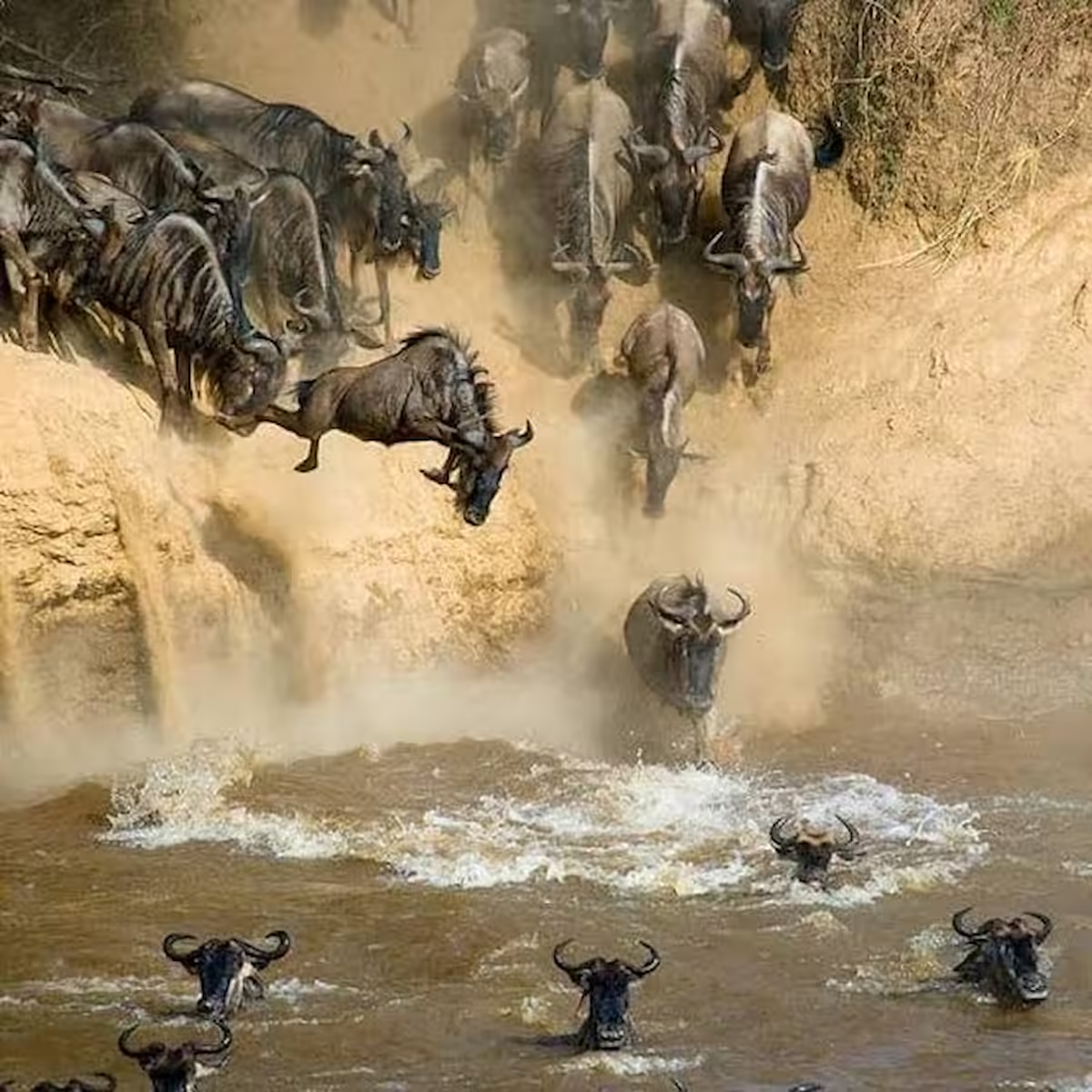
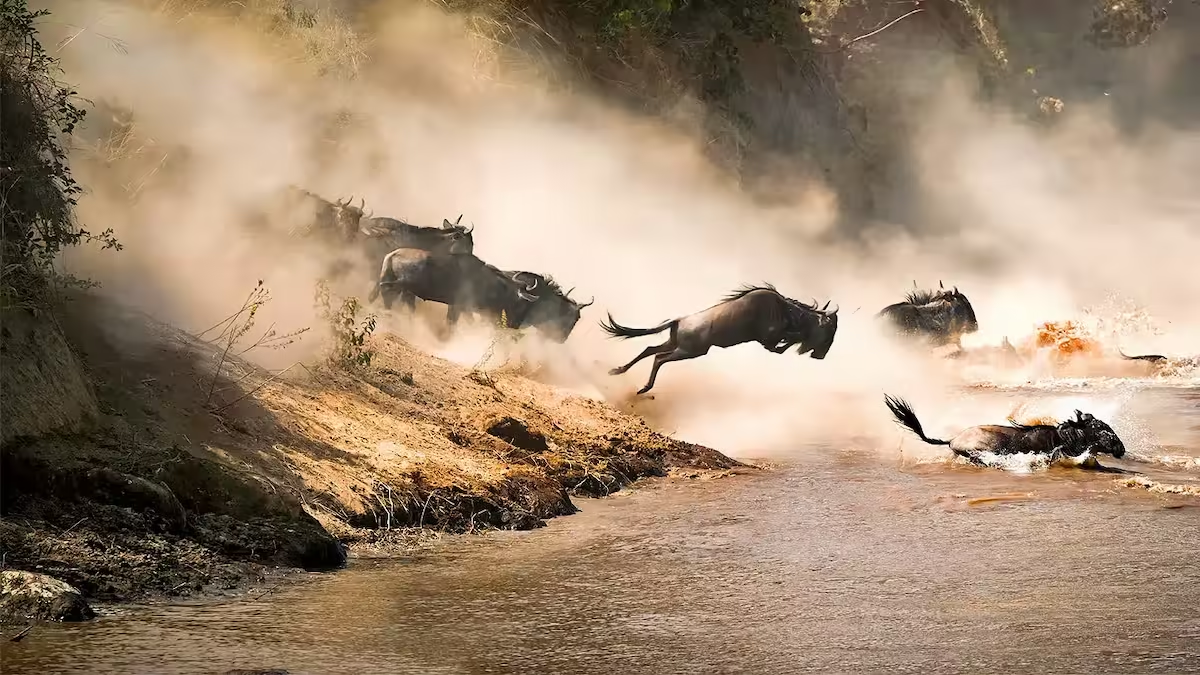
This is the period most commonly associated with the famous Mara River crossings.
As the herds move north, they reach the northern Serengeti and can eventually cross between Tanzania and Kenya. The spectacle can involve:
There is no guaranteed Mara River crossing date. The animals may gather at a riverbank for hours or days without crossing, may cross at one location and later cross again elsewhere, and may also turn back.
Serengeti National Park has specific rules for crossing viewing, including designated vehicle positions and a ban on approaching animals during a crossing. This is why a migration safari should be planned around time spent in the migration area, rather than around a promise of a particular crossing on a particular day. How crossings actually work →
The herds begin moving south again as seasonal rains return to the southern Serengeti.
This creates another opportunity to experience the migration without focusing entirely on the Mara River:
By December the cycle is progressing toward the southern plains again, which is where the next calving season will begin. The month-by-month table →
Everything on this page, grouped. Jump straight to the part you need.
There is no single best migration destination. The right location depends on which part of the migration you want to experience.

The southern section is the one to use for calving and for the short-grass plains:
Central Serengeti works in almost any month:
The western section matters when the herds are on that side of the ecosystem:
The northern section is where the migration season peaks:
The Maasai Mara forms the northern part of the wider Serengeti-Mara ecosystem.
It is the section that matters when the migrating herds are in Kenya, although the Mara is also a strong wildlife destination outside the migration period. The Mara is contiguous with the Serengeti and part of the same ecosystem that supports the annual movement of wildebeest and zebra, so a border crossing is a change of park rules rather than a change of wildlife. Kenya safaris →
The migration belongs to the Serengeti-Mara ecosystem, not to one country. The herds naturally cross the Tanzania-Kenya border.
Tanzania gives you access to several different phases of the migration inside one country:
Kenya is associated with the northern section of the migration and with the Mara River crossings, and the main migration destination there is the Maasai Mara. Tanzania migration safaris →
The answer depends on:
For a trip focused on calving, southern Tanzania is more relevant. For the northern migration and the Mara River, northern Tanzania and Kenya become more relevant. Safari by month →
A planning framework, not a wildlife timetable. Rainfall and grazing conditions influence the actual location of the herds each year.
| Month | Main migration area | What to look for |
|---|---|---|
| January | Southern Serengeti / Ndutu | Calving, newborns, predators |
| February | Southern Serengeti / Ndutu | Peak calving activity |
| March | Southern Serengeti | Calves, predators, herds beginning to move |
| April | Central / Western Serengeti | Herd movement, green landscapes |
| May | Western Serengeti | Large herds, movement north |
| June | Western Serengeti | Grumeti region, migration movement |
| July | Northern Serengeti / Mara | Herds moving north, possible crossings |
| August | Northern Serengeti / Maasai Mara | River-crossing season |
| September | Northern Serengeti / Maasai Mara | River crossings and northern herds |
| October | Northern Serengeti / Maasai Mara | Later northern migration |
| November | Serengeti | Return south |
| December | Central / Southern Serengeti | Movement toward calving areas |
The table tells you where to be, not what you will see on a given morning. Two weeks either side of a row is still usually inside the same phase. Choosing your month →
There is no single best month for everyone. Choose the month based on the experience you want.
Whichever month you choose, the itinerary should place you in the right region for that phase and leave enough nights to absorb a change in the weather. Improving your odds →
Length decides how much of the ecosystem you can cover and how tolerant the plan is of animals moving somewhere else.
Possible for travelers with limited time, but the shorter the trip, the more dependent you are on the location of the herds when you arrive. It works best as a focused single-region safari.
A practical duration for concentrating on one migration area while allowing several game drives in it, which is usually enough time for the plan to survive one change of weather.
Provides greater flexibility and can combine different Serengeti regions, so the route can follow the phase rather than committing to one zone from the start.
Suitable for travelers wanting a more comprehensive migration experience, potentially combining:
Useful for combining Tanzania and Kenya, particularly when the itinerary includes several ecosystems rather than concentrating exclusively on the migration. Itinerary ideas →
Five structures we build most often. Each one is adjusted to the month you travel and to where the herds are expected to be.
Built around the southern migration and the calving season.
Short, focused and aimed at the short-grass plains. 5-Day migration safari →
A broader Tanzania safari that incorporates migration viewing.
Three zones in a week, which is usually the point where a migration safari starts to work reliably. 7-Day migration safari →
Designed to give travelers several days in the northern migration area rather than relying on a single river-crossing opportunity.
Four consecutive nights in the north is the honest way to approach crossings. 8-Day migration safari →
The safari portion can be adjusted according to the expected migration location.
The clearest way to do wildlife and beach in one trip without either half feeling rushed. 10-Day migration safari →
This structure is the one to use when travelers want to experience both sides of the Serengeti-Mara ecosystem.
Two countries, one ecosystem, and no need to choose between the Kenyan and Tanzanian sides. 12-Day Kenya and Tanzania safari →
A migration safari combined with Zanzibar works particularly well for travelers who want wildlife first and an Indian Ocean beach holiday after.

A typical journey runs Arusha → Serengeti → Ngorongoro → Zanzibar, and the number of Zanzibar nights can be adjusted according to the overall trip length.
For example:
The beach portion should not be treated as an afterthought. Flight schedules, airport transfers and accommodation location all need to be incorporated into the itinerary, because a badly placed transfer can cost you a whole day on either end. Safari and Zanzibar →
The migration is one of Africa's major wildlife photography subjects, and photography-focused planning is different from planning an ordinary safari.
A photographer may need:
A shared vehicle can work, but the photographer must also consider the interests and schedule of the other travelers in it. For serious wildlife photography, a private migration safari provides greater control over when you leave, when you return and how long you stay at a sighting. Photographic safaris →
Families can experience the migration, but the itinerary should be designed around the ages of the children.
For younger children, consider:
Older children and teenagers may particularly enjoy the migration, because it gives them a chance to learn about:
Activity age restrictions vary between parks, camps and specific experiences, so these should be checked before booking rather than assumed. Family safaris →
The migration can also form the wildlife portion of a honeymoon.
A honeymoon itinerary might combine:
Possible experiences include:
The migration itself remains the wildlife focus, while the accommodation and the beach extension provide the more private side of the honeymoon. Honeymoon safaris →
A normal Serengeti safari can focus on the park as a whole. A migration safari adds an objective: following the seasonal movement of the herds.
That distinction matters, because it means the route is decided by where the animals are likely to be rather than by which lodges are available. Before the itinerary exists, these questions have to be answered:
The answer to those questions determines the itinerary. Back to the guide →
The Mara River crossing is one of the most famous scenes associated with the Great Migration, and also one of the easiest experiences to misunderstand.
A river crossing is not guaranteed simply because you visit the northern Serengeti in August or September. The animals can:
Even when a crossing occurs, it may happen suddenly, and the vehicles nearest the bank will not always be the ones that saw it first.
Serengeti National Park requires vehicles to remain in designated viewing areas and prohibits approaching animals during crossings. The rules are intended to reduce pressure on the animals and protect the ecosystem, so a responsible migration safari puts wildlife welfare and park regulations ahead of getting closer to the action. Why the migration is unpredictable → Responsible migration travel →
Rainfall drives the availability of fresh grazing, which means the migration does not operate like a train timetable.
A safari company can use historical patterns and current information to plan the route, but nobody can honestly guarantee:
What can be planned is time in the right ecosystem during the appropriate seasonal window. That is the realistic way to approach a migration safari, and it is also the reason the itinerary should be built around nights in the region rather than around a single promised sighting. How crossings work →
There are several practical ways to improve your opportunity.
Spend more nights in the migration area - three nights in the right area gives you more opportunities than arriving for one night and leaving immediately.
Choose accommodation carefully - a camp's location can make a major difference, and two properties twenty minutes apart can have completely different seasons.
Avoid overloading the itinerary - constantly moving between destinations reduces the amount of time available for wildlife viewing.
Travel at the right time - match the destination to the migration phase rather than to a fixed set of attractions.
Use experienced guides - a knowledgeable guide can interpret tracks, animal behavior, recent sightings and local conditions.
Consider a private vehicle - more flexibility can be particularly useful for photographers and travelers with a specific migration objective.
None of these guarantees a sighting. Together they change the odds in your favor. How long to stay →
Accommodation can range from a permanent lodge to a camp that moves with the season, and the location matters more than the star rating.
Suitable for travelers who prioritize:
A closer-to-nature safari atmosphere while still offering comfortable accommodation, usually with canvas walls, en-suite bathrooms and a dining tent.
These camps can move seasonally to remain closer to the migration route. That makes them particularly attractive for travelers whose primary objective is following the herds rather than staying in one fixed location.
Can combine:
The most important question is not simply how luxurious the accommodation is. It is: where is it located relative to the wildlife experience you want?
There is no universal migration safari price.
Cost depends on:
A river-crossing safari during a peak travel period can cost considerably more than a shoulder-season Serengeti itinerary, and a private vehicle will also generally change the cost structure compared with joining a group departure. For an accurate quote, the itinerary needs to be priced around the actual dates and travel style rather than around a headline number. Package prices →
Both formats work. They answer different questions.
| Feature | Group migration safari | Private migration safari |
|---|---|---|
| Vehicle | Shared | Exclusive |
| Guide | Shared | Dedicated |
| Cost per traveler | Usually lower | Usually higher |
| Flexibility | More limited | Greater |
| Photography | Possible | More control |
| Group interaction | Yes | Your own travelers |
| Route changes | Limited | Easier |
| Best suited to | Solo travelers, couples and budget-conscious travelers | Families, photographers, honeymooners and private groups |
A private safari does not mean ignoring park regulations. Wildlife viewing rules still apply in either format. Group safaris → Private safaris →
A Serengeti safari can be excellent at any time of year, because the park has resident wildlife and predators.
A migration safari adds a specific objective: following the seasonal movement of the herds. If you travel outside the major migration periods, you can still experience:
The Serengeti is one of the continent's major Big Five destinations, and the wider ecosystem contains one of the largest remaining natural large-mammal migrations in the world. Choosing between the two comes down to whether your dates and priorities actually need the migration, or whether a resident-wildlife safari is the better fit. Tanzania safaris →
The scale of the migration means responsible tourism matters.
A responsible safari should:
At Mara River crossings, designated viewing sites and vehicle limits exist to reduce harmful tourism practices. The goal is not simply to see the migration. It is to experience it without compromising the ecosystem that makes it possible. Crossing rules →
Where to focus, depending on who is traveling and what the trip is for.
| Traveler | Suggested focus |
|---|---|
| First-time safari | Central Serengeti and the migration area |
| Photographer | Private vehicle and a longer Serengeti stay |
| Honeymoon | Private Serengeti, luxury camp and Zanzibar |
| Family | Private vehicle and comfortable pacing |
| Solo traveler | Small-group or joining safari |
| Luxury traveler | Premium or mobile camp with a private vehicle |
| Budget traveler | Group safari and carefully selected accommodation |
| River-crossing focused | Northern Serengeti / Maasai Mara |
| Calving focused | Southern Serengeti / Ndutu |
| Kenya and Tanzania | Maasai Mara and northern Serengeti |
Most trips combine two or three of these rows. Itinerary ideas →
Six more timed itineraries, covering calving season, the western and northern herds and the two-country route. The exact route should be adjusted to the month of travel and to the migration experience you are after.
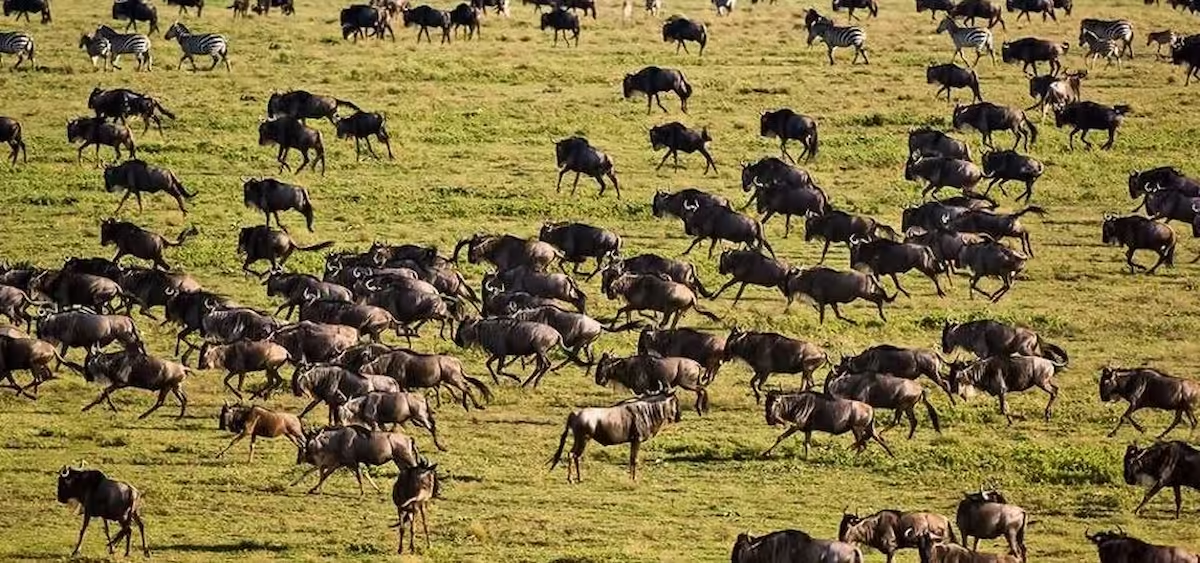
Arusha → Central and southern Serengeti → Arusha. The shortest workable migration safari.
From $1,800
Arusha → Central Serengeti → Northern Serengeti → Arusha, following the herds as they move north.
From $2,750
Arusha → Central Serengeti → Northern Serengeti → Ngorongoro → Arusha, with four nights in the north.
From $3,650
Nairobi → Maasai Mara → Nairobi, timed for the northern herds and the crossing season.
From $3,200
Amboseli, the Rift Valley lakes and the Masai Mara in one loop, with the Mara on herds-dependent days.
From $2,850
Nairobi → Maasai Mara → Northern Serengeti → Central Serengeti → Ngorongoro → Arusha → Zanzibar.
From $5,950
The deeper guides this page draws on. Open the one that matches the month or the phase you are planning for.
For the country framing around the same ecosystem, see the Africa migration safaris overview, the Tanzania migration packages and the Great Migration safari overview. Back to the guide →
The migration takes place throughout the year. Different parts of the Serengeti-Mara ecosystem become important at different times as the herds respond to rainfall, fresh grazing and water.
There is no single best month. January to March is associated with calving in the southern Serengeti, while July to October is commonly associated with the northern migration and potential Mara River crossings.
River crossings generally occur during the northern migration period, particularly around July to October, but the exact timing is unpredictable.
No. A responsible safari operator should not guarantee a specific crossing on a particular day.
The migration moves through the Serengeti-Mara ecosystem of Tanzania and Kenya.
No. The ecosystem crosses the Tanzania-Kenya border, with the Serengeti forming the southern portion and the Maasai Mara the northern portion.
January can be excellent for travelers interested in the calving season in the southern Serengeti.
February is strongly associated with calving in the southern Serengeti and can offer opportunities to see newborn wildebeest and increased predator activity.
June can be a good period for following the herds as they move through the western and central Serengeti, although the precise location depends on conditions.
August falls within the northern migration period and can provide opportunities for Mara River crossings, but crossings are never guaranteed.
September can still be a strong period for northern Serengeti and Maasai Mara migration viewing, with the exact location of the herds varying from year to year.
Yes. A Tanzania migration safari can be followed by a Zanzibar beach stay.
Five to seven days gives more flexibility than a very short safari, while eight to twelve days allows a broader migration itinerary and a possible Zanzibar or Ngorongoro extension.
Yes, with appropriate planning. A private vehicle, suitable accommodation and a realistic daily driving schedule can make a migration safari more manageable for families.
The two formats serve different travelers. A private vehicle provides more control over timing and route, while a group safari can reduce the cost per traveler and provide a social experience.
The most important decision is not simply when you can see the Great Migration. It is which part of the migration you want to experience. From newborn wildebeest in the southern Serengeti to enormous herds moving through the northern plains and the possibility of a Mara River crossing, each period offers a different safari. Tell us your dates, who is travelling and what you want from the trip, and the route can be built around them. Plan around the migration, not around a fixed calendar promise.