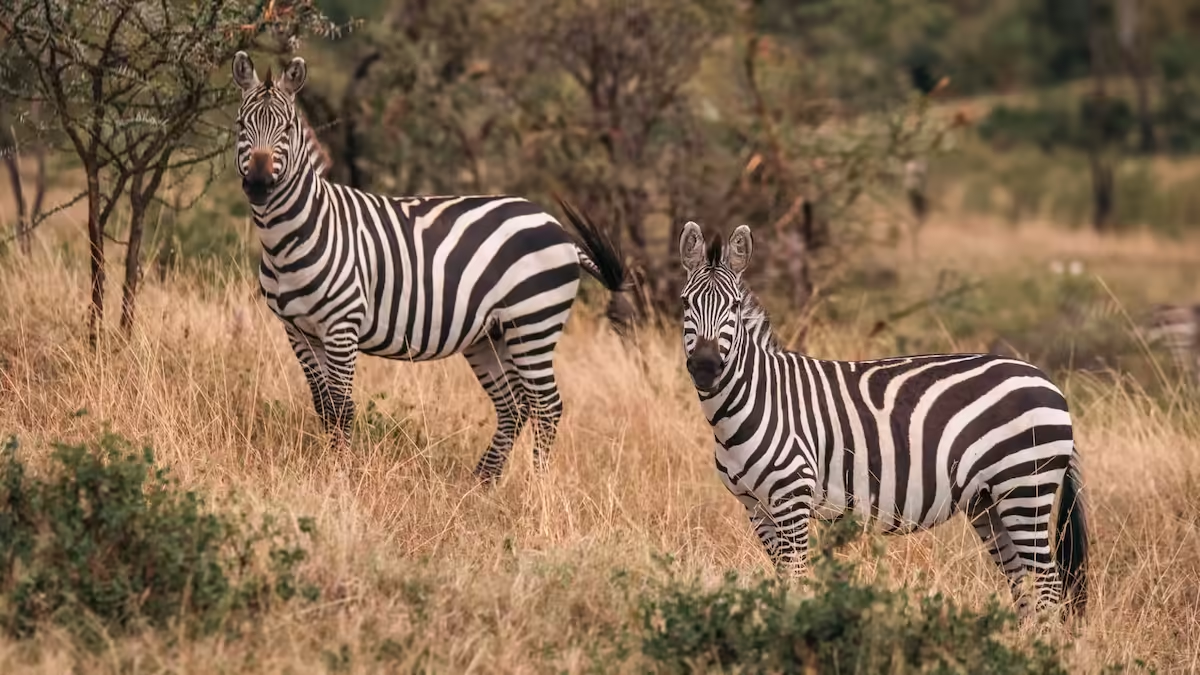

Kenya | Park guide
Amboseli National Park
Great tuskers under Kilimanjaro - Africa's most photographed elephants.
Amboseli National Park is one of Kenya's most visually distinctive safari destinations. Located in Kajiado County near the Tanzania border, the park is famous for its large elephant herds, open plains, wetlands and the dramatic backdrop of Mount Kilimanjaro.
Kenya Wildlife Service describes Amboseli as a premier destination for close encounters with large elephant herds and identifies its combination of grass plains, acacia woodland, thorn bush, swamps and marshes as the foundation of its wildlife diversity.
The park itself covers approximately 392 km², but the ecological system used by wildlife is much larger. Amboseli's elephants and other animals move between the park, surrounding community lands and northern Tanzania. This makes Amboseli an excellent example of why a national park boundary does not necessarily represent the boundary of a wildlife ecosystem.
Safaris visiting Amboseli National Park
What makes Amboseli National Park special?
Amboseli has a very different identity from Maasai Mara.
Its signature combination is:
Elephants + Kilimanjaro + wetlands + open plains + Maasai culture.
The park is particularly famous for elephant photography because the animals can often be seen against Mount Kilimanjaro when atmospheric conditions are favorable.
Other attractions include:
- Large elephant herds
- Mount Kilimanjaro views
- Amboseli Lake basin
- Swamps and wetlands
- Flamingos and other waterbirds
- Lions
- Buffalo
- Giraffes
- Zebras
- Wildebeest
- Eland
- Hippos
- Over 400 recorded bird species
- Maasai cultural experiences
- Observation Hill
KWS identifies Amboseli as one of Kenya's Important Bird Areas and records more than 400 bird species, including numerous raptors.
Where is Amboseli National Park?
Amboseli is located in Kajiado County in southern Kenya, close to the Kenya-Tanzania border.
The ecosystem extends beyond the national park into community lands and across the border into northern Tanzania.
KWS research places the broader Amboseli-Magadi census area within the much larger Amboseli-West Kilimanjaro-Magadi-Natron cross-border ecosystem.
This cross-border relationship is especially important for elephants.
Mount Kilimanjaro and Amboseli
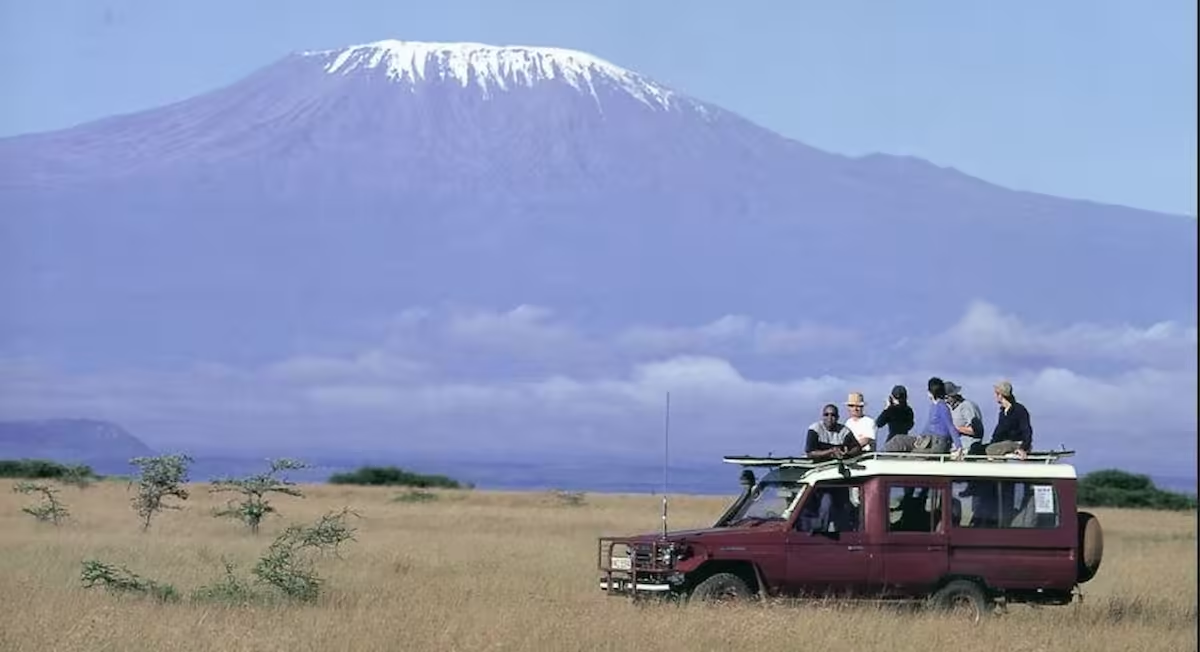
Mount Kilimanjaro is the visual icon of Amboseli.
The mountain rises across the border in Tanzania and can dominate the skyline when atmospheric conditions are clear.
KWS describes Kilimanjaro as rising to approximately 5,896 metres and identifies its snow-covered summit as one of Amboseli's most important photographic backdrops.
The mountain's presence creates some of East Africa's most recognizable safari images:
Elephant + acacia + open plain + Kilimanjaro.
But there is an important practical point.
Kilimanjaro is not visible every day.
Cloud and atmospheric conditions can obscure the mountain, particularly later in the day.
Travelers hoping for the classic mountain-and-elephant photograph should therefore be prepared for early starts and flexible expectations.
The Amboseli basin
The park sits within a broad basin associated with seasonal wetlands, grasslands and the temporary Lake Amboseli.
The landscape can appear surprisingly dry despite supporting wetlands.
This is partly because water reaches the park through underground systems associated with Kilimanjaro.
KWS explains that water filtered through volcanic rock from the Kilimanjaro massif feeds springs and wetlands in the Amboseli area.
This creates an unusual ecological contrast:
dry savanna surrounding surprisingly productive wetlands.
Amboseli's habitats
The park contains a mixture of:
- Open grass plains
- Acacia woodland
- Thorn bush
- Seasonal lake basin
- Swamps
- Marshes
- Wetlands
- Rocky areas
Different animals use these habitats differently.
Elephants move through woodland and wetland areas.
Grazers exploit grasslands.
Hippos use wet areas.
Birds concentrate around wetlands.
Predators follow concentrations of herbivores.
The Amboseli swamps
The swamps are among the most important ecological features of the park.
They provide water and green vegetation during periods when much of the surrounding landscape becomes dry.
This explains why wildlife can remain concentrated in Amboseli even when the wider ecosystem appears extremely arid.
The wetlands also provide habitat for birds and aquatic species.
Amboseli elephants
Why is Amboseli famous for elephants?
Elephants are the defining wildlife species of Amboseli.
The population has been studied continuously for decades, making the ecosystem one of the world's most important long-term elephant research sites.
The Amboseli Elephant Research Project began in 1972, and KWS's management documentation describes the population as one of the longest-studied elephant populations in the world.
This research has generated exceptional knowledge about:
- Elephant family groups
- Social relationships
- Reproduction
- Movement
- Habitat use
- Mortality
- Human-wildlife interactions
Amboseli's elephants do not stay inside the park
This is critical to understanding Amboseli.
The national park is only about 392 km², while the wider elephant ecosystem is much larger.
KWS's management documentation explains that elephants move between the park, surrounding Maasai group ranches and Tanzania.
This creates a conservation challenge.
Protecting elephants therefore requires protecting the landscapes they use outside the national park.
Elephant families of Amboseli
One of the special aspects of Amboseli's elephants is that individual families and animals have been monitored over many decades.
This makes the population particularly valuable for scientific research.
For safari travelers, it also means that elephant viewing can be more than a simple encounter with a large animal.
A knowledgeable guide can explain:
- Family relationships
- Age differences
- Calves
- Matriarchs
- Feeding behavior
- Social interactions
This makes Amboseli particularly rewarding for travelers who want to understand elephant behavior.
Other wildlife in Amboseli
Potential wildlife sightings include:
- Elephant
- Zebra
- Wildebeest
- Giraffe
- Buffalo
- Lion
- Leopard
- Cheetah
- Eland
- Grant's gazelle
- Thomson's gazelle
- Impala
- Oryx
- Warthog
- Hippo
- Hyena
- Ostrich
- Secretarybird
- Kori bustard
The 2021 Kenya wildlife census for the broader Amboseli-Magadi ecosystem recorded substantial populations of zebra, Grant's gazelle, wildebeest, giraffe and eland, alongside elephants and other species.
Predators in Amboseli
Amboseli supports several major predators.
These include:
- Lions
- Leopards
- Cheetahs
- Hyenas
However, the park's main strength is not predator density.
Travelers whose absolute priority is maximizing big-cat encounters may find Maasai Mara more suitable.
Amboseli's strength is the combination of elephants, landscape, wetlands and mountain scenery.
Lions. Lions occur in the Amboseli ecosystem and may be encountered during game drives. Their distribution is strongly influenced by prey and water. A lion sighting is possible, but the park should not be marketed as though every safari will produce the same predator density found in some areas of the Mara.
Leopards and cheetahs. Leopards are elusive and generally require patience. Cheetahs are associated with open areas where they can use their speed. Both species are present in the ecosystem, but sightings are less predictable than elephants. This is an important distinction when deciding between Amboseli and Maasai Mara.
Amboseli birdlife
Amboseli is a strong destination for birdwatchers.
KWS records more than 400 bird species, including approximately 40 birds of prey.
Potential sightings include:
- Flamingos
- Pelicans
- Egyptian geese
- African fish eagles
- Martial eagles
- Pygmy falcons
- Kingfishers
- Bee-eaters
- Ostriches
- Kori bustards
- Secretarybirds
- Various waterbirds
- Raptors
The wetlands make birding particularly productive. Birdwatching safaris →
During wetter conditions, the temporary lake basin can attract additional waterbirds and flamingos.
Lake Amboseli
Lake Amboseli is generally a temporary lake basin rather than a permanent open-water lake.
During periods of heavy rainfall, water can accumulate across the basin.
This can transform the landscape and attract waterbirds, including flamingos.
During dry periods, the basin can become a dramatic open expanse of dry lakebed and dust.
The contrast between wet and dry conditions is one of the reasons Amboseli changes so dramatically through the year.
Observation Hill
Observation Hill is one of Amboseli's important visitor viewpoints.
It provides broad views across the park and surrounding ecosystem.
From the elevated viewpoint, travelers can appreciate:
- Wetlands
- Open plains
- Wildlife concentrations
- Kilimanjaro
- Surrounding community landscapes
KWS also notes cultural history associated with Observation Hill and the Ndorobo community.
It is therefore more than simply a viewpoint.
Maasai culture in Amboseli
The Amboseli ecosystem is deeply connected with Maasai pastoral communities.
Maasai people and livestock are an integral part of the surrounding landscape.
UNESCO's tentative World Heritage documentation describes Amboseli as a landscape where pastoralism, wildlife and ecological processes have coexisted for generations and identifies the ecosystem as a UNESCO Man and Biosphere Reserve.
Cultural experiences can include:
- Visits to manyattas
- Traditional knowledge
- Livestock culture
- Beadwork
- Local history
- Conservation discussions
As with any cultural tourism, the experience should be respectful and community-connected rather than staged solely for tourists.
The wider Amboseli ecosystem
The park is only the protected core of a much larger ecological landscape.
The wider system includes:
- Community lands
- Wildlife dispersal areas
- Seasonal grazing areas
- Elephant corridors
- Kilimanjaro ecosystem connections
- Cross-border Tanzania landscapes
KWS's wildlife census identifies the broader Amboseli-Magadi landscape as part of a cross-border ecosystem extending into northern Tanzania.
This makes Amboseli a particularly strong case study in landscape-scale conservation.
Conservation challenges
The major conservation challenge is balancing:
wildlife + pastoralism + tourism + land-use change.
Elephants need large areas to move.
Pastoral communities need grazing land.
Agriculture and settlement can fragment wildlife habitat.
Tourism depends on healthy ecosystems.
Climate variability affects water and pasture.
These factors interact.
KWS's current strategic framework identifies habitat fragmentation, human-wildlife conflict and climate change among the broader pressures facing Kenya's wildlife.
Best time to visit Amboseli
Amboseli is a year-round destination, but different seasons produce different experiences.
June to October
The dry period can produce excellent wildlife concentrations around remaining water and wetlands.
The landscape is often dusty and dry, creating dramatic photography.
Elephants may be particularly easy to locate.
November to December
The short rains can bring fresh vegetation and changing conditions.
The landscape becomes greener.
January to February
Conditions can be relatively dry again, while wildlife remains accessible.
March to May
The long rains can transform the landscape.
However, some roads may become difficult and the mountain can be hidden by clouds.
Kenya Wildlife Service broadly identifies April–June as a long-rain low season for many Kenyan protected areas, while the broader dry periods tend to provide easier wildlife viewing.
When is the best time to see Kilimanjaro?
There is no guaranteed time because visibility depends on weather and atmospheric conditions.
However, early morning often provides better opportunities for clear mountain views.
The classic photograph of elephants with Kilimanjaro is therefore best approached with patience.
Do not structure an entire safari around one guaranteed mountain photograph.
Instead, plan several opportunities.
Activities in Amboseli
Game drives
Game drives are the main activity.
The combination of elephants, wetlands and open plains makes the experience visually different from many other Kenyan parks.
Photography
Amboseli is one of Africa's iconic wildlife photography destinations.
Particularly strong compositions include:
- Elephant + Kilimanjaro
- Elephant families
- Elephants in dust
- Wildlife around wetlands
- Flamingos
- Giraffes
- Zebras
- Sunrise over the plains
The open landscape provides excellent opportunities for environmental wildlife photography.
Birdwatching
With more than 400 recorded species, Amboseli is valuable for birdwatchers.
Wetlands should receive particular attention.
A specialist birding safari can spend more time around swamp and lake habitats rather than focusing exclusively on large mammals.
Cultural tourism
Cultural visits provide opportunities to learn about Maasai pastoralism and the relationship between people, livestock and wildlife.
This can add considerable depth to a short Amboseli safari.
Walking experiences
Walking opportunities depend on the location and authorization.
Inside the national park, visitors must follow KWS rules and remain in designated areas or with authorized guides.
Walking outside the park in appropriate community conservation areas can provide a different experience focused on tracks, plants and landscape interpretation. Walking safaris →
Balloon safaris
Balloon experiences have been offered in the Amboseli ecosystem and can provide an aerial perspective over the plains and wetlands.
Availability should be confirmed for the specific camp, date and current operating conditions. Balloon safari details →
Night experiences
Night wildlife experiences depend on the area and the applicable management rules.
Travelers should not assume that activities available in a private conservancy or community area are automatically available inside Amboseli National Park.
This distinction should be confirmed before booking.
How many days do you need in Amboseli?
One night
Possible, but rushed.
A one-night stay can provide an afternoon and morning game drive but gives little flexibility for weather or mountain visibility.
Two nights
Two nights is a strong minimum.
It gives travelers time for:
- Multiple game drives
- Elephant viewing
- Kilimanjaro photography
- Observation Hill
- Birding
- Optional cultural experience
Three nights
Three nights are ideal for travelers who want a slower experience or have strong photography and birding interests.
How to get to Amboseli
By road
KWS lists several road approaches.
The park can be accessed through:
- Iremito Gate
- Kimana Gate
- Meshanani Gate
KWS gives approximately 204 km from the Nairobi–Mombasa road via Emali to Iremito, while the Nairobi–Namanga route to Meshanani is approximately 220 km.
Road conditions vary by route and season.
By air
KWS identifies Kimana Airstrip as the park's principal tarmacked airstrip for light aircraft, with other airstrips serving the surrounding area.
Flying can be useful for luxury travelers and short itineraries.
Accommodation in Amboseli
Accommodation ranges from:
- Luxury lodges
- Tented camps
- Safari camps
- Budget accommodation
- Public camping
- Special campsites
KWS currently lists several accommodation options associated with the park and provides both camping and lodge-related information.
The most important consideration is location.
A property with views toward Kilimanjaro can be valuable for photographers.
A property closer to productive wetland areas can reduce driving time.
Luxury Amboseli safari
Luxury in Amboseli is strongly connected to location and views.
A premium itinerary can include:
- Private safari vehicle
- Expert guide
- Elephant-focused game drives
- Kilimanjaro-view accommodation
- Bush meals
- Sundowners
- Cultural experience
- Photography-focused routing
The best luxury safari is therefore not simply the most expensive lodge.
It is the one that gives the traveler the right combination of privacy, wildlife access and scenery.
Family safaris in Amboseli
Amboseli is excellent for families.
Elephants are visually impressive and easy for children to appreciate.
The open landscapes also make it easier for younger travelers to understand what they are seeing.
Families can combine:
- Shorter game drives
- Elephant viewing
- Birding
- Observation Hill
- Cultural experiences
- Scenic meals
Private vehicles are especially valuable for families because they allow greater flexibility.
Amboseli vs Maasai Mara
These are complementary destinations.
Choose Amboseli for:
- Elephants
- Kilimanjaro
- Wetlands
- Birdlife
- Photography
- Maasai culture
Choose Maasai Mara for:
- Lions
- Leopards
- Cheetahs
- Great Migration
- Big-cat photography
- Large predator-prey interactions
For a first Kenya safari, combining both creates an excellent contrast. Maasai Mara National Reserve guide →
Amboseli vs Serengeti
Amboseli is much smaller and has a different character.
Amboseli: elephants + Kilimanjaro + wetlands.
Serengeti: vast plains + migration + predators + enormous scale.
They should not be treated as substitutes. Serengeti National Park guide →
Sample 2-day Amboseli safari
Day 1: Travel from Nairobi to Amboseli. Afternoon game drive focusing on elephants, wetlands and the surrounding plains. Overnight in Amboseli.
Day 2: Early morning game drive for wildlife and possible Kilimanjaro views. Return for breakfast. Continue with a second wildlife activity or cultural experience before departure.
Sample 3-day Amboseli safari
Day 1: Nairobi → Amboseli. Afternoon game drive.
Day 2: Early morning elephant and Kilimanjaro-focused game drive. Midday rest. Afternoon game drive.
Day 3: Morning game drive or cultural experience. Visit Observation Hill where appropriate. Depart for Nairobi or continue toward another destination.
Who should visit Amboseli?
Amboseli is particularly suitable for:
- Elephant enthusiasts
- Wildlife photographers
- Families
- Honeymooners
- Birdwatchers
- First-time Kenya travelers
- Luxury safari travelers
- Travelers interested in Maasai culture
- Travelers who want Kilimanjaro scenery
- Short safari travelers
It is especially strong for anyone who wants iconic landscapes and elephants rather than migration alone.
Suggested internal links
Kenya Safari · Maasai Mara National Reserve · Tanzania Safari · Tarangire National Park · Serengeti National Park · Family Safaris in Africa · Honeymoon Safaris · Luxury African Safaris · Photographic Safaris · Tailor-Made Safaris · African Safari Packages.
FAQs
Will we actually see Kilimanjaro?
Most dawns in January to March: the mountain reveals at sunrise then clouds over by 10am. Build two mornings for insurance.
What is a great tusker?
An elephant whose tusks reach the ground - Amboseli shelters Africa's last significant population, monitored by researchers.
Is two days enough?
Yes: afternoon arrival drive, full second day, dawn third morning. Longer only for photographers staking swamp crossings.
How many days do we need in Amboseli National Park?
2 days.
When is the best time to visit Amboseli National Park?
January to March for clearest mountain views; June to October for dry-season game density.
What pairs well with Amboseli National Park?
Pair with the Mara for cats-plus-tuskers, or Tsavo for south-Kenya depth.
Is Amboseli National Park worth visiting?
Yes, especially if elephants and landscape photography are high on your list.
Amboseli's appeal comes from the combination of large elephant herds, open plains, wetlands and Mount Kilimanjaro. It provides a safari experience that is visually different from the Mara and Serengeti.
The park is also scientifically important because the Amboseli elephant population has been studied continuously for decades. This makes a guided elephant encounter particularly valuable for travelers who want to understand animal behavior rather than simply photograph the animals.
What is Amboseli famous for?
Amboseli is most famous for its elephants and the dramatic Mount Kilimanjaro backdrop.
The classic Amboseli image shows elephants crossing open plains with Kilimanjaro behind them.
However, the park is not simply a photographic backdrop. Its wetlands, seasonal lake basin, birdlife, Maasai culture and wider cross-border ecosystem are equally important to understanding the destination.
Can you see Mount Kilimanjaro from Amboseli?
Yes, Mount Kilimanjaro can be seen from Amboseli when weather and atmospheric conditions are favorable.
It is important, however, not to treat visibility as guaranteed. Clouds can obscure the mountain, particularly later in the day.
For photographers, early morning is often worth prioritizing because atmospheric conditions can provide better visibility. A two- or three-night stay also gives travelers several opportunities rather than relying on a single photograph opportunity.
When is the best time to visit Amboseli?
The dry season is generally strong for wildlife viewing because animals can become more concentrated around reliable water and wetland areas.
However, the best season depends on the traveler's priority. If the main goal is elephants and general wildlife, drier conditions are attractive. If the priority is green landscapes and birdlife, the wetter periods can be rewarding.
The long rains can also make some roads more challenging, so travelers should be prepared for changing conditions.
Is Amboseli good for elephants?
It is one of the strongest elephant destinations in Africa.
The population is particularly important scientifically because the Amboseli elephants have been monitored for decades. The long-running research program has generated extensive information about individual elephants, family groups, movement and behavior.
This makes Amboseli especially valuable for travelers who are fascinated by elephant social behavior.
Will I see elephants every day?
Elephant sightings are one of Amboseli's major strengths, but wildlife is never guaranteed.
Their distribution changes according to water, vegetation, weather and movement between the park and surrounding ecosystem.
The important point is that elephants use a landscape much larger than the national park. Some animals may be outside the park when others are inside.
A knowledgeable guide who understands current conditions can greatly improve the chances of finding them.
Why are there wetlands in such a dry landscape?
Amboseli receives water through underground systems associated with Mount Kilimanjaro.
KWS explains that water filtered through volcanic rock reaches the Amboseli area and feeds springs and wetland systems.
This creates one of the park's most fascinating ecological contrasts: an apparently dry landscape containing permanent or semi-permanent wetland areas that support wildlife and birds.
The wetlands are therefore central to the park's ecology rather than simply scenic features.
Can you see flamingos in Amboseli?
Yes, particularly when water accumulates in the temporary Lake Amboseli basin.
Flamingo numbers and presence depend heavily on water conditions, so they should not be presented as a guaranteed year-round sighting.
Birdwatchers who want flamingos should pay attention to recent rainfall and water levels when planning their visit.
Is Amboseli good for birdwatching?
Yes. KWS identifies Amboseli as one of Kenya's Important Bird Areas and records more than 400 bird species, including approximately 40 birds of prey.
The wetlands are particularly productive, but bird diversity extends into grassland and woodland habitats.
A specialist birding itinerary can therefore produce a considerably deeper experience than a conventional game drive focused only on elephants.
Is Amboseli better than Maasai Mara?
Neither is objectively better.
Amboseli is stronger for elephants, Kilimanjaro scenery, wetlands and birding. Maasai Mara is stronger for big cats, migration and large predator-prey interactions.
If a traveler has enough time, the best solution is usually to combine them rather than choose one based on the assumption that they offer the same experience.
How many days should I spend in Amboseli?
Two nights is a strong minimum.
One night is possible but leaves little flexibility if Kilimanjaro is covered by clouds or wildlife conditions are quiet.
Three nights work particularly well for photographers, birdwatchers and families because there is enough time to explore without rushing.
Can I visit Amboseli on a day trip from Nairobi?
It is technically possible but generally not the best way to experience the park.
The distance from Nairobi is substantial, and a day trip can result in several hours being spent on the road rather than in the ecosystem.
If Amboseli is important to the traveler, spending at least one or preferably two nights provides a much better balance between travel and actual wildlife time.
Can I combine Amboseli with Maasai Mara?
Yes, and it is one of the strongest combinations for a Kenya safari.
Amboseli provides elephants and Kilimanjaro, while Maasai Mara provides big cats, open plains and migration. The two destinations therefore complement each other rather than duplicating one another.
A longer itinerary can also include other Kenyan destinations depending on the traveler's interests.
Is Amboseli good for families?
Yes.
Elephants, giraffes, zebras and the dramatic mountain landscape are particularly engaging for children. The park also works well for families because wildlife viewing can be combined with cultural experiences and scenic stops.
A private vehicle is preferable for many families because children may need more frequent breaks than adult-only travelers.
Is Amboseli good for honeymooners?
Yes, particularly for couples who value scenery and photography.
A private safari with Kilimanjaro views, an elephant-focused game drive, a bush breakfast and a sunset experience can create a very memorable honeymoon.
Amboseli is particularly strong for couples who want dramatic landscapes rather than only predator sightings.
Can you do a walking safari in Amboseli?
Walking opportunities depend on the location and applicable authorization.
Inside the national park, visitors must follow KWS rules and use designated areas or authorized guides. Community and private conservation areas around the park may offer additional walking experiences.
Travelers should confirm the exact location and regulations before booking rather than assuming a walking safari is available throughout the ecosystem.
Can you see lions in Amboseli?
Yes. Lions occur in the Amboseli ecosystem and can be encountered during game drives.
However, Amboseli should not be chosen solely on the assumption of maximum lion density. Travelers whose main objective is lions, leopards and cheetahs may find Maasai Mara more suitable.
Amboseli's unique selling point is the combination of elephants, wetlands and Kilimanjaro.
Is Amboseli good for photography?
It is one of Kenya's strongest wildlife photography destinations.
The combination of open plains, elephants, dust, wetlands and Kilimanjaro creates opportunities for both close wildlife portraits and wide environmental images.
The mountain is particularly valuable because it gives the photographs a strong sense of place.
Why is Amboseli important for conservation?
The park is important because it protects wetland and savanna habitat while forming part of a much larger ecosystem used by elephants and other wildlife.
Elephants move beyond the park into surrounding community lands and across the Kenya-Tanzania border.
Therefore, protecting only the national park would not be enough to protect the full elephant range. Long-term conservation depends on maintaining wildlife corridors and productive relationships with neighboring communities.
What is the biggest mistake travelers make when planning Amboseli?
Assuming that Amboseli is simply a smaller version of Maasai Mara.
It is not.
The park has a distinct ecological identity built around elephants, wetlands, dry plains and Kilimanjaro. Travelers should plan accordingly.
If elephants and photography are the priority, allow time for slow observation and good light rather than trying to pack the itinerary with too many destinations.
Can older travelers or limited mobility join?
Often yes: game drives are vehicle-based, many lodges have ground-floor rooms with walk-in showers, and we grade walking and trekking honestly. Tell us constraints and we design around them - except gorilla trekking, which demands real hill fitness.
What is included in the from-price?
Private 4x4 and driver-guide, accommodation, park and concession fees, listed transfers and most meals. International flights, visas, insurance and tips are excluded.
On our quotes the from-price covers the private 4x4 and driver-guide, accommodation, park and concession fees, listed transfers and most meals; it excludes international flights, visas, insurance, tips and premium drinks. Balloon flights, night drives and gorilla permits appear as optional line items you switch on.
Can we add a beach extension?
Yes - Zanzibar, Diani and Mozambique links are routine. Say the word and the flights slot into your proposal.
How do deposits and payments work?
A deposit of 20 to 30 percent confirms camps, permits and flights; the balance is due 60 days before travel. We accept bank transfer and major cards (card fees disclosed upfront). Full terms arrive in writing before you pay anything.
We accept bank transfer and Visa or Mastercard; card payments add the processor's 2-4 percent, disclosed line by line. Splitting the balance across two cards is possible at proposal stage, and paying early in green season occasionally unlocks camp flexibility worth a few percent - always against a written schedule, never against an informal promise.
Are your guides qualified?
Our driver-guides average a decade in their parks, hold national guiding licenses plus first-aid certification, and are assigned by specialty - Migration positioning, photography, birding or family pacing.
How do we get the best price without hurting the trip?
Travel green season, bring four or more travelers to split the vehicle, choose tented camps over lodges, and drive where flying saves little. Never cut guide quality, Migration-zone positioning or insurance.
The four levers that actually work: green season (published rates 20-40 percent below high season with fewer vehicles at sightings), four or more travelers splitting the vehicle, tented camps over permanent lodges of the same operator, and road transfers under two hours instead of flight sectors. The three that do not: cutting guide quality, cutting Migration-zone positioning, and dropping insurance - the last one being a false economy at US$100-300 for a multi-thousand-dollar trip.
Put Amboseli National Park in the right place
Season, zone and camp selection by a specialist.