
Luxury travel guide
Luxury African safaris
Private concessions, fly-in transfers, exclusive-use villas, private guides and low-density wildlife viewing across East and southern Africa.
What a luxury African safari is
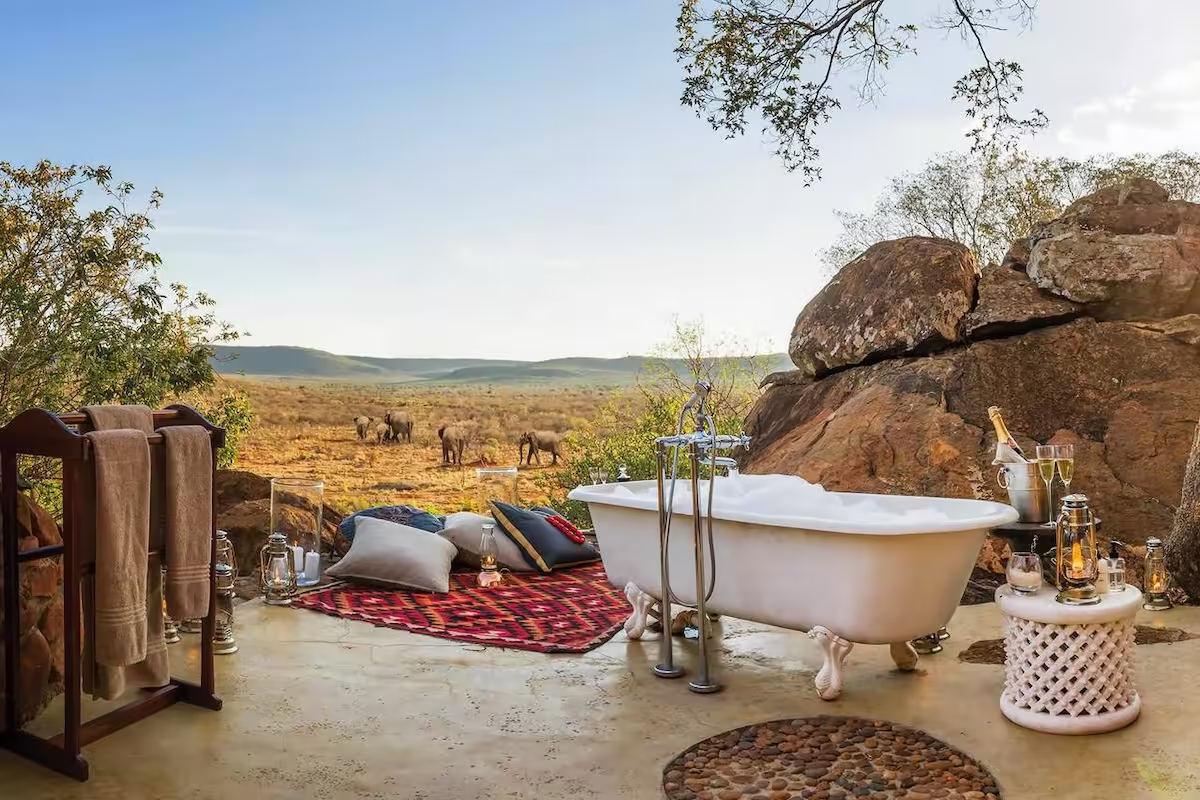
Not simply a five-star room in the bush: private access, expert guiding and logistics that remove the friction.
A luxury African safari is built around five things a standard safari rarely delivers together. Guest numbers are controlled on a private concession or conservancy. The guide and the vehicle belong to your group rather than to a shared departure. Light aircraft replace full days on the road. Camps carry low bed counts. And the route, the pace and the meals are designed around you rather than around a fixed schedule.
What it looks like changes considerably from one country to another. In the Serengeti it can be a private villa above a migration route. In Kenya's Maasai Mara it can be a camp inside a private conservancy where night drives and walking safaris are permitted. In Botswana it can mean flying directly between remote Okavango and Linyanti camps instead of spending hours on gravel roads. In Rwanda it can centre on a private lodge built around gorilla trekking. In Namibia it can mean flying between desert camps where desert-adapted wildlife is the main attraction.
The result is not simply a more expensive version of a standard safari. Luxury changes the way the safari is experienced: fewer people around a sighting, more control over the day, and access to wilderness areas that are difficult to reach independently.
Luxury safari guide → Private African safaris →
Popular luxury safari packages
Three we book most often. Every other duration and route sits in the collection below.
What makes an African safari truly luxury?
The word is used widely in safari marketing. Accommodation alone does not define it.
A genuinely high-end safari can involve several layers of exclusivity, and most trips combine four or five of them rather than relying on one. The layers below are what separate a luxury safari from a well-run mid-range one.
The layers of exclusivity
- Private concessions and conservancies where guest numbers are controlled and activity rules are more flexible
- Exclusive-use villas reserved for one party, with their own staff
- Private guide and vehicle for the whole trip
- Fly-in transfers that replace long overland drives
- Low-density camps with small room counts and quiet wildlife areas
- Specialist guiding for photography, tracking, birding or walking
- Private dining in the bush rather than a fixed restaurant service
- Access to remote or restricted areas that cannot be booked independently
Private conservancies matter most in Kenya and South Africa, while private concessions sit at the centre of luxury experiences in Botswana, Tanzania, Zimbabwe and Zambia. In Rwanda and Uganda the exclusivity is concentrated around limited gorilla permits and small forest lodges. In Namibia it is concentrated around scarce camp beds and light-aircraft logistics.
Where the layers matter most
- Kenya and South Africa - conservancy and private reserve rules that allow night drives, walking and off-road viewing
- Botswana, Tanzania, Zimbabwe and Zambia - concessions with low vehicle density and controlled access
- Namibia - fly-in desert camps, private guides and long-range landscape routing
- Rwanda and Uganda - permit-controlled gorilla trekking with private guiding
- Zanzibar, Mozambique and the Kenyan coast - private-island and beach extensions that close the trip
Because these rules are set locally, activity availability differs between properties and seasons. Night drives and off-road driving are never universal, so an itinerary should be built around what a specific area actually permits. African safaris →
In this guide
Everything on this page, grouped. Jump straight to the part you need.
Best luxury safari experiences
Three things that are difficult to arrange independently and easy to notice once you have them.
Private concessions
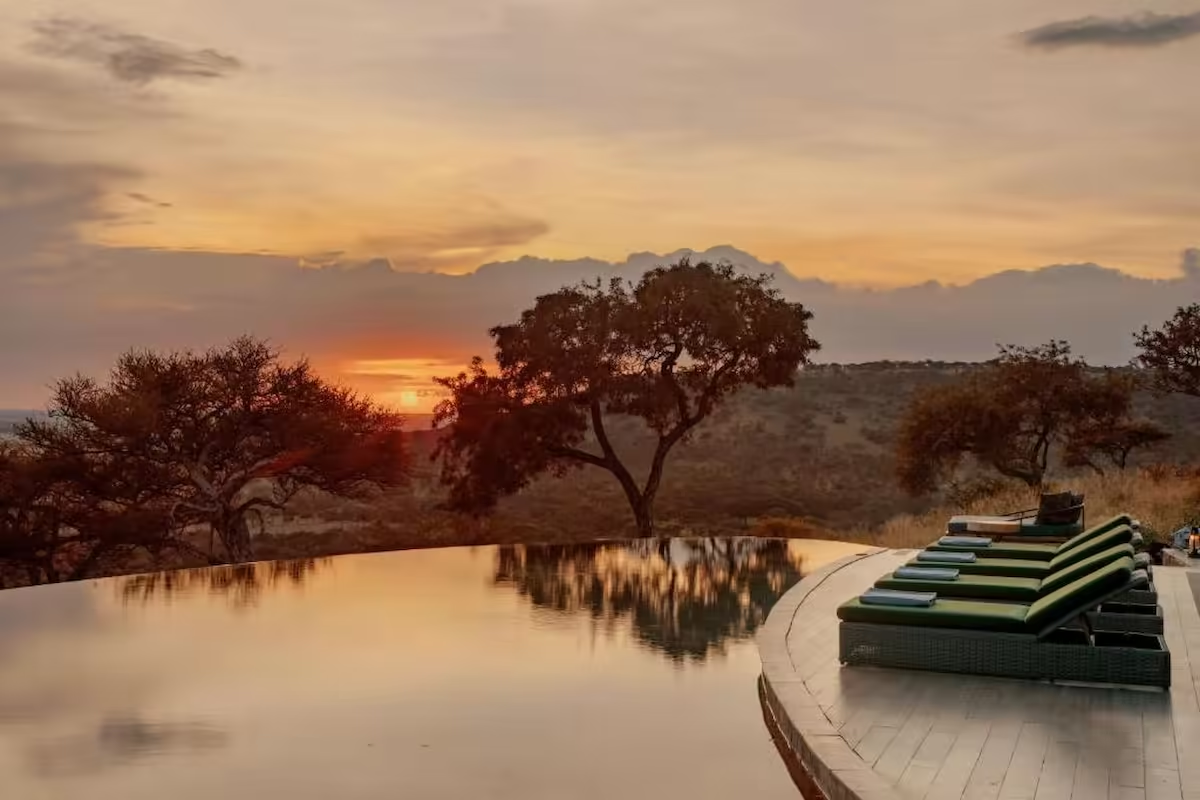
Areas where guest numbers are controlled, so a sighting does not become a traffic jam and vehicles can position properly. How concessions work →
Private guiding
One guide and one vehicle for your group, so the day follows the wildlife, the light and your interests. Why it changes the trip →
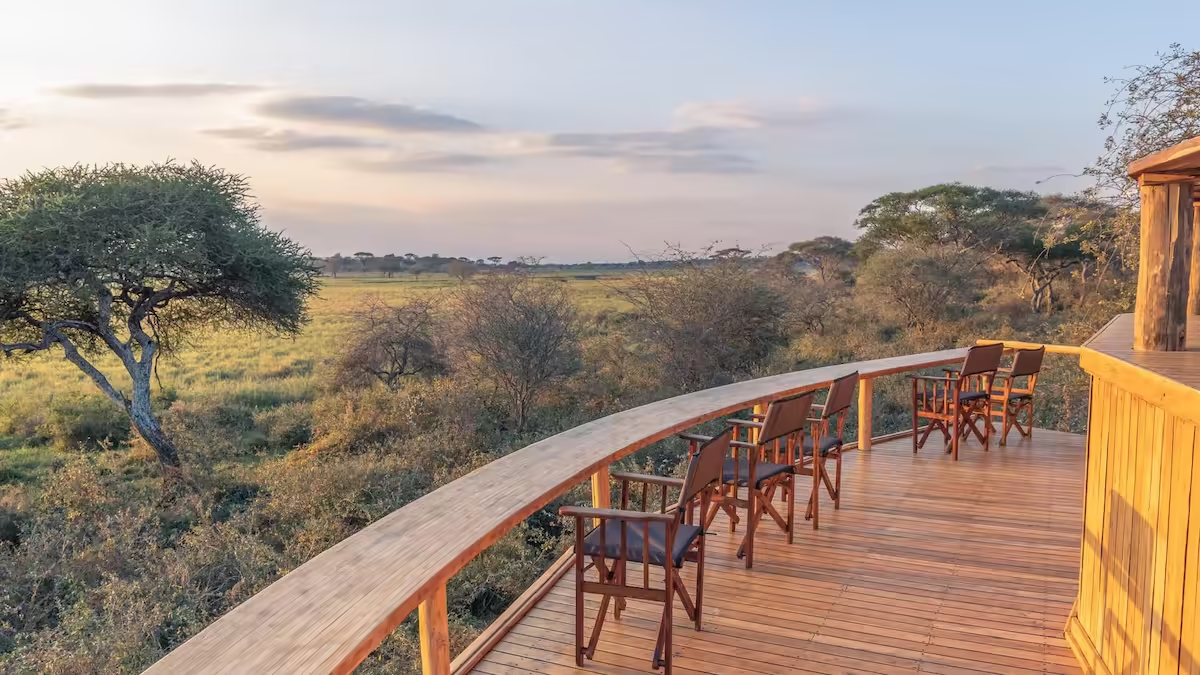
Fly-in desert camps
Light aircraft between remote camps, turning a full day of driving into a short scenic flight over the landscape. Fly-in logistics →
Private concessions and conservancies
The single feature that most reliably separates a luxury safari from an ordinary one.
A private concession or conservancy is a designated area managed separately from the surrounding national park or reserve. Access, vehicle numbers and permitted activities are set by the concession rather than by national park regulation, which is why the experience inside one can differ so sharply from the experience a few kilometres away.
Where local rules allow it, a concession can offer:
- Night game drives
- Guided walking safaris
- Off-road wildlife viewing
- Private vehicle excursions
- Specialist photography sessions
- Private bush dinners
- Longer wildlife encounters
- Fewer vehicles around sightings
Conservancies are most important in Kenya, where community-owned land around the Maasai Mara controls vehicle density and permits night drives and walking. In South Africa the equivalent is the private reserve inside or next to the Greater Kruger ecosystem, where trackers and private vehicles are standard. In Botswana, Tanzania, Zimbabwe and Zambia the concession model governs most of the highest-end camps. In Namibia, community conservancies and private leases do the same job across desert landscapes.
Every concession sets its own rules, and they change between properties and seasons. A responsible itinerary promises only what a specific area actually allows. Game drives → Walking safaris →
Fly-in luxury safaris
One of the clearest differences between a standard safari and a high-end safari is how guests move between camps.
Instead of spending an entire day driving from one region to another, a fly-in safari uses light aircraft to connect remote airstrips. The transfer takes an hour where the road alternative takes six, and it opens up camps that would otherwise require complicated road logistics, long fuel ranges and careful water planning.
Fly-in travel is most valuable in:
- Botswana - between Okavango, Moremi, Linyanti and Chobe
- Tanzania - between the Serengeti, Tarangire, Ruaha and the coast
- Kenya - into the Mara and the northern conservancies
- Zambia - into South Luangwa and the Lower Zambezi
- Zimbabwe - between Victoria Falls, Hwange and Mana Pools
- Namibia - between Sossusvlei, Damaraland, the Skeleton Coast and Etosha
A typical private itinerary therefore looks like this: international arrival, private transfer, light aircraft, remote safari camp, light aircraft, second wilderness area, private transfer, international departure.
The flights are not simply transportation. In many destinations the aerial leg becomes part of the safari, with views over floodplains, savannah, deserts, rivers and wildlife landscapes that are impossible to read from the ground. Baggage allowances are tighter than on scheduled airlines, so packing needs to be planned around the aircraft rather than around the hotel. African safaris →
Luxury safari suites and private villas
Accommodation is the most visible part of a luxury safari, but it works best when it is the by-product of a well-designed route.
Instead of a conventional hotel room, high-end safari properties tend to use:
- Standalone suites
- Private villas and family villas
- Tented suites with permanent floors and en-suite bathrooms
- Private plunge pools
- Outdoor showers and private decks
- Fireplaces for cold-season mornings
- Personal butler or host services
- Private dining areas
- Indoor-outdoor living space that opens onto the bush
The most exclusive properties can be booked as sole-use villas or entire safari houses, with dedicated hosts, chefs, housekeepers, butlers, field guides and a private safari vehicle at selected properties.
Suite quality varies more than star ratings suggest. Two properties with identical published categories can differ enormously in where the suite sits, how much of the view is private, how far the wildlife areas are and whether the camp runs one vehicle or four. Room category should be read alongside vehicle numbers, guiding model and distance to the wildlife, not on its own. Safari accommodation →
Exclusive-use safari villas
Reserving the whole property instead of individual rooms changes the structure of the trip.
With exclusive use, one group holds the lodge. Depending on the property, that can include:
- A private chef and personalised menus
- A private guide and dedicated safari vehicle
- A private host
- Flexible meal times
- Private activities and departures
- Exclusive use of the pool and outdoor dining areas
- Greater control over the daily schedule
Exclusive-use properties are available across Tanzania, Kenya, Rwanda, Uganda, Botswana, Namibia and Zambia, with some designed for small groups and others for larger family or corporate parties. They are priced by the property rather than per person, which makes them poor value for a couple and unusually good value for a group of six or more.
This is the model that solves the real difficulty of multigenerational travel: children need earlier meals and shorter drives, grandparents need shade and rest, and photographers want to stay out. A private villa removes the negotiation. Family African safaris →
Private guide and private safari vehicle
For a high-value safari, private guiding makes a larger difference than room category.
With a private guide and vehicle, the day does not have to be structured around other travellers. It can be adapted around:
- Wildlife behaviour on the day
- Photography and light
- Children and elderly travellers
- Birdwatching or specific predators
- Migration timing
- Cultural visits and walking
For photographers this matters most. A private vehicle can stay at a sighting longer when the situation allows, reposition without negotiating with other guests, and re-order the day around photographic conditions instead of around a fixed lodge timetable.
The guide is the other half of it. A dedicated guide travels with the same group for the whole circuit, learns what the group wants to look at, and builds local knowledge across camps rather than restarting at each one. On a first-class itinerary this continuity is usually the difference between a good trip and a memorable one. Photographic safaris →
Luxury safari dining
Dining has moved far beyond the traditional camp buffet, and it is worth evaluating as part of the experience rather than as an inclusions line.
Current high-end properties increasingly offer:
- Bush breakfasts
- Private dinners in the bush
- Firepit dinners
- Destination dining away from camp
- Wine pairings and cellar lists
- Private villa meals prepared by a dedicated chef
- Sundowner drinks at set-up viewpoints
- Picnic lunches on the route
- Special celebration dinners
Dining quality depends on logistics more than on ambition. Remote camps resupply by air or by long road transfers, so the properties that manage their supply chain well are the ones that can genuinely cook to a standard rather than simply present an ambitious menu. Dietary requirements are handled well almost everywhere, but they need to be declared when the booking is made rather than on arrival.
Luxury African safaris by destination
The meaning of luxury changes considerably from one African destination to another.
Some countries sell exclusivity through private land and vehicle density. Others sell it through flying, remoteness or permit scarcity. Reading a destination correctly is what stops a luxury budget being spent on the wrong things.
- Tanzania - private concessions in the Serengeti and Grumeti, fly-in routing, migration positioning and a beach close by
- Kenya - conservancies around the Maasai Mara and Laikipia, night drives, walking and balloon flights
- Botswana - the fly-in model, low bed counts and enormous concessions around the Okavango and Linyanti
- South Africa - private reserves with trackers, specialist vehicles, short flights and excellent food
- Namibia - remote desert camps, private flights and desert-adapted wildlife in extraordinary landscapes
- Zambia - walking safaris, river wilderness and small guiding-focused camps
- Zimbabwe - Victoria Falls, Hwange and Mana Pools with strong private-concession guiding
- Rwanda and Uganda - permit-controlled gorilla trekking with private guiding and forest lodges
- Mozambique and Malawi - beach extensions, private islands and marine wildlife
East Africa safari → Southern Africa safari →
Luxury Tanzania safaris
The strongest destination for combining private concessions, the Serengeti, the Great Migration, Ngorongoro, tented camps and Zanzibar.
Tanzania is where the private-concession model is easiest to see. Land inside the wider Serengeti ecosystem can be held under private lease, which means vehicle numbers, off-road driving and night activity depend on the concession rather than on national park rules. That is why the same wildebeest herd can be watched from a road with eight vehicles in one area and from a private vehicle with no others at all a few kilometres away.
Distinctive luxury experiences
- Private Serengeti villa
- Private game vehicle
- Fly-in safari between parks
- Great Migration viewing
- Hot-air balloon safari
- Private bush dinner
- Walking safari
- Luxury tented camps
- Private-use safari houses
- Zanzibar island extension
Indicative Tanzania luxury packages
- 4 days - Serengeti private concession escape. Arusha to Grumeti or Serengeti, then back to Arusha. Best for couples, short luxury trips and repeat Africa visitors. Includes a luxury lodge or private villa, private safari vehicle, domestic flight, full-board accommodation, private guide, game drives, sundowners and bush dining.
- 6 days - Luxury fly-in safari. Arusha to Tarangire, then Serengeti, then Ngorongoro, then Arusha, built around elephants, big cats and internal flights where practical.
- 8 days - Serengeti migration luxury safari. Arusha to Serengeti, then Grumeti or the northern Serengeti, then Ngorongoro, then Arusha, with camps positioned for the seasonal movement of the wildebeest.
- 10 days - Luxury safari and Zanzibar. Arusha to Tarangire, then Serengeti, then Ngorongoro, then Zanzibar. The bush-to-beach model, and the format most first-time luxury travellers choose.
- 12 days - Ultimate private safari. Tarangire to Ngorongoro, then Serengeti, then Grumeti, then Ruaha, then Zanzibar, for honeymooners, anniversary travellers and private groups.
Longer Tanzania circuits work because the north-to-south gradient keeps giving new country: the crater rim, the short-grass plains, the western corridor and then the coast. Luxury Tanzania safaris → Hot-air balloon safaris →
Luxury Kenya safaris
Kenya's luxury market is built on private conservancies, which is why it delivers activities that other countries cannot.
Conservancy land around the Maasai Mara and in Laikipia is community-owned and separately managed. Vehicle numbers are capped, off-road driving is permitted in many of them, and night drives and walking safaris are allowed where national parks are not. That combination - private access plus a wider activity list - is what Kenya actually sells at the high end.
Important luxury regions
- Maasai Mara and the Mara private conservancies
- Laikipia and Lewa
- Samburu
- Amboseli
- Tsavo
- Diani Beach
Indicative Kenya luxury packages
- 4 days - Maasai Mara private conservancy safari. Nairobi to a Mara conservancy, then back to Nairobi. Built around the Big Five, a private vehicle, a luxury tented suite, bush dining and walking where permitted.
- 7 days - Kenya luxury safari. Nairobi to Samburu, then Laikipia, then the Maasai Mara, then Nairobi, covering the Samburu Special Five, rhino and conservancy wildlife.
- 9 days - Kenya luxury safari and beach. Nairobi to Samburu, then the Maasai Mara, then Diani - the Kenyan version of bush-to-beach.
- 10 days - Great Migration luxury safari. Nairobi to Laikipia, then a Maasai Mara private conservancy, then Nairobi, positioned around private guiding, migration timing and exclusive accommodation.
Ballooning over the Mara at dawn, an hour in a conservancy with a specialist tracker, and a late flight to Diani can all sit inside the same week. Luxury Kenya safaris → Cultural tours →
Luxury Botswana safaris
The most natural destination for the fly-in luxury model, because the alternative is a very long drive.
Botswana built its high-end industry around low volume and high cost rather than around mass tourism. Concessions are large, bed counts are small, and moving between regions by light aircraft is normal rather than indulgent. The result is a country where remoteness itself is the product.
Major luxury regions
- Okavango Delta
- Moremi
- Linyanti
- Chobe
- Savuti
- Makgadikgadi
- Central Kalahari
Indicative Botswana luxury packages
- 4 days - Okavango Delta luxury escape. Maun to a private Okavango concession, then back to Maun.
- 7 days - Fly-in luxury safari. Maun to the Okavango, then Moremi, then Chobe.
- 9 days - Desert and delta luxury safari. Okavango to Makgadikgadi, then Moremi, then Chobe.
- 10 days - Private concession safari. Okavango to Linyanti, then Chobe - water, predators and elephants.
- 12 days - Botswana and Victoria Falls luxury safari. Okavango to Linyanti and Chobe, then Victoria Falls.
Mokoro excursions, helicopter flights, walking and specialist photography sessions are the activities that justify the model here, and they are all concession-dependent. Luxury Botswana safaris → Boat safaris →
Luxury South Africa safaris
South Africa's luxury market is strongly associated with private reserves inside or next to the Greater Kruger ecosystem.
The private reserves differ from the national park in three practical ways: vehicles are fewer, off-road driving is usually allowed, and professional trackers work alongside the guide. That combination is why Sabi Sand has the reputation it does for leopard viewing, and why a first-time visitor sees more in three nights there than in a longer stay in open public park.
Key luxury regions
- Sabi Sand
- Timbavati
- Thornybush
- Manyeleti
- Madikwe
- Phinda
- Tswalu in the Kalahari
What private reserves add
- Private vehicles
- Specialist trackers
- Walking safaris
- Flexible game-drive timing
- High-end suites and private villas
- Spa and wellness facilities
Indicative South Africa luxury packages
- 4 days - Sabi Sand ultra-luxury safari. Johannesburg to Sabi Sand, then back to Johannesburg.
- 7 days - Cape Town and Sabi Sand. Cape Town to Sabi Sand, then Johannesburg.
- 9 days - Cape Town, Winelands and Kruger. Cape Town to the Winelands, then Greater Kruger, then Johannesburg.
- 11 days - Luxury grand journey. Cape Town to the Winelands, then Sabi Sand, then Tswalu and the Kalahari.
South Africa also offers the shortest access of any major safari destination: an overnight flight, a two-hour transfer and you are in a tracker-equipped reserve the same afternoon. Luxury South Africa safaris → Kruger National Park →
Luxury Namibia safaris
Here luxury is remote desert camps, private flights and desert-adapted wildlife in landscapes built for photography.
Namibia's model is different again. There is no dense wildlife concentration to compete for, so exclusivity is expressed through distance, scarcity of beds and the ability to fly between places that would otherwise take two days of gravel driving.
Key areas
- Sossusvlei and the Namib Desert
- Damaraland
- Skeleton Coast
- Kunene
- Etosha
A strong luxury route runs from the dunes to Damaraland and on to the Skeleton Coast, with light aircraft linking camps in the Hoanib valley, desert-rhino country and the coastal pan. Desert-adapted elephant and black rhino are found by reading tracks in dry river systems rather than by waiting at a waterhole, which makes the guiding model - a specialist and a private vehicle - more important here than almost anywhere else in Africa.
Indicative Namibia luxury packages
- 7 days - Luxury fly-in. Sossusvlei to Damaraland, then the Skeleton Coast.
- 9 days - Desert and wildlife luxury safari. Sossusvlei to Swakopmund, then Damaraland, then Etosha.
- 10 days - Ultimate fly-in safari. Sossusvlei to Damaraland, then Kunene, then the Skeleton Coast, then Etosha.
- 12 days - Private wilderness journey. Sossusvlei to Damaraland, then the Skeleton Coast, then Etosha.
Namibia pairs unusually well with Botswana, because one adds arid country and the other adds water. Luxury Namibia safaris → Sossusvlei →
Luxury Zambia safaris
The destination travellers choose when the priority is walking, river wilderness and guiding rather than lodging.
Zambia is where the guided safari - on foot, small numbers, experienced guides - takes priority over the room. The camps are modest by comparison with Botswana or South Africa, but the guiding standard and the quality of the wilderness are among the highest on the continent.
Key regions
- South Luangwa
- Lower Zambezi
- Kafue
- Livingstone and Victoria Falls
Luxury here should be built around walking, private guiding, canoeing, boating, fishing, remote camps, predator viewing and Victoria Falls rather than around suite size. Night drives are standard in the Luangwa valley, which is where the walking safari tradition began.
Indicative Zambia luxury packages
- 5 days - South Luangwa luxury walking safari.
- 7 days - Lower Zambezi luxury river safari.
- 9 days - Zambia luxury safari. South Luangwa to the Lower Zambezi.
- 10 days - Zambia and Victoria Falls. South Luangwa to Livingstone and Victoria Falls.
Walking safaris → Solo safari →
Luxury Zimbabwe safaris
A strong luxury combination of Victoria Falls, Hwange, Mana Pools and the Zambezi, with some of the best guiding on the continent.
Zimbabwe's private and semi-private concession areas around Hwange and Mana Pools deliver low vehicle density and experienced guides at a lower entry price than Botswana, which is why many experienced travellers route through Zimbabwe rather than through neighbouring countries.
Key regions
- Victoria Falls
- Hwange
- Mana Pools
- Zambezi River
- Private concessions around Hwange and Mana Pools
Canoeing the Zambezi above the falls, walking in Mana Pools where elephant move freely on foot, and sitting in a hide at a waterhole in Hwange are the three experiences that define the country at the high end.
Indicative Zimbabwe luxury packages
- 4 days - Victoria Falls luxury escape.
- 6 days - Hwange luxury safari.
- 8 days - Victoria Falls, Hwange and Mana Pools.
- 10 days - Luxury wilderness safari. Victoria Falls to Hwange, then Mana Pools.
- 12 days - Zimbabwe and Botswana luxury safari. Victoria Falls to Hwange, then Mana Pools, then the Okavango.
Game drives → Family African safaris →
Luxury Rwanda safaris
Rwanda occupies a different position: the high-end experience is permit-controlled gorilla trekking combined with a small number of very good lodges.
Gorilla permits are limited and separately managed, so the lodge and the permit are planned together rather than separately. Around that, Rwanda rewards travellers who want short distances, excellent roads, a compact capital and a trip that can be finished in under a week.
Luxury Rwanda packages can include
- Gorilla trekking
- Golden monkey trekking
- Kigali
- Akagera
- Nyungwe
- Private transfers and luxury lodges
- Private villas
Permits are the expensive component and are never included in accommodation pricing, so a Rwanda quotation should always show them as a separate line.
Indicative Rwanda luxury packages
- 4 days - Luxury gorilla safari. Kigali to Volcanoes National Park, then back to Kigali.
- 5 days - Gorilla and golden monkey safari.
- 7 days - Wildlife and gorilla safari. Kigali to Akagera, then Volcanoes, then Kigali.
- 8 days - Gorilla and forest safari. Volcanoes to Nyungwe, then Kigali.
Gorilla safaris → Gorilla trekking →
Luxury Uganda safaris
Uganda's luxury niche is travellers who want gorilla trekking, chimpanzee trekking and savannah wildlife in one private itinerary.
Uganda offers the same mountain gorillas as Rwanda at a lower permit cost, a habituated chimpanzee population in Kibale, and Big Five savannah in Queen Elizabeth and Murchison Falls. The trade-off is distance: Uganda is bigger and slower to cross, so the luxury element is a private vehicle, a good guide and careful routing rather than a short transfer time.
What the niche is built on
- Gorilla trekking
- Chimpanzee trekking
- Savannah wildlife
- Private lodges
- Boat safaris
Gorilla permits are limited and separately managed, and a well-built Uganda quotation includes accommodation, flights, park and conservation fees and emergency evacuation cover as clearly stated components.
Indicative Uganda luxury packages
- 5 days - Luxury gorilla safari. Entebbe to Bwindi, then back to Entebbe.
- 7 days - Gorilla and wildlife luxury safari. Entebbe to Bwindi, then Queen Elizabeth, then back to Entebbe.
- 10 days - Primates and wildlife luxury safari. Bwindi to Queen Elizabeth, then Kibale, then Murchison Falls.
- 12 days - Ultimate luxury safari. Bwindi to Queen Elizabeth, then Kibale, then Murchison Falls.
Luxury Uganda safaris → Chimpanzee trekking →
Luxury Mozambique safari and beach
Mozambique is the beach extension after a safari, not a Big Five destination - and it is one of the best in Africa at that.
The Bazaruto Archipelago and the Benguerra coastline are where southern African luxury itineraries usually end. Private-island accommodation, reef diving and snorkelling, dhow cruises, blue-water fishing, horseback riding on the beach and marine wildlife make this the closing week for a large share of the region's highest-end trips.
What the archipelago offers
- Private-island accommodation
- Diving and snorkelling
- Dhow cruises
- Fishing
- Horseback riding
- Marine wildlife, including seasonal whale and dolphin viewing
- Private beaches
Properties here run private plunge pools, castaway picnics, marine activity programmes and family villas, which makes Mozambique as suitable for a multigenerational group as it is for a honeymoon.
Indicative Mozambique luxury packages
- 4 days - Luxury island escape.
- 7 days - Safari and Mozambique beach. A South Africa safari, then Benguerra.
- 10 days - Zimbabwe safari and Mozambique beach. Victoria Falls to Hwange, then Vilanculos or Benguerra.
- 12 days - South Africa and Mozambique luxury journey. Cape Town to a private game reserve, then Mozambique.
Flights into the archipelago are the constraint, so beach extensions should be built around the aircraft schedule rather than the other way round.
Luxury Malawi safari
A more intimate, less conventional choice, with wildlife and lake in the same itinerary.
Malawi does not compete with the large safari countries for wildlife volume, and it does not try to. What it offers is compact parks with very few visitors, strong conservation programmes and a lake shore that behaves like a beach extension without the air transfer.
Luxury themes
- Liwonde
- Majete
- Lake Malawi
- Wildlife combined with beach
- Walking and boating
- Conservation projects
Indicative Malawi luxury packages
- 5 days - Liwonde luxury safari.
- 7 days - Wildlife and lake escape. Liwonde to Lake Malawi.
- 10 days - Luxury wilderness journey. Majete to Liwonde, then Lake Malawi.
Malawi works best as an addition to a Zambia or Tanzania itinerary rather than as a standalone long-haul destination.
The best luxury safari package structures
Rather than a long list of unrelated itineraries, luxury packages are better organised around what the traveller is buying.
The private concession safari
4-7 nights. Built around controlled access, low vehicle density and private guiding. Core destinations: Tanzania, Kenya, South Africa, Botswana, Zambia and Zimbabwe.
Best for: couples, honeymooners, wildlife photographers and repeat safari travellers.
The fly-in luxury safari
7-10 nights. Core structure: arrival, private air transfer, luxury camp, private air transfer, second camp, third camp, departure. Best destinations: Botswana, Tanzania, Zambia, Zimbabwe and Namibia.
The ultra-luxury villa safari
4-10 nights. Designed around an exclusive-use villa, a private guide, a private vehicle, a chef, a butler or host and flexible activities. Best for: families, couples, celebrations and private groups.
The ultimate southern Africa luxury safari
14-18 nights. A premium cross-border itinerary: Cape Town to Sabi Sand, then Victoria Falls, then Hwange, then the Okavango Delta. That gives the traveller a city, wine, the Big Five, private reserves, Victoria Falls, Zimbabwe wildlife and Botswana wetlands in one trip.
The ultimate East Africa luxury safari
12-16 nights. Nairobi to Laikipia, then the Maasai Mara, then the Serengeti, then Ngorongoro, then Zanzibar - private conservancies, the Great Migration ecosystem and a beach finish.
The ultimate Africa luxury safari
18-24 nights. For travellers who want a multi-country journey: South Africa to Botswana, then Zimbabwe, then Zambia, or Kenya to Tanzania, then Rwanda. This should be planned as a bespoke journey rather than a fixed itinerary, because international flight schedules, seasonality and camp availability all affect the routing. Tailor-made safaris →
The luxury Great Migration safari
The migration is a seasonal movement, not a place - so it should be positioned by location and date rather than by name.
Wildebeest move through the wider Serengeti and Mara ecosystem across the whole year, and the camps that are right for a luxury trip change with them. Calving season in the southern plains, the western corridor crossings, the northern Serengeti from July and the Mara River from August are four quite different products, and they are priced and sited accordingly.
Tanzania
Grumeti and the Serengeti, then the northern Serengeti, then Ngorongoro. Private concessions along the western corridor give the best combination of migration proximity and vehicle density.
Kenya
Laikipia, then a Maasai Mara private conservancy. Conservancy access around the Mara river crossings is what makes the Kenyan side work at the high end.
The focus should be on where the animals will be in your month and on how many vehicles share the sighting - not on putting the word into the package name. Great Migration → Migration month by month →
Bush and beach luxury safaris
The format most first-time luxury travellers choose, because it solves the problem of ending a safari exhausted.
Two or three nights of internal flying plus a beach week is the standard structure. The examples below are the combinations that work reliably.
- Tanzania and Zanzibar - Serengeti to Ngorongoro, then Zanzibar
- Kenya and Diani - Maasai Mara, then Diani Beach
- South Africa and Mozambique - Kruger or Phinda, then Benguerra
- Zimbabwe and Mozambique - Hwange and Mana Pools, then Victoria Falls, then Mozambique
Bush-and-beach combinations are a major part of the luxury market, and the practical constraint is always the coastal flight schedule rather than the lodge availability. Build the beach week first, then fit the safari in front of it. Tanzania beach and safari → Kenya beach safari →
What a luxury safari package should include
A package marketed as luxury should state its inclusions plainly rather than hiding behind the phrase "full board".
- Luxury lodge or tented-suite accommodation
- Private safari vehicle
- Private guide
- Domestic or charter flights
- Airport transfers and inter-camp flights
- Park fees, concession fees and conservation levies
- Full-board meals
- Selected alcoholic and non-alcoholic beverages
- Laundry
- Scheduled safari activities
- Walking and boat safaris where available
- Emergency medical evacuation cover
- Selected cultural experiences
- Selected special dining experiences
Not every property includes every item, and the exclusions matter more at this end of the market than at any other. Conservation fees, premium spirits, wellness treatments, spa sessions and some internal transport are commonly charged separately, and gorilla permits are always separate. A quotation that lists these lines up front is more trustworthy than one that presents a single headline figure. Safari tipping guide →
How much does a luxury African safari cost?
Pricing varies too widely for a single continent-wide figure, so the honest answer is a range broken down by its drivers.
The cost is influenced by:
- Destination and country
- Season
- Lodge category
- Private versus shared vehicle
- Private guide
- Domestic and charter flights
- Concession fees and conservation levies
- Length of stay
- Exclusive-use villa versus per-person rooms
- International flights and beach extensions
- Special activities, permits and spa treatments
Published figures illustrate the range. A short fly-in safari of around three nights can start near $5,700 per person, while an eleven-night private-concession circuit can reach $20,020 per person. Exclusive-use villas are frequently priced by the property rather than per person, which changes the arithmetic completely for a group.
What is not useful is a single average figure. Cost should be compared per night, per vehicle and per guide, and always against what is excluded. African safari cost guide →
Who are luxury African safaris best for?
Luxury does not necessarily mean wanting the most expensive lodge. It usually means valuing a specific thing highly.
- Privacy - private villas, private vehicles and small camps
- Time - flying rather than spending long periods on the road
- Personalisation - a safari built around individual interests
- Comfort - spacious suites, quality beds, private bathrooms, pools and good food
- Wildlife access - private concessions, conservancies and specialist guiding
- Exclusivity - low guest numbers or exclusive-use properties
- Special occasions - honeymoons, anniversaries, birthdays and milestone celebrations
- Multigenerational travel - private villas make family logistics far easier
The common thread is control. A luxury safari is for travellers who would rather decide where the day goes than accept a fixed schedule, and who understand that the value is in access and guiding rather than in marble bathrooms. Take the safari quiz →
Luxury safari for honeymooners
A honeymoon safari should be designed around privacy rather than simply around an expensive room.
The strongest honeymoon design combines four things: a private villa or private vehicle, romantic dining in a location that is booked for you alone, a camp with a real wilderness behind it, and a beach week at the end. Everything else is detail.
Combinations that work
- Tanzania - a Serengeti private concession, then Zanzibar
- Kenya - a Maasai Mara conservancy, then Diani
- Botswana - the Okavango, then Chobe, then Victoria Falls
- South Africa - Sabi Sand, then Cape Town, then Mozambique
- Rwanda - gorilla trekking, then a luxury lodge, then Kigali
The practical advice is to keep the internal flights short and the number of camps low. Four stops in eleven nights looks good on paper and feels like an airport transfer holiday in practice. Honeymoon safaris →
Luxury family safaris
For families, the most valuable luxury feature is flexibility rather than room size.
A private vehicle means the safari adapts around children's energy, meal times, rest, wildlife interests, walking activities and photography rather than around a shared timetable. An exclusive-use villa adds multiple bedrooms and shared living space, which is what actually makes a multigenerational trip workable.
What to prioritise
- Fewer bases with shorter driving days
- Camps with family rooms or interconnecting rooms
- A private guide who can adjust the pace daily
- Conservancies where walking and shorter activities are permitted
- Beach or pool time built into the second half of the trip
Private villas are increasingly marketed specifically to families and multigenerational groups, and for a party of six or more they are usually cheaper per head than individual luxury rooms. Family African safaris → Family safari guide →
Luxury safari for wildlife photographers
Photography is the discipline where private guiding and low-density concessions pay for themselves.
A photography-led safari should be designed around:
- Private vehicles that can stay longer and reposition freely
- Specialist guides who read behaviour rather than just find animals
- Photographic hides
- Low-density concessions with fewer vehicles in the frame
- Flexible schedules that allow a sighting to run its course
- Migration timing where relevant
- Sunrise and sunset positioning planned in advance
Recommended destinations
- Tanzania - the Serengeti
- Kenya - Maasai Mara conservancies
- Botswana - the Okavango and Linyanti
- South Africa - Sabi Sand
- Zimbabwe - Mana Pools and Hwange
- Namibia - Etosha, Damaraland and the Skeleton Coast
Allow time rather than adding destinations. Three nights in one concession with a private vehicle produces more usable images than seven nights across four camps. Photographic safaris → Safari photography guide →
Luxury safari for first-time visitors
A first-time luxury safari should not include five countries. One ecosystem, experienced properly, is the better answer.
East Africa
Kenya and Tanzania, if the priority is open savanna, large herds, the Great Migration and a beach finish.
Southern Africa
South Africa and Botswana, with Victoria Falls, if the priority is private reserves, reliable wildlife and short internal flights.
Desert-focused
Namibia alone, if the priority is landscape, remoteness and photography rather than animal density.
Primates
Rwanda and Uganda, if the priority is gorilla and chimpanzee trekking with a short, intensive itinerary.
The purpose of a luxury safari is not to collect countries. It is to create a journey where transfers, accommodation, wildlife and experiences work together without unnecessary logistical friction. First safari guide → Book a consultation →
Private concession vs national park
One of the most important decisions when planning a luxury safari is where you are actually allowed to stay.
National park
Advantages: a large protected ecosystem, strong wildlife populations and iconic destinations. Potential limitations: more regulated activities and potentially more vehicles at popular sightings.
Private concession
Potential advantages: lower guest density, private vehicles, walking, night drives where permitted, specialist activities and off-road viewing where the local rules allow it.
Community conservancy
Potential advantages: wildlife and community conservation together, cultural opportunities, lower-density tourism in some areas and direct economic links between tourism and local communities.
The exact rules vary by country and by concession, so an itinerary should never promise night drives or off-road driving universally. What it should do is name the specific areas where those activities are permitted and build the route around them. Night safaris →
The future of luxury African safaris
The direction of travel is experience-led exclusivity rather than larger rooms.
The strongest products are not adding marble bathrooms. They are adding:
- Private access to areas other camps cannot use
- Fewer vehicles around a sighting
- Conservation experiences with a real scientific role
- Specialist guides and smaller guiding teams
- Private aircraft and flexible departures
- Exclusive-use villas
- Meaningful community experiences
- Wellness, photography and marine extensions
- Personalised dining built around the group rather than the kitchen
Demand for private-use properties continues to grow, and the operators who design villas around friends and families travelling together are responding to that. The same shift is visible in conservation: guests increasingly expect to see what their fees fund rather than simply be told about it.
The practical consequence for travellers is that the difference between a good luxury safari and a forgettable one now sits in access, guiding and pacing - not in the room. African safaris →
All safari packages → Or send us your dates
All luxury safari packages
The three above are a shortlist. The rest of the collection - the fly-in circuits, the bush-to-beach weeks and the long cross-border journeys - sits below.
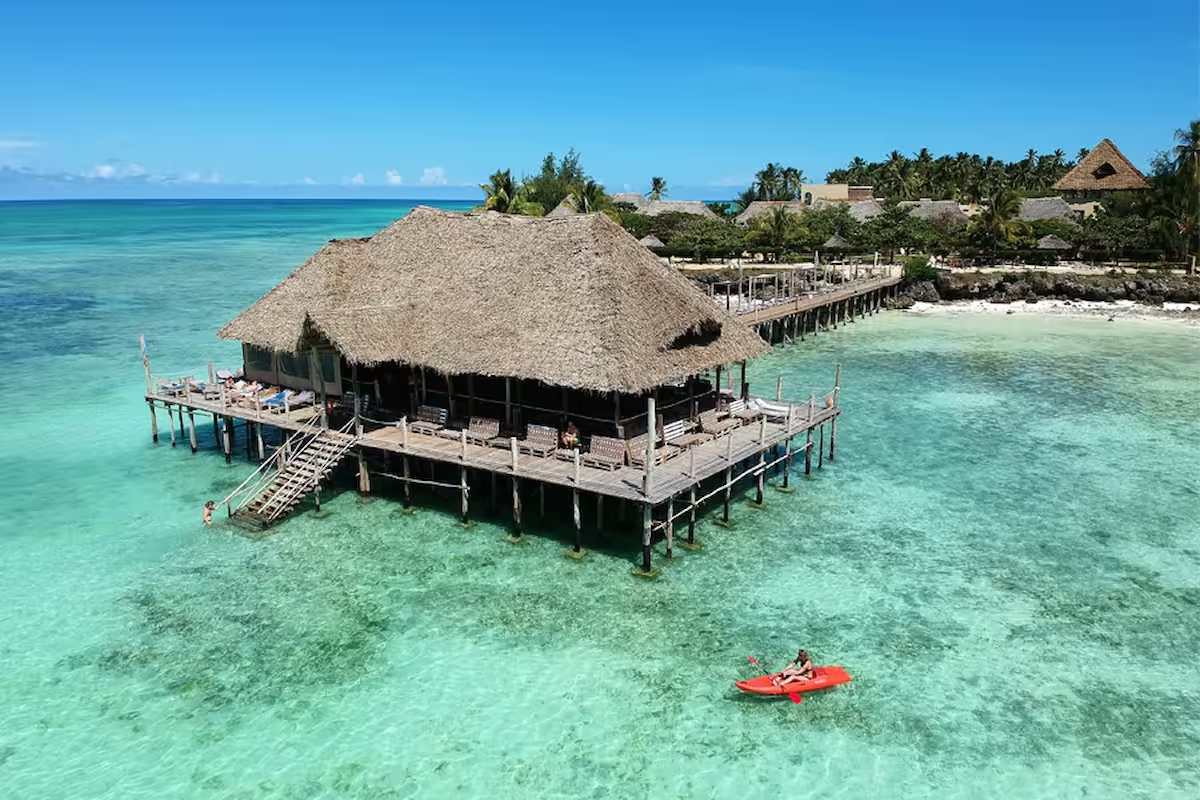
10-Day Luxury Tanzania & Zanzibar
Fly-in across the northern circuit, then a private beach week on Zanzibar.
From $8,150
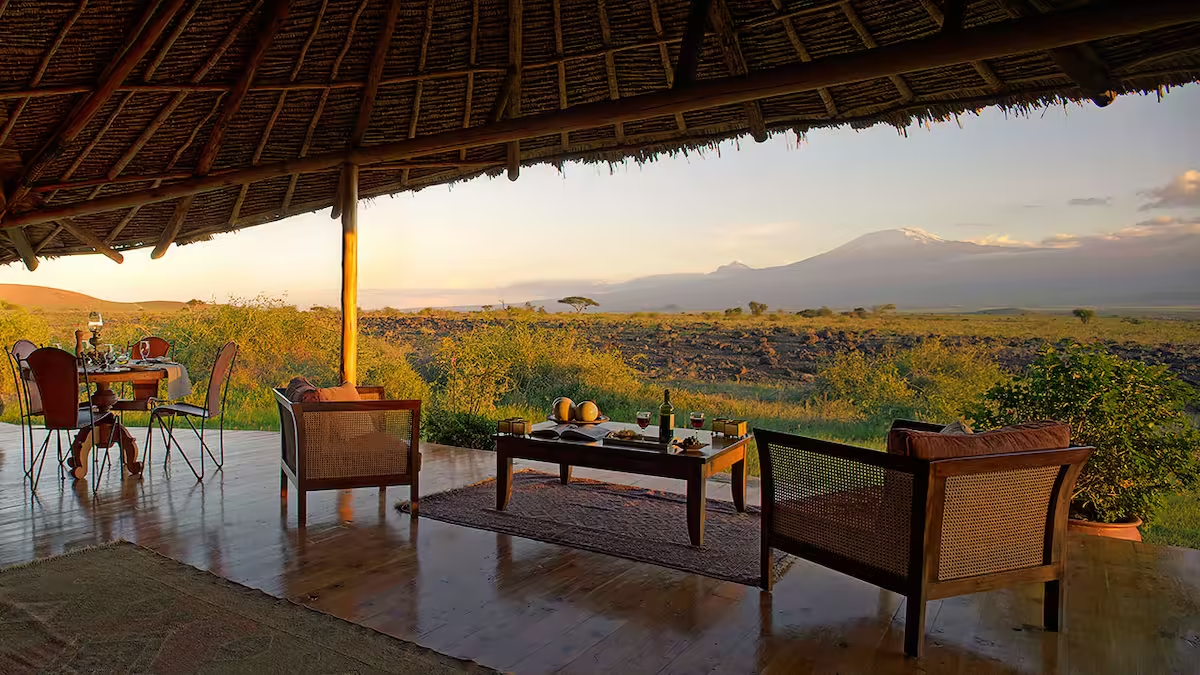
7-Day Kenya Luxury Safari
Conservancy base with off-road rights, night drives, walking and a private vehicle.
From $5,450
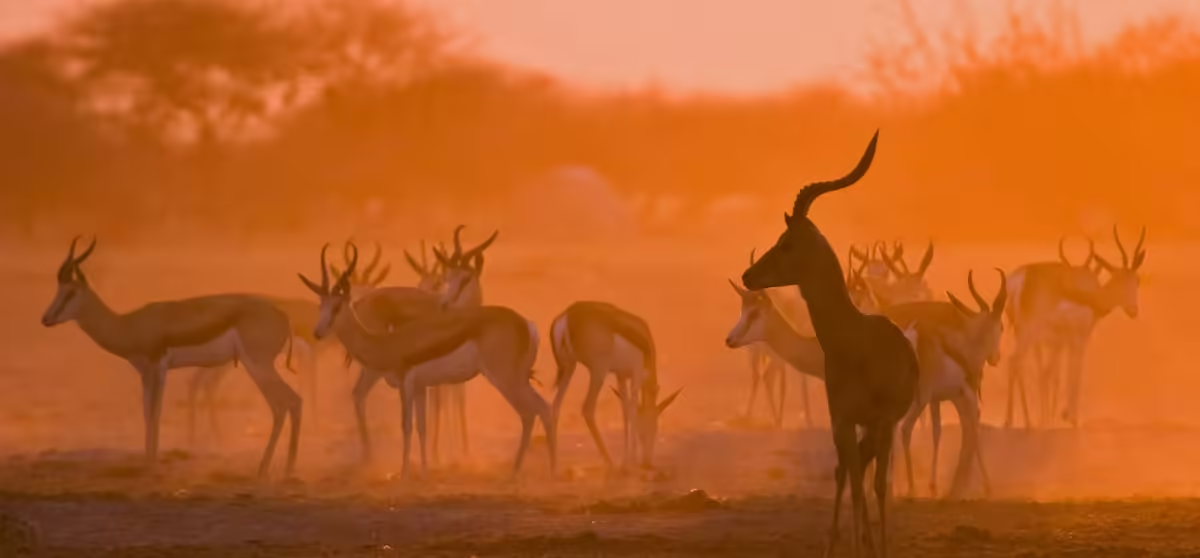
10-Day Botswana + Falls
Light-aircraft hops between water, predator and riverfront camps, finishing at the falls.
From $9,400
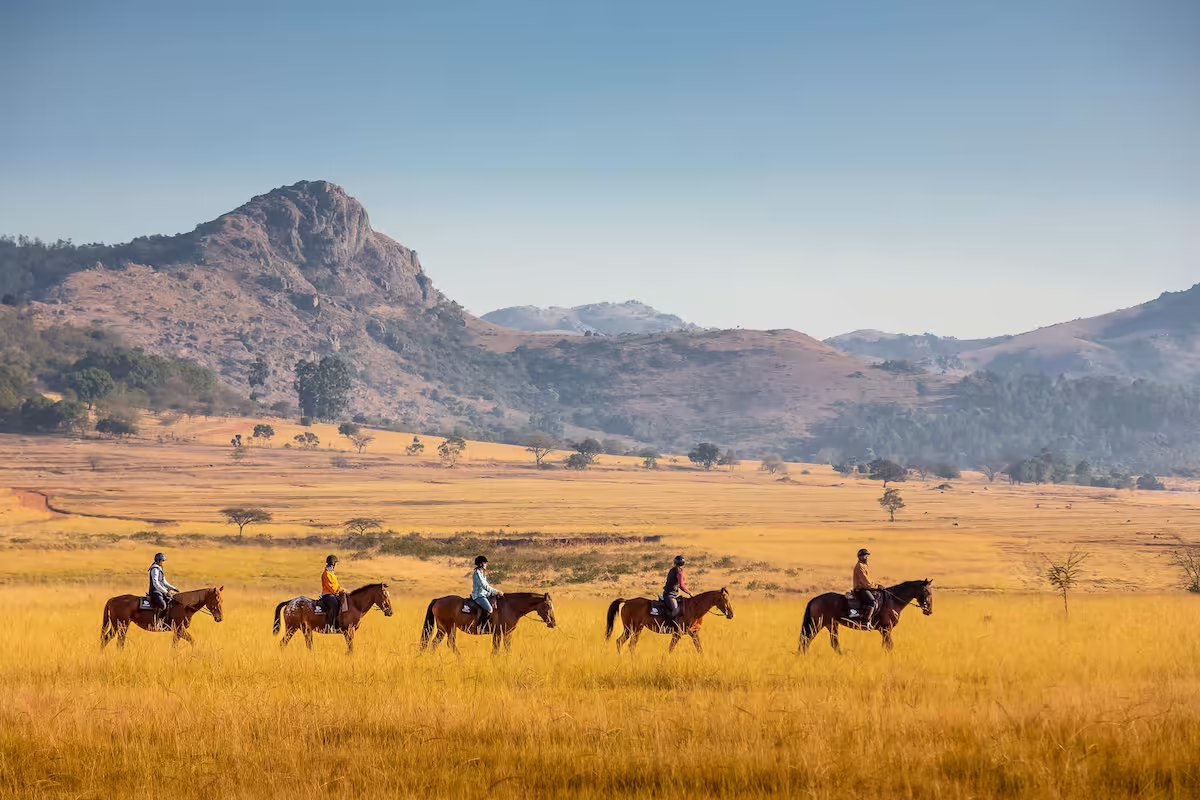
12-Day Grand South Africa
Sabi Sand leopards with Cape Town and the Winelands in the same unhurried trip.
From $6,700
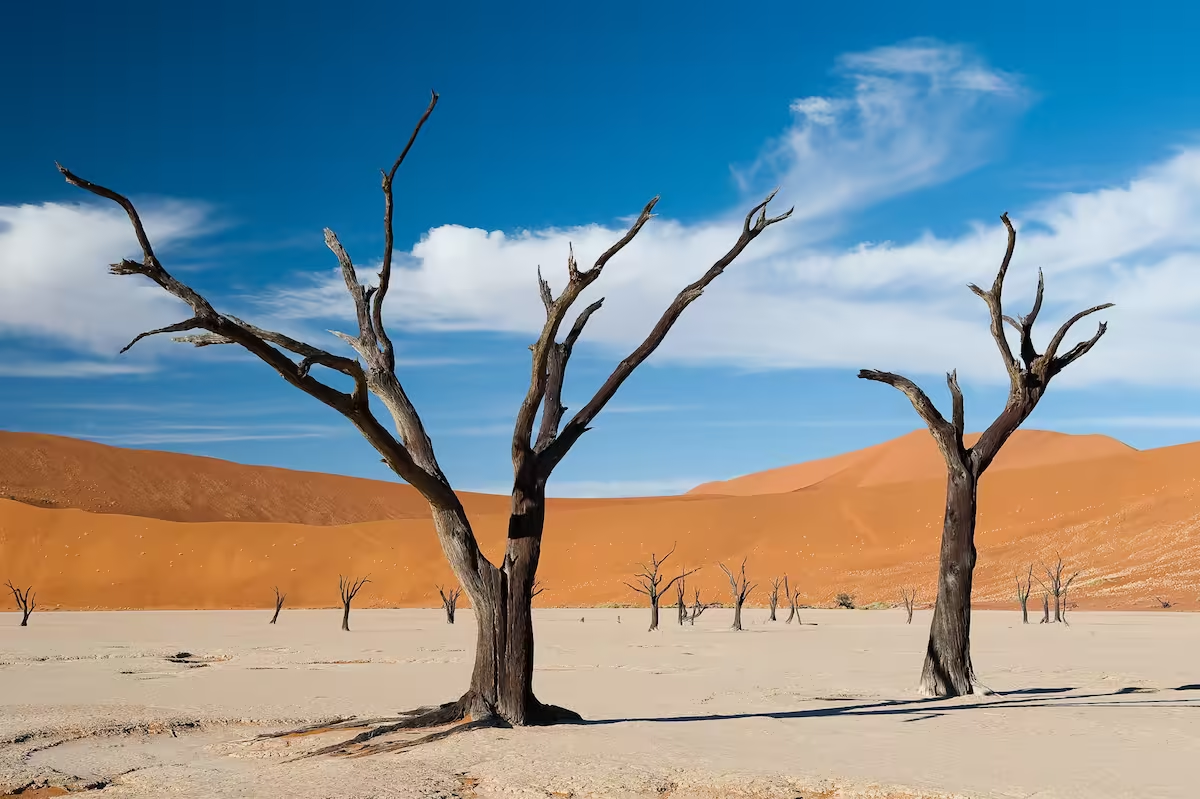
12-Day Namibia Expedition
Dunes, desert and Etosha linked by long-range road days rather than internal flights.
From $5,250
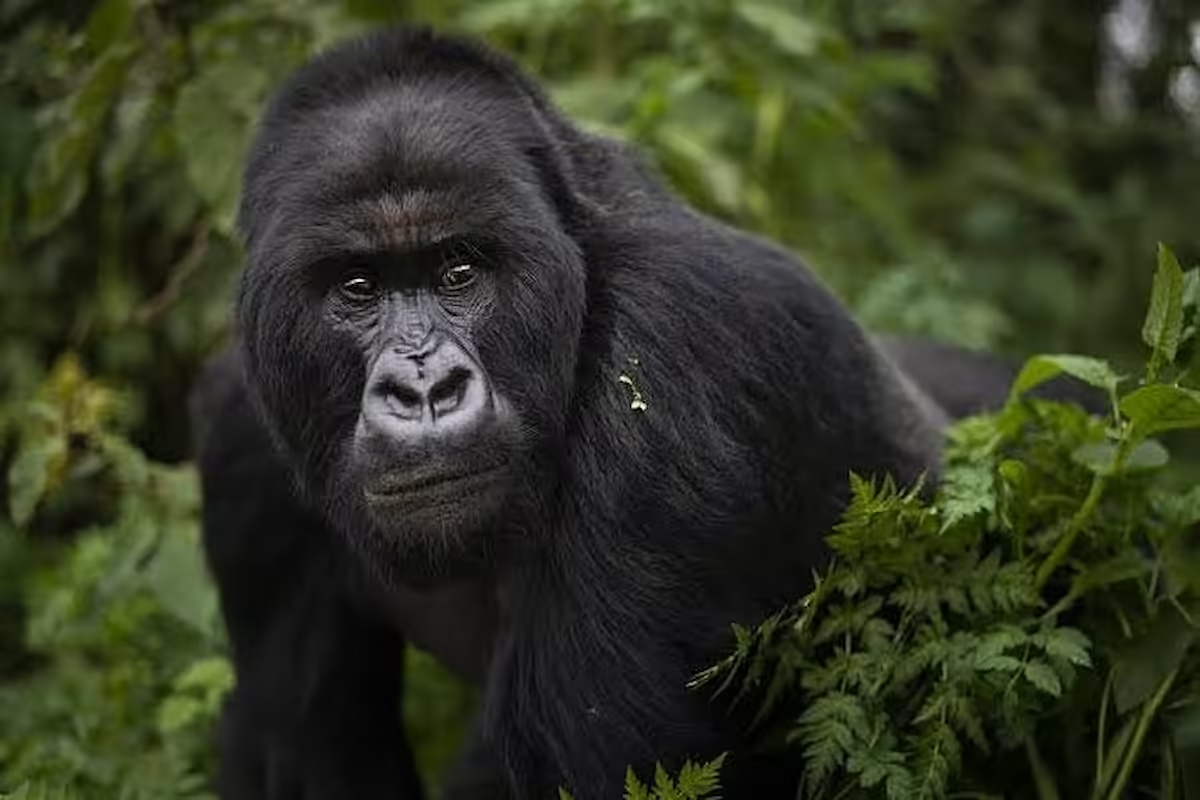
5-Day Uganda Gorilla + Chimps
Two forest days, two primate permits and Queen Elizabeth in between.
From $3,050
Featured luxury African safari packages
Fifteen route ideas, grouped by what the traveller is actually buying. Durations are indicative; every one can be re-cut around your dates.
Serengeti Private Concession Escape
Private safari in the Serengeti ecosystem with luxury accommodation, private game drives and fly-in logistics.
Best for: Couples, short luxury escapes and photographers.
Tanzania Luxury Safari & Zanzibar
Tarangire, Ngorongoro and the Serengeti followed by a private island or a luxury beach retreat on Zanzibar.
Best for: Honeymoons, anniversaries and first-time luxury travellers.
Great Migration Private Safari
Luxury camps positioned according to the seasonal movement of the wildebeest migration, with private guiding and selected fly-in transfers.
Best for: Wildlife enthusiasts and photographers.
Maasai Mara Private Conservancy Safari
Luxury tented accommodation inside a private conservancy, with private game drives, walking and cultural experiences where available.
Best for: Big Five viewing and couples.
Kenya Bush to Beach
Samburu or Laikipia, then the Maasai Mara, then Diani Beach - one flight instead of a return to Nairobi.
Best for: Travellers who want wildlife and Indian Ocean relaxation.
Okavango Fly-In Luxury Safari
Private air transfers connecting luxury camps in the Okavango Delta and the surrounding wilderness.
Best for: Couples, photographers and first-class wilderness experiences.
Botswana Desert & Delta
Okavango Delta, then Makgadikgadi, then Chobe and Linyanti - water, salt pan and riverfront in one circuit.
Best for: Travellers who want contrasting landscapes and ecosystems.
Cape Town & Sabi Sand Luxury Safari
Cape Town, then the Winelands, then Sabi Sand - city, wine and leopard tracking without internal flights.
Best for: First-time southern Africa travellers.
Namibia Ultimate Fly-In Safari
Sossusvlei, then Damaraland, then the Skeleton Coast and Etosha, connected by light aircraft rather than gravel roads.
Best for: Landscape photographers and travellers seeking remote desert wilderness.
Victoria Falls & Zimbabwe Luxury Safari
Victoria Falls, then Hwange, then Mana Pools - private-concession wildlife viewing with river time built in.
Best for: Wildlife, walking, river activities and Victoria Falls.
Zambia Walking & River Safari
South Luangwa, then the Lower Zambezi - the two strongest walking and river wildernesses in the country.
Best for: Walking-safari enthusiasts and experienced safari travellers.
Luxury Gorilla Safari
Kigali, then Volcanoes National Park, then Kigali - gorilla trekking with private transfers and a small forest lodge.
Best for: Gorilla trekking, couples and luxury adventure travellers.
Uganda Gorilla & Wildlife Safari
Bwindi, then Queen Elizabeth, then Kibale, then Entebbe - primates and savannah wildlife in one loop.
Best for: Primates combined with savannah wildlife.
Zimbabwe & Botswana Luxury Journey
Victoria Falls, then Hwange and Mana Pools, then Chobe and the Okavango Delta across two countries.
Best for: Travellers wanting a deeper southern African safari.
South Africa & Mozambique Luxury Escape
Private game reserves, then Cape Town or Johannesburg, then Benguerra or Bazaruto for the closing week.
Best for: Honeymooners and bush-and-beach travellers.
Ask us to cut one of these to your dates
Frequently asked questions
What is a luxury African safari?
A luxury African safari combines high-quality accommodation with personalised guiding, premium logistics, excellent food, comfortable transport and access to exceptional wildlife areas. Depending on the destination it may also include private concessions, fly-in transfers or exclusive-use villas.
What is the difference between a luxury safari and a normal safari?
The biggest differences are privacy, accommodation, logistics, guiding and flexibility. Luxury safaris tend to use private vehicles, private guides, remote camps, fly-in transfers and premium suites, and they are built around low-density wildlife areas rather than around the most-visited parks.
Are luxury safaris all-inclusive?
Not necessarily. Many luxury lodges include accommodation, meals, drinks, activities and some transfers, but park fees, conservation levies, premium drinks, spa treatments, international flights and certain activities may still be charged separately.
Which African country is best for a luxury safari?
There is no single answer, because the experience varies by destination. Tanzania and Kenya are strongest for East African wildlife and the migration; Botswana for fly-in wilderness; South Africa for private reserves with trackers; Namibia for desert landscapes; Zambia and Zimbabwe for walking and river safaris; Rwanda and Uganda for gorilla and primate trekking.
What is a private concession safari?
A private concession is a designated area managed separately from the surrounding national park or reserve. It allows a different range of activities and lower-density tourism, subject to local regulations set by the concession rather than by national park rules.
What does a private guide and vehicle change?
The day is no longer built around other travellers. A private guide can reorder the route around wildlife behaviour, light, children, photography or a specific interest, and can stay longer at a sighting when the situation allows.
Are luxury safaris suitable for families?
Yes. Private vehicles and exclusive-use villas make luxury safaris particularly practical for families and multigenerational groups, because meals, driving times and activity levels can all be adjusted daily.
Is a luxury safari suitable for solo travellers?
Yes, although single supplements are common at the highest end because suites and villas are priced for double occupancy. A private guide and vehicle can also be arranged on a shared basis on set-departure luxury departures.
Can I combine a luxury safari with a beach holiday?
Yes. The most popular combinations are Tanzania with Zanzibar, Kenya with its own coast, South Africa with Mozambique, and Zimbabwe or Botswana with Mozambique.
How many days should a luxury African safari be?
Short luxury safaris work in 3-5 nights. A more comprehensive African journey generally benefits from 8-14 nights, and multi-country journeys can run 2-3 weeks or longer.
What is an exclusive-use villa?
Exclusive use means the entire property is reserved for one group rather than rooms being booked individually. Depending on the property it can include a private chef, a private guide, a dedicated vehicle, flexible meal times and private activities.
How much does a luxury African safari cost?
Published figures range widely. A short fly-in safari of around three nights can start near $5,700 per person, while an eleven-night private-concession circuit can reach around $20,020 per person. Exclusive-use villas are often priced by the property rather than per person.
Published figures range widely because three line items drive the top end: private-concession fees (a prime Serengeti or Mara block can cost a camp US$50-150 per guest per night before a single meal), exclusive-use villas priced per property rather than per person, and internal light-aircraft sectors of US$500-1,000. At the very top the number is set by how many people share the vehicle, not by bigger rooms - a short three-night fly-in can start near US$5,700 per person while an eleven-night private-concession circuit passes US$20,000.
Are gorilla permits included in a luxury safari price?
Usually not. Gorilla permits are limited and separately managed, so they are normally quoted as a distinct line alongside accommodation, flights, park fees and conservation levies.
Two reasons they sit outside: permits are sold by the wildlife authority at a fixed public tariff (no operator margin to absorb), and they are dated, non-transferable inventory that can block a whole itinerary. Some high-end operators do pre-purchase and roll them into the package for cash-flow reasons - ask specifically whether your quote shows permit as a line item or inside the total.
Is a fly-in safari worth the extra cost?
In Botswana, Namibia and Zambia it usually is, because the road alternative consumes whole days and reaches fewer camps. In South Africa and Kenya, where road transfers are short and reliable, flying is a convenience rather than a necessity.
The comparison to run is hours on the road against hours in the air: a Windhoek-Sossusvlei drive is a full day each way, while the same leg by light aircraft is under an hour. Sector hops typically add US$300-600 per person per flight, and baggage on Cessna Caravans is usually capped at 12-15kg in soft bags - itself a reason to travel light. Where road transfers run under two hours, the savings rarely justify the cost.
What is the best time of year for a luxury safari?
It depends on the destination. The dry season concentrates wildlife around water in East and southern Africa, while the migration moves through the Serengeti and Mara ecosystem all year. Beach extensions are usually best outside the main regional rain periods.
How far in advance should I book a luxury safari?
Longer than for a standard safari. The best camps have few rooms, exclusive-use villas are single properties, and gorilla permits are limited. Ten to twelve months ahead is comfortable for peak-season and holiday dates.
Do I need travel insurance for a luxury safari?
Yes, and it should explicitly include emergency medical evacuation cover. Many remote camps are hours from the nearest hospital, and evacuation is the reason that cover matters more here than on a normal holiday.
What is the difference between a private reserve and a national park?
A national park is state-managed with regulated activities and public access. A private reserve or concession sets its own rules on vehicle numbers, off-road driving, night drives and walking, which usually means fewer vehicles and a wider activity list.
Can I combine two countries on one luxury itinerary?
Yes, and it is common. Botswana with Zimbabwe, Kenya with Tanzania, South Africa with Mozambique and Zambia with Zimbabwe all work well because the internal flights are short and the two countries offer different ecosystems.
Can I see the Great Migration on a luxury safari?
Yes, if the camp is positioned for the month you travel. The migration moves through the Serengeti and Mara ecosystem year-round, so the correct question is where the herds will be in your specific dates.
Are night drives and off-road driving guaranteed?
No. Both depend entirely on the specific concession and on local regulation. Some conservancies permit both, national parks usually permit neither, and rules can change between properties and seasons.
How do I choose between luxury camps?
Read room count, vehicle numbers, guiding model, distance to the wildlife areas and what is excluded from the price. Star category and interior photographs tell you much less about the actual experience.
Are luxury safaris suitable for photographers?
They are the strongest option available. Private vehicles, specialist guides, low-density concessions and flexible schedules are the four factors that most affect the quality of the images, and all four are standard at the luxury end.
What should I pack for a luxury safari?
Neutral clothing in layers, a warm fleece for early starts, a hat, sunglasses, comfortable walking shoes, sunscreen and a buff, plus binoculars, a camera with spare batteries and a power bank. Fly-in itineraries have tight baggage allowances, so soft bags are far easier than hard cases.
Is a luxury safari good value?
It is expensive, and it is not trying to be cheap. What it buys is privacy, access, time and guiding - the four things that determine how a safari actually feels. Travellers who value those usually consider it worth the difference, particularly if they travel in the shoulder season, keep the number of camps low and reduce internal flights before cutting room category.
Plan a luxury African safari
Tell us your travel dates, how many of you are travelling and what matters most - private concessions, fly-in logistics, gorilla permits, a family villa or a beach finish. A specialist replies within 24 hours.