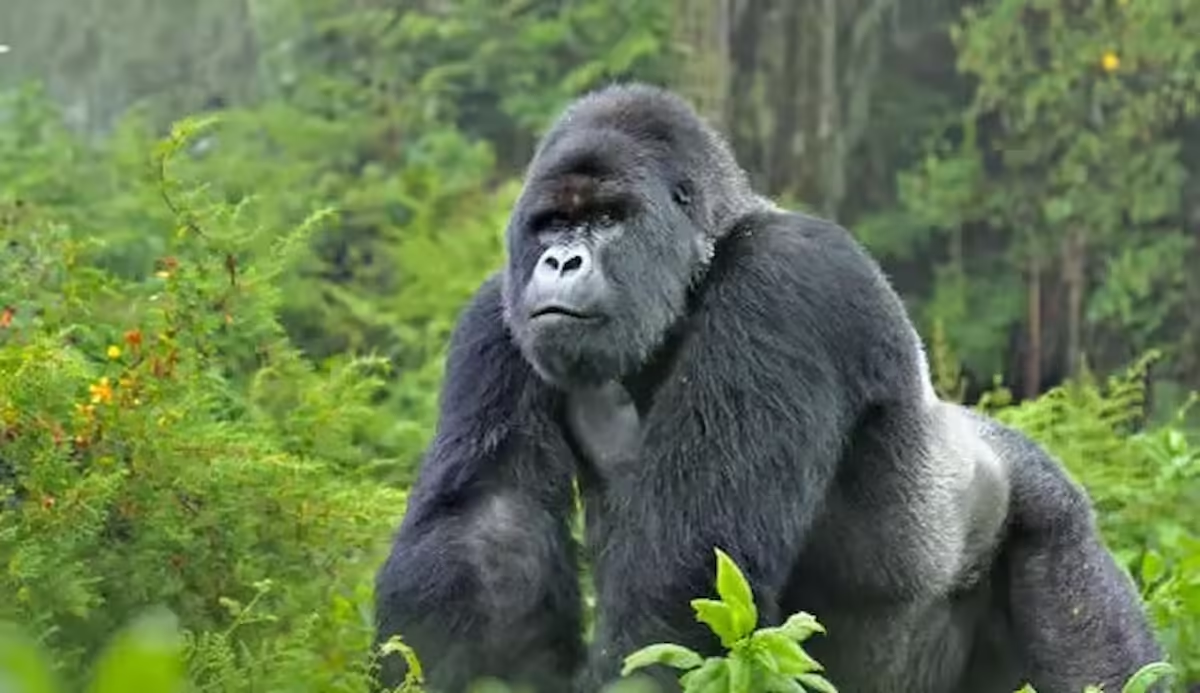
3-Day Rwanda Gorilla Trekking Safari
Kigali → Volcanoes National Park → Gorilla Trekking → Kigali
A compact itinerary for travelers whose primary objective is seeing mountain gorillas.

Activity guide
Where to trek, what the permit costs, how hard the walk is, and how to combine a gorilla trek with a wider East African safari.
How the day runs, from the morning briefing to the regulated hour with the gorillas. Read this section →
The two trekking countries compared on permits, forests and gateways. See the comparison →
What the walk demands, the minimum age, and how to behave in the forest. Check the requirements →
Example itineraries, what the price includes, and how far ahead to book. See the packages →
Gorilla trekking is a guided forest expedition to locate one of the habituated mountain gorilla families that visitors are allowed to approach. A typical day begins with a morning briefing, after which trackers lead the group into the forest. Once the family is found, visitors spend a regulated period observing the animals before walking back out.

The experience is very different from a conventional African game drive. Nobody can say exactly where the gorillas will be when you enter the forest, and the hike can involve steep terrain, dense vegetation, mud, rain and significant changes in elevation.
In Uganda, gorilla tracking can take roughly 2 to 7 hours depending on where the gorilla family is found, followed by one hour of observation once the family has been located.
In Rwanda, visitors meet at the Volcanoes National Park headquarters in Kinigi, are allocated a gorilla family, and then begin the trek. The length and difficulty depend on where the assigned family is living that week.
For mountain gorilla trekking, the principal tourism destinations are:
| Destination | Gorilla trekking location | Main experience |
|---|---|---|
| Rwanda | Volcanoes National Park | Virunga mountain gorillas, volcanic landscapes and relatively compact logistics |
| Uganda | Bwindi Impenetrable National Park | Dense rainforest, several trekking sectors and a broad range of gorilla families |
| Uganda | Mgahinga Gorilla National Park | Virunga volcanoes, mountain gorillas and golden monkeys |
| DR Congo | Virunga National Park | Mountain gorilla trekking and wider Virunga experiences, subject to park access and security conditions |
For most travelers planning a conventional gorilla trekking holiday, Rwanda and Uganda are the two principal choices, and the difference between them shapes the whole itinerary.
A gorilla trip can be designed as a short, primate-focused journey or combined with a larger African safari. The short formats keep the whole trip built around one trek day.
Kigali → Volcanoes National Park → Gorilla Trekking → Kigali
A compact itinerary for travelers whose primary objective is seeing mountain gorillas.
Kigali → Volcanoes National Park → Gorilla Trekking → Golden Monkey Trek → Kigali
Adds another primate experience to the gorilla trek.
Entebbe → Bwindi → Gorilla Trekking → Entebbe
A focused Uganda gorilla itinerary.
Longer formats add savannah wildlife, chimpanzee trekking or a beach finish to the same trek day.
Kigali → Volcanoes National Park → Gorilla Trekking → Akagera National Park
Combines mountain gorillas with savannah wildlife.
Entebbe → Bwindi → Gorilla Trekking → Queen Elizabeth National Park
Combines mountain gorillas with savannah wildlife and the landscapes around Queen Elizabeth National Park.
Kigali → Volcanoes → Gorilla Trekking → Nyungwe → Akagera
A broader Rwanda itinerary combining primates, rainforest and savannah.
Entebbe → Kibale → Queen Elizabeth → Bwindi → Entebbe
Combines chimpanzee trekking, conventional wildlife viewing and mountain gorilla trekking.
Entebbe → Kibale → Queen Elizabeth → Bwindi → Mgahinga
Designed for travelers interested in primates as well as Uganda's broader landscapes and wildlife.
Gorilla trekking in Rwanda takes place in Volcanoes National Park, part of the Virunga volcanic massif in northwestern Rwanda.
The park protects steep volcanic slopes covered by montane forest, bamboo, grassland, swamp and heath. The Virunga volcanoes include Karisimbi, Bisoke, Sabinyo, Gahinga and Muhabura, with Karisimbi reaching approximately 4,507 metres.
Rwanda's compact geography also makes it possible to combine gorilla trekking with other experiences relatively easily:
The published international tourist permit price for gorilla trekking in Rwanda is US$1,500 per person per day, with a minimum trekking age of 15 years. See how gorilla permits are booked.
The permit is a major part of the overall cost of a Rwanda gorilla safari, but the complete trip also includes accommodation, transportation, meals, guiding, transfers and other logistics.
Special rates apply for qualifying Rwandan and East African Community visitors, so permit prices should be checked against your residency or nationality category when planning.
Volcanoes National Park combines gorilla trekking with dramatic volcanic scenery. The park is also home to golden monkeys and supports hiking and cultural experiences beyond the gorilla trek.
For travelers who want a short, gorilla-focused trip rather than a long conventional safari, Rwanda works particularly well because Kigali is connected efficiently with the Volcanoes region.
Uganda offers gorilla trekking in Bwindi Impenetrable National Park and Mgahinga Gorilla National Park.
Bwindi is particularly important because it protects a major portion of the world's mountain gorilla population. There are four main trekking sectors:
These sectors are geographically separated within the wider Bwindi forest, so choosing the right sector matters when selecting accommodation and planning transfers.
Mgahinga lies within the Virunga Mountains and provides another Ugandan option for mountain gorilla trekking. Mgahinga issues a smaller number of gorilla permits and offers a different forest environment to Bwindi.
The international gorilla tracking permit costs US$800 per person in Bwindi and Mgahinga, with different rates for qualifying foreign residents and East African visitors. Read the gorilla permit guide.
Permit tariffs can change, so the current rates should be checked before confirming a trip.
Uganda also offers a different experience known as the Gorilla Habituation Experience.
Rather than the standard one-hour gorilla encounter, habituation involves accompanying researchers and habituators while a gorilla group becomes accustomed to human presence. It is sold as a separate product from ordinary gorilla tracking.
This can be particularly relevant for travelers interested in primatology, conservation and spending substantially more time observing gorilla behaviour.
The choice between Rwanda and Uganda should be based on the type of journey you want rather than simply the permit price.
| Factor | Rwanda | Uganda |
|---|---|---|
| Main trekking area | Volcanoes National Park | Bwindi and Mgahinga |
| International permit | US$1,500 | US$800 |
| Minimum age | 15 | 15 |
| Forest environment | Virunga montane forest | Bwindi rainforest and Virunga forest |
| Trek difficulty | Varies by family | Varies by sector and family |
| Gorilla habituation | Standard trekking focus | Standard trekking and habituation experience |
| Main gateway | Kigali | Entebbe and Kampala, with regional connections |
| Other wildlife options | Akagera, Nyungwe | Queen Elizabeth, Kibale, Murchison Falls and others |
| Beach combination | Zanzibar possible via a regional itinerary | Zanzibar possible via a regional itinerary |
| Good for | Shorter Rwanda-focused trips and gorilla plus volcano combinations | Longer Uganda wildlife and primate itineraries |
Neither destination guarantees an easier trek. Gorilla families move naturally through the forest, so the walking distance and terrain can change from one day to another. Compare gorilla safaris by country before you decide.
Gorilla trekking requires a reasonable level of physical fitness. The challenge is not simply the number of kilometres walked, because forest trails can involve:
A trek may be relatively short on one day and considerably longer on another, depending on where the gorilla family has moved. The activity is generally rated as requiring moderate fitness, with treks potentially lasting between two and seven hours. Walking safaris are the closest preparation for that kind of day.
Yes. Age alone does not automatically prevent someone from trekking. The important considerations are:
Travelers who are concerned about fitness should discuss their walking ability with the safari operator before selecting the trekking sector or itinerary.
Porter services can also be valuable, particularly in Uganda, because porters can assist with daypacks and provide physical support on difficult sections of the trail.
The minimum age for mountain gorilla trekking is generally 15 years in both Rwanda and Uganda. Visitors must be at least 15 years old in Rwanda, and Uganda applies the same minimum of 15 years to gorilla tracking.
This makes gorilla trekking different from many conventional African safari activities, where younger children may be permitted on game drives.
For families traveling with children under 15, the itinerary can instead include conventional wildlife safaris, cultural experiences, nature walks or other age-appropriate activities. Family safaris are built around exactly that constraint.
The trekking itself can take several hours, but the actual gorilla observation period is strictly controlled. Visits are limited to one hour per gorilla group per day in Uganda, and Rwanda likewise limits each gorilla family to a maximum of one hour of tourist contact per day, with eight tracking permits issued per gorilla troop per day.
That one hour can feel remarkably short because gorillas may be:
The goal is not to make the encounter longer, but to keep human impact on the gorillas controlled. How many days you need matters more here than on a savannah safari, because the trek day cannot be rushed.
Gorilla tourism operates under strict rules because mountain gorillas are vulnerable to human disturbance and disease transmission.
Visitors are required to maintain a 7-metre distance from the gorillas. The gorillas may close that distance themselves, and you stay where you are.
Visitors with colds or other infectious illnesses should not visit gorillas, because human diseases can be transmitted to them.
Flash photography is not permitted during gorilla tracking.
Food and drinks should not be consumed during the gorilla encounter.
The ranger and trackers determine where visitors stand and how they move around the gorilla family.
These rules are not simply formalities. Mountain gorillas share a close genetic relationship with humans, making disease transmission a serious conservation concern.
The forest can be wet, muddy, cold and densely vegetated, so normal safari clothing is not enough. Recommended equipment includes:
Solid walking shoes, gaiters, sturdy clothing, gloves and lightweight waterproof layers matter more here than on a savannah drive, because of the forest environment and stinging vegetation. See the full safari packing list.
Gorilla trekking takes place throughout the year. Unlike a conventional savannah safari, there is no single migration season that determines whether gorillas are present, because the gorillas live year-round within their forest habitats.
The major consideration is therefore trekking conditions rather than whether gorillas will be present. During wetter periods, trails can become muddy, slippery, more difficult to climb and wetter under the forest canopy.
Drier periods can provide more comfortable walking conditions, although mountain rainforest weather remains unpredictable.
A good itinerary should therefore consider the season, trekking sector, accommodation location and your tolerance for difficult hiking, rather than relying only on a generic best-month recommendation.
The total cost of a gorilla safari is considerably higher than the permit alone. Your final price can include:
For Rwanda, the international gorilla permit is US$1,500 per person. In Uganda, the international tracking tariff is US$800 per person.
Because accommodation and transportation costs can differ substantially, comparing destinations using permit price alone does not show the complete cost of a gorilla safari. Break down a safari cost line by line before you compare.
Gorilla trekking can be combined with a beach holiday in Zanzibar, particularly when building a longer East African itinerary. A popular structure is:
Kigali → Volcanoes National Park → Gorilla Trekking → Serengeti → Ngorongoro → Zanzibar
Another option is:
Entebbe → Bwindi → Gorilla Trekking → Queen Elizabeth → Serengeti → Zanzibar
The advantage of combining the experiences is the contrast between rainforest trekking and a relaxed Indian Ocean beach stay. Safaris from Zanzibar and safari and beach combinations show how the transfer works in practice, with time in the Serengeti and around the Ngorongoro Crater on the way through.
Zanzibar can therefore be incorporated into a gorilla safari itinerary without treating the beach component as a completely separate trip.
A gorilla trek can form the adventure portion of a luxury honeymoon. A honeymoon itinerary could combine:
For couples, the gorilla trek works particularly well when balanced with slower days before or after the forest hike. Honeymoon safaris are usually built around that rhythm.
Because the minimum gorilla trekking age is 15, families with younger children need a different structure.
For families with teenagers who meet the age requirement, a gorilla trek can be combined with:
Families with younger children can experience Uganda or Rwanda through conventional wildlife and cultural activities while one or more eligible family members undertake the gorilla trek. Family safaris are planned this way.
Gorilla photography is different from photographing animals on an open savannah. The forest environment creates challenges such as:
A lightweight telephoto lens can be useful, but extremely long lenses are not always necessary because gorillas may be relatively close. Photographers must also follow the same distance, flash and movement restrictions as every other visitor.
The objective is to photograph the animals without altering their behaviour. Photographic safaris and photographic safari itineraries cover the wider craft.
Gorilla tourism is directly connected to conservation. Mountain gorillas remain endangered, and their populations are concentrated in a small number of protected forest areas. Mountain gorillas now number just over 1,000 in the wild, divided between the Virunga Massif and the Bwindi-Sarambwe population.
Tourism revenue contributes to conservation and communities around the protected areas. Gorilla permit revenue supports conservation and community projects in both countries.
The experience therefore needs to be managed carefully: the economic value of gorilla tourism must be balanced against disease risk, habitat pressure and disturbance.
These experiences should not be treated as the same product.
Gorilla trekking involves visiting a habituated gorilla family for the regulated tourist observation period. Gorilla habituation involves a longer, research-oriented process in which gorillas are gradually accustomed to human presence. The two are sold as separate products, and the same is true of chimpanzee trekking, where habituation and ordinary tracking also differ.
For most first-time visitors, standard gorilla trekking provides the essential mountain gorilla experience. Habituation is more appropriate for travelers who want a deeper conservation and behavioural research experience and are prepared for a different cost and time commitment.
Gorilla trekking becomes even more valuable when incorporated into a wider East African itinerary.
Kigali → Volcanoes → Gorilla Trekking → Serengeti → Ngorongoro → Zanzibar
Entebbe → Bwindi → Gorilla Trekking → Serengeti → Ngorongoro → Zanzibar
Nairobi → Maasai Mara → Kigali → Volcanoes → Gorilla Trekking
Nairobi → Maasai Mara → Entebbe → Bwindi → Gorilla Trekking
Kigali → Volcanoes → Gorilla Trekking → Maasai Mara → Zanzibar
These combinations allow travelers to experience rainforest primates, open savannah wildlife and the Indian Ocean within one extended East African journey. Kenya and Tanzania safaris, Tanzania safaris, Kenya safaris and Maasai Mara safaris cover the savannah half of the route.
Gorilla permits are limited because only a controlled number of visitors can visit each gorilla family each day. Rwanda issues eight tracking permits per troop per day, which makes advance booking important, particularly for popular travel periods and for travelers who need specific dates.
The same principle applies in Uganda, where permits are allocated to specific gorilla tracking sectors and groups.
For a tailor-made itinerary, it is therefore sensible to establish the gorilla trekking date before building the surrounding accommodation and transport schedule. Request a proposal and the permit date is the first thing we hold.
A complete package can be structured around the traveler rather than simply selling a permit. Typical inclusions may include:
The exact inclusions depend on the itinerary and destination, and a tailor-made safari is built to your budget rather than to a fixed template.
It can be physically demanding because the trek may involve steep, muddy and uneven forest terrain. The activity is generally rated as requiring moderate fitness, and tracking may take 2 to 7 hours.
Difficulty is terrain, not distance: the cumulative gain matches a hard hill day, but at 2,000-3,000m in wet forest with no trail surface. Porters take packs and help on the steepest pulls. Under-16s cannot go, over-60s routinely do - the park rates fitness as moderate because the ranger team carries the day's logistics.
The minimum age is 15 years in both Rwanda and Uganda.
Enforced with passports, not judgement: permit systems reject the booking name if the date of birth is under 15, and trailhead rangers re-check. The reasoning is consistency across the region (Rwanda, Uganda and DRC all set 15) plus the physical demands of an uncontrolled walk. Under-15 alternatives that same week: Kibale chimps from 12, forest walks, community visits.
The standard observation period is limited to one hour per gorilla group per day.
The hour is a hard rule from the wildlife authority, timed from the moment the group is found - not from trailhead. It exists because gorillas have limited exposure to people, and longer visits raise stress and disease risk. Rangers may shorten it for a gorilla's comfort; they cannot extend it for yours. Photographers plan the frame before the clock starts.
Yes. Photography is permitted, but flash photography is prohibited and visitors must follow the ranger's instructions and the required distance.
No. Visitors should not trek when suffering from an infectious illness, because human diseases can pose a risk to gorillas.
The rule is not arbitrary: gorillas share roughly 98 percent of human DNA and catch respiratory infections easily, and one trekker's cold has forced family quarantines before. Rangers screen at the trailhead and will turn you back without refund - which is exactly why operators ask for your health status the night before.
They provide different experiences rather than identical products. Rwanda's Volcanoes National Park offers the Virunga volcanic environment and relatively compact logistics, while Uganda provides Bwindi's different trekking sectors, Mgahinga and the option of gorilla habituation.
Score it on your own constraints: Rwanda wins on transfer time (2.5 hours from Kigali versus 8-9 from Entebbe), luxury density and permit availability; Uganda wins on price (US$800 versus US$1,500), extension options (chimps, savanna, Nile) and habituation permits at US$1,500. Same gorillas - the families were translocated between the two countries' parks in the 1980s.
Yes. Rwanda can be combined with Akagera, while Uganda can be combined with Queen Elizabeth, Kibale and other Ugandan wildlife destinations. Gorilla trekking can also be incorporated into wider Kenya and Tanzania itineraries.
The rule of thumb is two habitats per week: a savanna day after the trek resets the mood, and Queen Elizabeth adds tree-climbing lions and Kazinga hippos within one drive of Bwindi. Rwanda's version is shorter - Akagera is 2-3 hours from Kigali. Avoid stacking two treks with three parks in under eight days.
Yes. Zanzibar can be added to a longer East African itinerary after gorilla trekking in Rwanda or Uganda, particularly when the trip also includes Tanzania.
Cleanest routing: end in Entebbe or Kigali and fly onward to Zanzibar (Entebbe has a direct link, Kigali connects same-day), avoiding backtracking to Nairobi. From Uganda, weigh Entebbe-Zanzibar (1.5 hours) against driving back through Tanzania only if you are extending south anyway. Keep four island nights - three is a taster, five lets the holiday actually start.
You should be comfortable walking for several hours over uneven and sometimes steep terrain. Your operator should know your fitness level before the trekking sector and itinerary are finalized.
No. Gorillas are wild animals and move through their forest habitat. Trackers work from recent signs and information to locate the assigned family, but the exact trek duration and encounter conditions cannot be guaranteed.
What is guaranteed is effort, not outcome: every permit buys a licensed tracker and a search of the assigned family's range, and success rates sit above 95 percent because ranger networks know each group's habits. Flexibility helps more than fitness - sectors with more families (Rushaga, Nkuringo) smooth over a wandering day.
The international gorilla permit is US$1,500 per person in Rwanda and US$800 per person for international trackers in Bwindi and Mgahinga, with other rates for qualifying residents and East African visitors.
What the fee buys: ranger and veterinary teams, anti-poaching patrols and community revenue-share - the model that pulled the species back from the brink. Fees are per person, per trek, non-transferable and priced in foreign currency at the authority's rate. Resident and East African Community rates exist but require proof of status at purchase.
Permits are limited, so popular travel periods and specific dates should be booked early. Establish the trekking date first, then build accommodation and transport around it.
Sturdy waterproof hiking boots, long trousers, a long-sleeved shirt, a lightweight waterproof jacket, gaiters, gloves, a waterproof daypack, water, insect repellent, sunscreen, a hat, a camera and spare socks.
Waterproof over lightweight: Bwindi is equatorial rainforest, so everything below the knees gets muddy even in dry months. Gaiters stop stinging nettles and safari ants, gardening gloves protect hands on vine-pulled climbs. Add a rain cover for the daypack, a dry bag for electronics and water for a 2-7 hour day - there are no shops at the trailhead.
A gorilla safari should be planned around the permit date first, followed by the trekking location, accommodation, transportation and additional experiences.