3-Day Gorilla Trekking Safari
Fly into Entebbe, trek in Bwindi and fly out - the shortest way to stand with a gorilla family.
From $2,650 pp

Uganda safari hub
Mountain gorillas in Bwindi, chimpanzees in Kibale, tree-climbing lions in Queen Elizabeth, the Nile at Murchison Falls and the remote semi-arid north of Kidepo Valley - Uganda puts forest, savannah, wetland and mountain safari into one country.
A Uganda safari combines experiences that are difficult to find together elsewhere in East Africa. In a single journey you can track mountain gorillas through the forests of Bwindi, search for chimpanzees in Kibale, watch tree-climbing lions in Queen Elizabeth National Park, cruise the Victoria Nile below Murchison Falls, or explore the remote savannah of Kidepo Valley.
The shape of the trip changes from one park to the next. In Bwindi the day may begin on foot rather than in a vehicle, with trackers moving through steep forest terrain in search of a habituated gorilla family. In Kibale the focus shifts to chimpanzees and other forest primates. In Queen Elizabeth, morning game drives combine with a boat cruise along the Kazinga Channel. In Murchison Falls, savannah game drives sit alongside a Nile boat trip and the gorge where the river forces its way through the falls. In Kidepo the experience becomes more remote - broad savannah, mountain horizons and northern wildlife.
Uganda is not simply a destination for primate trekking. Its protected areas cover tropical forests, Rift Valley landscapes, savannah, wetlands, mountains and semi-arid wilderness. Uganda Wildlife Authority manages 10 national parks - Bwindi Impenetrable, Mgahinga Gorilla, Kibale, Queen Elizabeth, Murchison Falls, Kidepo Valley, Lake Mburo, Semuliki, Rwenzori Mountains and Mount Elgon - which means gorilla trekking, chimpanzee tracking and traditional game drives can all sit inside one itinerary.
That variation is one of the defining characteristics of travelling through Uganda, and it is the reason most itineraries here are built around a route rather than a single park.
Uganda's strongest safari appeal comes from the range of experiences that can be connected within one country.
A traditional safari here can include elephants, lions, buffaloes, giraffes, antelopes and hippos. A forest itinerary adds chimpanzee tracking and other primates. A gorilla safari takes you into the mountainous forests of the south-west, while the north provides a very different experience in the semi-arid landscapes of Kidepo Valley. The result is a safari built around wildlife diversity rather than a single iconic park.
Few destinations of this size hold so many different landscapes within reach of each other. A single route can move from lowland rainforest to open savannah, from crater lakes and wetlands to snow-capped mountains close to the equator. That is what makes multi-park itineraries here practical rather than exhausting - the driving between ecosystems is usually the price of seeing them all.
Uganda is one of the few countries where a gorilla trek and a conventional game drive can sit in the same week. Kibale holds one of the highest primate densities in East Africa, Queen Elizabeth and Murchison Falls deliver classic savannah wildlife, and gorilla trekking is available in two separate parks. Nothing else in the region gives you that combination without crossing a border.
Outside a handful of headline experiences, Uganda sees far fewer visitors than the better-known East African parks. Kidepo in particular rewards travellers who are prepared to travel further for space, and even in Bwindi the forest experience rarely feels busy once you are away from the trailhead.
Uganda sits at the intersection of several ecological regions, which is why bird counts are so high - Bwindi records more than 350 species, Queen Elizabeth more than 600 and Kidepo more than 476. Forest light is demanding, but the proximity of the animals makes it a serious photographic safari destination.
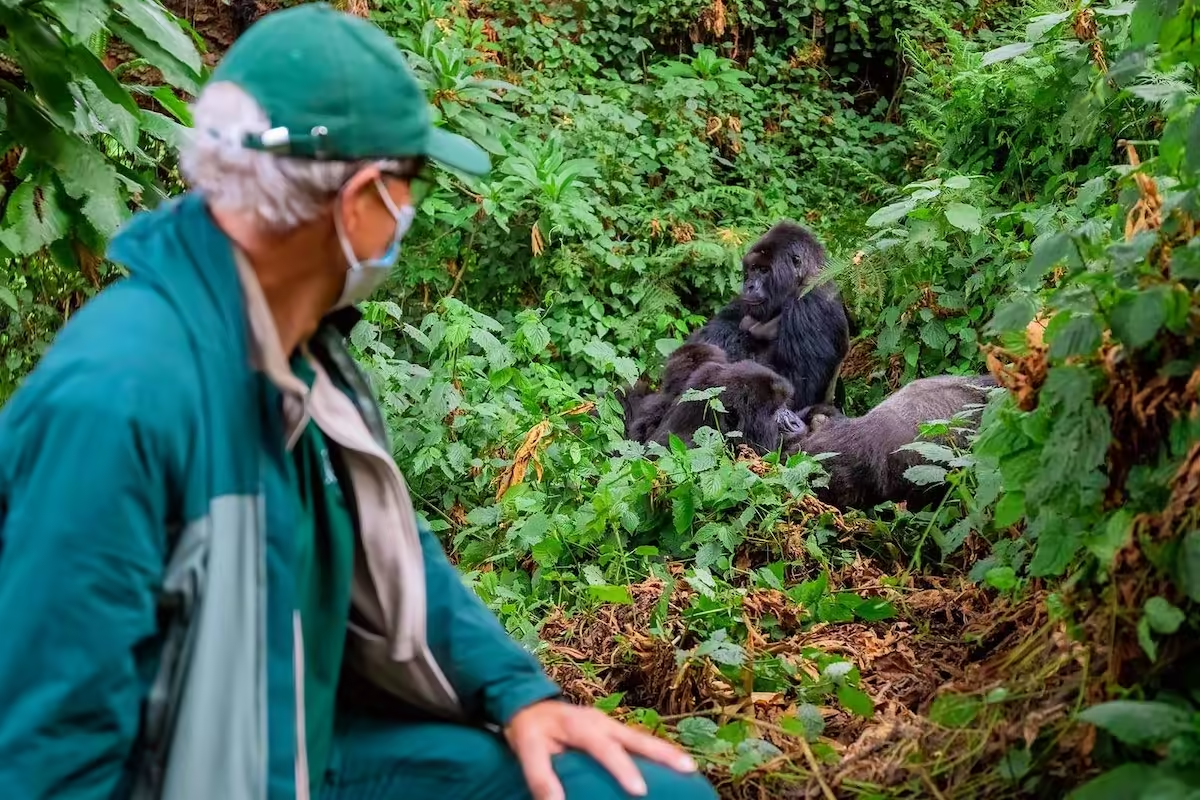
Track habituated families through steep rainforest, then spend an hour with them. Gorilla guide →
Kibale's forest troops, plus habituation for longer encounters. Chimp tracking →
Game drives, the Kazinga Channel and the Nile below Murchison Falls. Boat safaris →
Three we book most often. Every other duration and route lives on the packages page.
Fly into Entebbe, trek in Bwindi and fly out - the shortest way to stand with a gorilla family.
From $2,650 pp
The classic combination: Kibale chimpanzees, Queen Elizabeth game drives and the Kazinga Channel, then gorillas in Bwindi.
From $4,100 pp
Murchison Falls and the Nile, chimpanzees in Kibale, Queen Elizabeth, then gorillas - the complete circuit without rushing.
From $5,800 pp
Everything on this page, grouped. Jump straight to the part you need.
Ten national parks, from the impenetrable forest of the south-west to the semi-arid plains of the north-east. These are the ones that shape most itineraries.
Mountain gorillas in UNESCO rainforest, with four separate trekking sectors.
Virunga volcanoes, gorillas and golden monkeys on the Rwanda and DRC border.
Uganda's principal chimpanzee destination and its richest primate forest.
Savannah, wetlands and the Kazinga Channel - plus the lions of Ishasha.
Uganda's largest park: Nile boat cruise, savannah game drives and shoebill.
Remote semi-arid wilderness in the far north, close to the South Sudan border.
Compact savannah and the easiest park to reach from Kampala.
Congo Basin lowland forest in the Albertine Rift - a birding destination.
The Mountains of the Moon: high-altitude trekking rather than game drives.
Eastern Uganda: crater caves, waterfalls, moorland and forest trails.
Uganda's mountain gorilla safari destination.
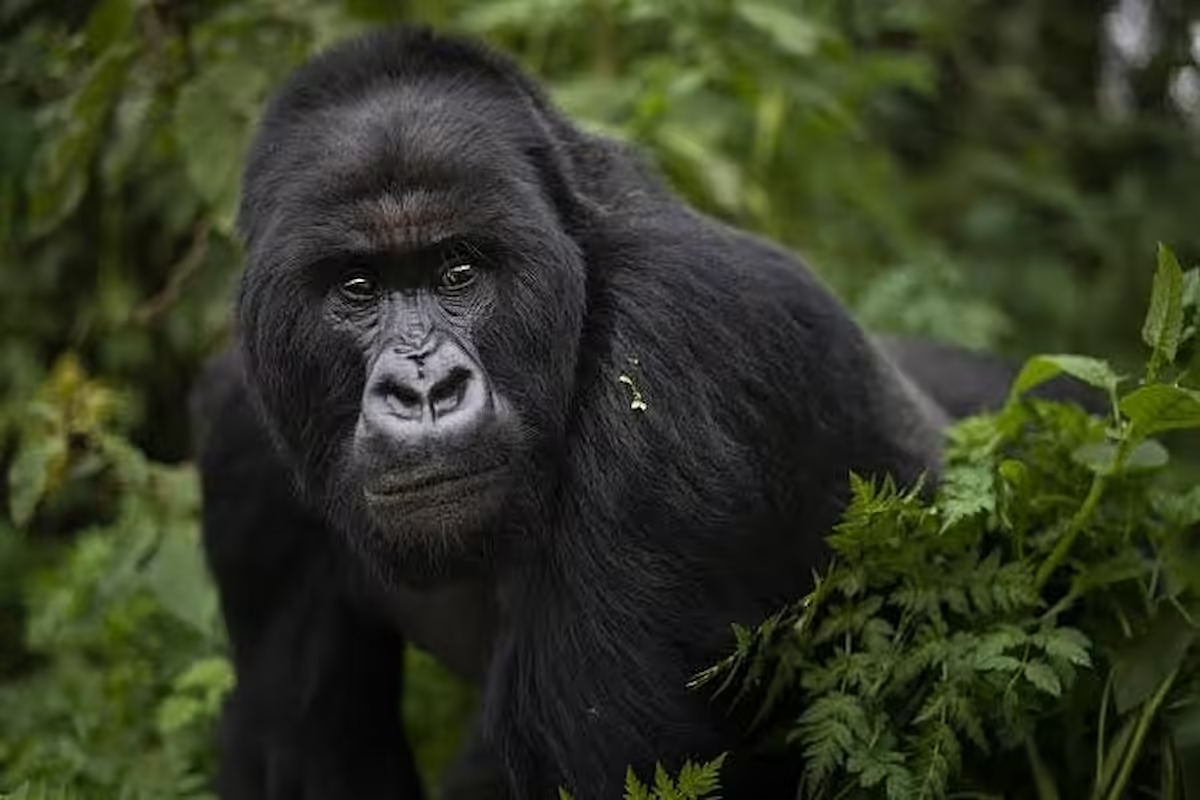
Bwindi is the destination most closely associated with gorilla trekking in Uganda. The UNESCO-recognised forest ecosystem lies in the south-west of the country and contains steep ridges, valleys and dense vegetation. Around 459 mountain gorillas live here, with several habituated gorilla groups available for tourism.
Gorilla trekking in Uganda takes place in four sectors:
The trekking experience can involve steep terrain, muddy trails and significant walking. Treks can last approximately 2-7 hours depending on where the gorilla family has moved, with visitors allowed one hour of observation once they reach their assigned habituated family.
Gorillas are the primary attraction, but the forest contains much more:
More than 350 bird species are recorded in Bwindi, including numerous Albertine Rift endemics. For the trekking itself, see gorilla trekking in Uganda; the forest also has its own Bwindi park guide.
Uganda's other mountain-gorilla destination.
Mgahinga forms part of the Virunga volcanic landscape and sits in the south-west near the borders with Rwanda and the Democratic Republic of Congo. It is a very different setting from Bwindi - a smaller, more open park built around three extinct volcanoes.
The park offers:
Gorilla trekking at Mgahinga operates alongside Bwindi, giving travellers an alternative forest and volcanic setting. Golden monkey tracking is the other important reason to include the park: under the 2024-2026 conservation tariff, golden monkey tracking and habituation are separate activities that require advance arrangements.
Chimpanzee tracking in Uganda.
Kibale is one of Uganda's most important destinations for chimpanzee tracking. The park's forest environment supports a high concentration of primates and is usually included in itineraries that combine chimpanzees with gorilla trekking and savannah wildlife. The main experience is chimpanzee tracking, but the forest also supports other primates and forest species.
Tracking normally begins with a briefing before visitors enter the forest with trained guides. Chimpanzee sightings are not guaranteed - the animals move through the forest, and the length of the walk depends on where the troop is located. A chimpanzee habituation experience is also available, which provides substantially more time with chimpanzees than standard tracking and is treated as a separate activity.
Depending on the area and conditions, visitors can encounter:
Kibale is therefore particularly valuable for travellers whose priority is primates rather than conventional savannah game. It also has a dedicated park guide, and the activity itself is covered under chimpanzee tracking.
Uganda's classic savannah and wildlife safari.
Queen Elizabeth National Park combines savannah, woodland, wetlands, lakes and forest habitats. It is one of the most useful parks for travellers who want to combine a conventional African game drive with chimpanzees, boat safaris and unusual wildlife landscapes. More than 600 bird species have been recorded here.
A safari can include sightings of:
One of the defining experiences is a boat cruise along the Kazinga Channel, the waterway connecting Lake Edward and Lake George. The channel attracts hippos, crocodiles, elephants, buffaloes and large numbers of waterbirds, and it is one of the park's major wildlife attractions. A boat cruise gives a different perspective from a game drive because many animals approach or stay close to the water.
The southern Ishasha sector is known for its tree-climbing lions. The behaviour is unusual enough that it has become one of Uganda's recognisable wildlife experiences. Sightings are never guaranteed, but the possibility of finding lions resting in fig trees gives Ishasha a distinct place in a Uganda safari itinerary.
Wildlife and the Nile.
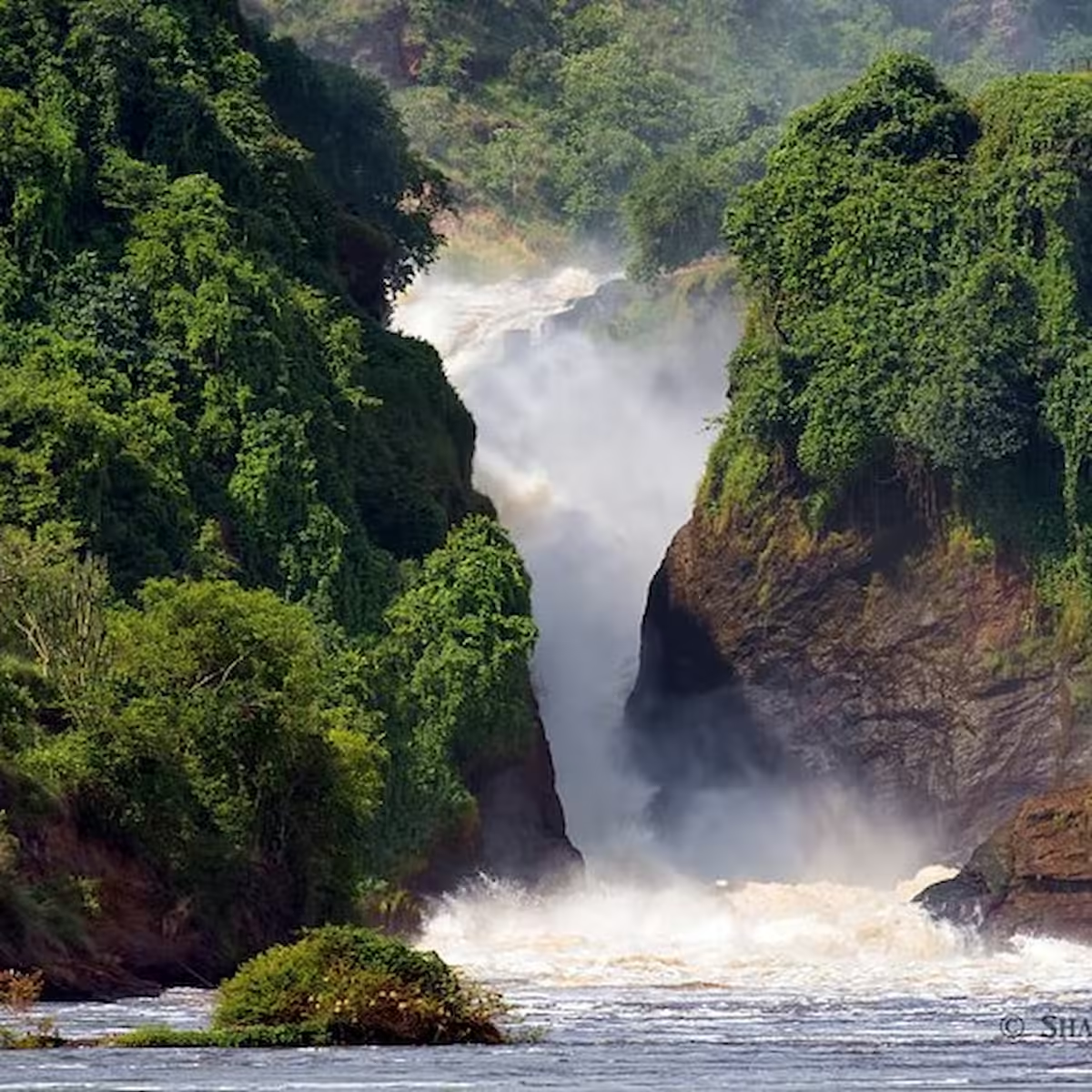
Murchison Falls is Uganda's largest national park and combines savannah wildlife with one of the country's most dramatic natural features: the Nile forcing through the narrow Murchison Falls gorge. The park suits travellers who want game drives, Nile boat cruises and the waterfall itself in the same itinerary.
What a safari here can include:
The northern sector provides open savannah and strong opportunities for large mammal viewing. Potential sightings include Rothschild's giraffe, elephant, buffalo, lion, leopard, Uganda kob, hartebeest, warthog and oribi.
A boat cruise downstream toward the base of Murchison Falls provides close views of hippos, crocodiles and animals coming to drink. It is one of the most useful activities to include when designing a first-time Murchison Falls itinerary.
Murchison Falls is also relevant to specialist birdwatchers, particularly travellers hoping to find the shoebill - one of Uganda's important birding destinations for the species.
Remote northern Uganda safari.
Kidepo Valley is geographically and ecologically different from Uganda's south-western forest destinations. The park lies in the semi-arid Karamoja region in the north-east and covers approximately 1,442 square kilometres. It borders South Sudan and lies close to the Kenya border.
Kidepo's appeal is its combination of remote wilderness, broad savannah, mountain scenery and dryland wildlife:
More than 77 mammal species and 476 bird species are recorded in the park.
During the dry season the Narus Valley becomes an important wildlife-viewing area, because water remains available when surrounding rivers and seasonal watercourses dry up. This concentrates animals around the remaining water sources.
A Kidepo itinerary can connect with cultural experiences involving communities in the Karamoja region, including the Karamojong and Ik. These visits should be arranged through responsible local operators and approached as genuine cultural exchanges rather than staged entertainment.
Kidepo's remoteness is a major part of the experience but also an important planning consideration. Scheduled or charter flights are the most practical way to reach the park for many safari travellers, although road access is possible.
A compact savannah park that works well as an introduction to Uganda's wildlife.
Lake Mburo covers approximately 370 square kilometres and sits between Kampala and Mbarara. It is Uganda's closest national park to Kampala, and it combines savannah, wetlands, woodlands and lakes in a small area.
Lake Mburo is particularly notable for:
It is also one of Uganda's distinctive destinations for walking and cycling-style wildlife experiences where these are permitted and guided. More than 315 bird species are recorded in the park.
It works particularly well between:
It can also provide a shorter safari experience for travellers who do not have enough time for the longer northern parks.
Different from Uganda's better-known savannah parks.
Located in the Albertine Rift, Semuliki contains lowland tropical forest and gives access to wildlife and bird species associated with the Congo Basin ecosystem. It is particularly relevant to birdwatchers, forest enthusiasts, primate travellers, botanists and travellers interested in unusual ecosystems.
Semuliki is one of Uganda's ten national parks and sits within the country's forest and Rift Valley landscapes. The park can be combined with Fort Portal and Kibale on a western Uganda route.
An entirely different side of Uganda.
Instead of a conventional game-drive safari, the Rwenzori experience revolves around mountain trekking, high-altitude landscapes and the dramatic vegetation zones of the mountains. The range is famous for its snow-capped peaks despite sitting close to the equator.
A traveller can therefore combine Uganda safari, gorilla trekking and Rwenzori trekking for a much more active itinerary.
Eastern Uganda, close to the Kenya border.
Mount Elgon offers:
Mount Elgon is particularly useful for travellers extending a wildlife trip into eastern Uganda or combining Uganda with western Kenya.
For many travellers, gorilla trekking is the main reason to visit Uganda.
The activity is available in Bwindi Impenetrable National Park and Mgahinga Gorilla National Park, and it requires moderate physical fitness. A trek can take approximately 2-7 hours, followed by one hour observing the habituated gorilla family.
A typical trekking day includes:
The exact duration depends on the movement of the gorillas.
It can be physically demanding. The terrain in Bwindi includes steep slopes, dense vegetation, muddy trails and elevation changes, so fitness matters when selecting the trekking sector and planning the trip.
Under the current July 2024-June 2026 conservation tariff, a foreign non-resident gorilla permit costs US$800, a foreign resident permit US$700, and an East African Community permit UGX 300,000. The same tariff lists the gorilla habituation experience at US$1,500 for foreign non-residents.
The gorilla permit includes the guide fee, park entrance for the day and a community development contribution. Tariffs are revised periodically, so confirm the current permit price against the latest tariff before booking - the gorilla permit guide keeps this updated.
The habituation experience is different from standard gorilla trekking. Instead of the normal one-hour gorilla viewing period, participants spend substantially longer with a gorilla group undergoing habituation. It is listed at up to US$1,500 for foreign non-residents, subject to the applicable tariff period and availability, and is particularly relevant to wildlife photographers, researchers, primate enthusiasts and travellers wanting extended forest time.
Primarily associated with Kibale, with a second option inside Queen Elizabeth.
Chimpanzee experiences centre on Kibale National Park, although chimpanzee tracking also takes place at Kyambura Gorge in Queen Elizabeth National Park.
Under the July 2024-June 2026 tariff:
Kibale tracking includes the applicable guide fee and park entrance, while Kyambura tracking has different inclusion rules. Prices are updated periodically, so recheck them before booking.
For travellers who want more than a standard chimpanzee trek, Kibale offers a habituation experience. Instead of following chimpanzees for a conventional tracking period, visitors spend considerably longer observing the animals. Habituation runs throughout the year and is particularly attractive to photographers and serious primate enthusiasts.
Primarily associated with Mgahinga Gorilla National Park.
Golden monkey tracking can be combined with gorilla trekking for travellers who want to experience two different primate species in the Virunga landscape.
Current tariff:
The activity excludes park entrance fees and requires advance booking.
Strong big game - but the proposition reaches beyond the Big Five.
Uganda is capable of delivering a traditional big-game safari, and potential Big Five destinations include Queen Elizabeth National Park, Murchison Falls National Park, Kidepo Valley National Park, Lake Mburo and selected conservation areas and sanctuaries.
Queen Elizabeth is especially known for the tree-climbing lions of Ishasha.
Elephants occur across several Ugandan protected areas, including Queen Elizabeth, Murchison Falls and Kidepo.
Buffaloes are widely distributed across Uganda's savannah ecosystems, with especially large herds in Kidepo.
Leopards are present in several savannah parks but are naturally more difficult to encounter than some other large mammals.
For travellers specifically interested in seeing rhinos, Ziwa Rhino Sanctuary is an important addition outside the national-park network. Uganda's conservation programme has also begun reintroducing rhinos to Kidepo Valley: in March 2026 a reintroduction programme involving eight southern white rhinos started, following more than four decades without rhinos in Kidepo. This is an important current conservation development, but Kidepo is not yet an established rhino-viewing destination.
A wildlife-focused itinerary can combine several ecosystems in one route.
Best suited to travellers interested in savannah wildlife, the Kazinga Channel, tree-climbing lions, birdlife and chimpanzees.
A strong combination of game drives, the Nile, the waterfall, giraffes, elephants, hippos and birding.
Best suited to travellers looking for remote wilderness, northern species, large landscapes and low-density safari experiences.
Useful for zebra, impala, eland, walking, birding and short safari extensions.
One of the strongest birding destinations in East Africa.
Uganda is particularly strong for birdwatching because the country sits at the intersection of several ecological regions. Important birding destinations include Murchison Falls, Bwindi, Mgahinga and Semuliki.
Murchison Falls is notable for shoebill opportunities, while Bwindi and Mgahinga are important for Albertine Rift endemics. Semuliki is particularly significant because it supports species associated with the Guinea-Congo region. A specialist birding itinerary can therefore be substantially different from a conventional wildlife safari - start with bird watching activities.
The activity list is unusually wide for one country - forest tracking, classic game drives, water-based viewing and high-altitude trekking all sit on the same itinerary.
Game drives are available in Uganda's savannah parks and are particularly important in Queen Elizabeth, Murchison Falls, Kidepo Valley and Lake Mburo. Game drives remain the backbone of any itinerary that is not focused entirely on primates.
Uganda's rivers and lakes create several opportunities for water-based wildlife viewing. The important experiences are the Kazinga Channel, the Victoria Nile below Murchison Falls and Lake Mburo. See boat safaris for how these are run.
Available in Bwindi and Mgahinga. Covered in full under gorilla trekking above.
Available in Kibale and Kyambura Gorge.
Available in Mgahinga.
Walking experiences are available in selected protected areas and can focus on wildlife, forests, birds, plants and tracking. Lake Mburo is the best-known option. See walking safaris.
Uganda offers Rwenzori trekking, Mount Elgon trekking and Virunga volcano experiences around Mgahinga.
Cultural experiences can include Batwa-related experiences, Karamojong experiences in northern Uganda, local community visits around conservation areas, and traditional crafts and performances. Depending on the route you may also spend time with Bakiga, Banyankole and other communities. Visits should be arranged with communities or responsible local organisations rather than treated as photo opportunities - see cultural tours.
Uganda's climate varies across regions, so there is no single month that is objectively best for every safari.
Generally one of the drier periods, and useful for game viewing, gorilla trekking, chimpanzee tracking and wildlife photography. December-February is recognised as a dry period for primate tracking and wildlife viewing in savannah reserves.
Another major dry period, favourable for savannah wildlife, gorilla trekking, chimpanzee tracking and photography. This is the busiest window on the popular routes.
Generally associated with heavier rains. The forests become wetter and trails can become muddy - but rainfall also brings lush vegetation, excellent landscapes, strong bird activity and fewer visitors in some areas. Chimpanzee tracking can sometimes be more productive during the rainy season, because chimpanzees may stay closer to accessible food sources rather than moving deeper into the forest.
Can bring another rainy period, although conditions vary considerably by region.
Gorilla trekking runs throughout the year. Many travellers prefer drier periods because forest trails are generally easier, but wet conditions are part of the rainforest environment and gorilla sightings are not limited to one season.
Also available throughout the year. The ideal timing depends on whether you prioritise easier trails, forest conditions or particular photographic opportunities. For the wider regional picture see the best time for an African safari.
The total cost of a Uganda safari is determined by far more than park fees.
Usually focuses on simple lodges or guesthouses, road transport, fewer premium activities and efficient itineraries.
Can combine comfortable lodges, private 4x4 transport, a private guide, gorilla trekking, chimpanzee tracking and savannah game drives.
May include premium forest lodges, luxury safari camps, domestic or charter flights, private vehicles, premium gorilla lodges, private experiences and extended stays. See luxury Uganda safaris.
The gorilla permit alone is a significant portion of the cost for many international travellers. For this reason a 3-day gorilla safari can cost considerably more than a 3-day conventional wildlife safari. Confirm the current tariff whenever pricing is published - our safari cost guide explains how quotes are normally structured.
Three ways of travelling that change the route, the lodges and the pace.
A luxury Uganda safari is less about large concentrations of animals and more about combining exclusive accommodation with specialised wildlife experiences. A typical route is Entebbe → Kibale → Queen Elizabeth → Bwindi → Entebbe, with luxury forest lodges, a private guide, a private 4x4, gorilla trekking, chimpanzee tracking, a Kazinga Channel cruise, private meals and domestic flights where useful. For travellers with more time, Kidepo can be added as a remote luxury extension.
Uganda can work for families, but the itinerary needs to account for age and activity restrictions - gorilla trekking age requirements, chimpanzee activity requirements, long road transfers, lodge family-room availability, walking ability, meal requirements and travel pace. A family route can focus more heavily on game drives and boat trips while limiting long forest treks: Entebbe → Lake Mburo → Queen Elizabeth → Murchison Falls is a practical shape. For families with older children, a primate-focused itinerary may add Kibale. See family and honeymoon Uganda safaris.
A honeymoon in Uganda can combine forest experiences with luxury lodges and wildlife. Possible routes are Entebbe → Kibale → Queen Elizabeth → Bwindi, or Entebbe → Queen Elizabeth → Bwindi → Lake Bunyonyi. Experiences include gorilla trekking, private game drives, chimpanzee tracking, a Kazinga Channel cruise, luxury forest lodges, scenic mountain views and private dining.
Uganda rarely travels alone - most strong itineraries are combinations.
This is one of the strongest combinations for a Uganda holiday: instead of choosing between wildlife and gorillas, travellers can combine both. A 7-day route works like this - Day 1 Entebbe → Kibale, Day 2 chimpanzee tracking, Day 3 Kibale → Queen Elizabeth, Day 4 game drive and Kazinga Channel cruise, Day 5 Queen Elizabeth → Bwindi, Day 6 gorilla trekking, Day 7 Bwindi → Entebbe. That combines forest primates, savannah wildlife and mountain gorillas in one week.
Uganda and Rwanda combine particularly well for travellers interested in gorillas. A cross-border itinerary can run Kigali → Volcanoes National Park → Uganda → Bwindi → Queen Elizabeth → Kibale, or Entebbe → Kibale → Queen Elizabeth → Bwindi → Rwanda. The choice depends on border arrangements, permit availability, road conditions and your preferred route - our Uganda vs Rwanda comparison covers the trade-offs.
A longer East African journey can combine Uganda's forest experiences with Kenya's savannah: Bwindi gorillas, Kibale chimpanzees and Queen Elizabeth on one side, the Masai Mara on the other. The contrast between Uganda's forest ecosystems and Kenya's open savannah is what makes the pairing work.
Uganda can also be combined with Tanzania, although the geography makes this more suitable for longer trips. A possible itinerary combines Uganda gorillas, the Serengeti, Ngorongoro and the coast - particularly attractive to travellers who want both primate trekking and classic East African wildlife. Start from our Tanzania safari hub, or plan the whole thing as one East Africa route via East Africa safaris.
Accommodation ranges from simple safari lodges to high-end forest properties.
Common in Queen Elizabeth, Murchison Falls, Lake Mburo and Kidepo.
Particularly important around Bwindi, Kibale and Mgahinga, where staying close to the trailhead saves an early start.
Higher-end properties may offer private cottages, forest views, large rooms, private decks, premium dining, spa services and personalised service.
For gorilla trekking, the lodge's position in relation to the relevant trekking sector matters considerably. Staying around Buhoma is more practical for a Buhoma trek than booking accommodation on the opposite side of the forest. Bwindi has multiple trekking sectors - Buhoma, Ruhija, Rushaga and Nkuringo - so accommodation should be selected after the gorilla permit sector is confirmed, not the other way around. The full range is listed under accommodation in Uganda.
Roads, domestic flights and the gateways that connect them.
Road travel remains one of the most practical ways to explore western Uganda. A 4x4 vehicle is useful for forest roads, savannah game drives, long-distance transfers, rougher roads and wildlife viewing.
Flying can save significant travel time for remote destinations, and is especially relevant for Kidepo, Bwindi, Murchison Falls and Queen Elizabeth. Air-access options are confirmed for destinations including Bwindi and Kidepo.
Choose road travel when you have sufficient time, want to see rural Uganda, want a more flexible itinerary, or are combining nearby western parks. Consider flying when your itinerary includes Kidepo, when your trip is short, when you want to reduce long road transfers, or when you are travelling between distant safari regions.
Most international visitors enter through Entebbe International Airport, which makes it the natural starting point for gorilla safaris, chimpanzee safaris, Murchison Falls, Queen Elizabeth and Lake Mburo. Kampala can be used as a starting point for road-based itineraries, although international travellers normally arrive through Entebbe. Kisoro is important for the southern sectors of Bwindi and Mgahinga, Kihihi for accessing the northern side of Bwindi, and the Kidepo airstrips for air access to the far north.
A short itinerary can focus on gorilla trekking, Queen Elizabeth or Murchison Falls - but three days only works if you fly rather than drive.
Good for Kibale plus Queen Elizabeth, or Queen Elizabeth plus Bwindi.
Allows combinations such as Kibale → Queen Elizabeth → Bwindi - one of the strongest routes for travellers wanting chimpanzees, savannah wildlife and gorillas.
Allows more complete itineraries including Murchison Falls, Kibale, Queen Elizabeth and Bwindi, or a northern extension to Kidepo.
A longer trip can combine Kidepo, Murchison Falls, Kibale, Queen Elizabeth and Bwindi without making every day a long transfer.
Seven routes we build most often, with the day-by-day shape of each.
Day 1 Entebbe or Kampala → Bwindi. Day 2 gorilla trekking. Day 3 Bwindi → Entebbe or Kampala. Best suited to travellers whose primary objective is gorilla trekking - see the 3-day gorilla itinerary.
Day 1 Entebbe → Bwindi. Day 2 gorilla trekking. Day 3 Bwindi → Lake Bunyonyi. Day 4 Lake Bunyonyi → Entebbe. Adds a scenic highland lake experience after the trek - see the 4-day gorilla safari.
Day 1 Entebbe → Kibale. Day 2 chimpanzee tracking. Day 3 Kibale → Bwindi. Day 4 gorilla trekking. Day 5 Bwindi → Entebbe. A concentrated primate itinerary - 5-day details.
Day 1 Entebbe → Kibale. Day 2 chimpanzee tracking. Day 3 Kibale → Queen Elizabeth. Day 4 game drive and Kazinga Channel. Day 5 Queen Elizabeth → Bwindi. Day 6 gorilla trekking. Day 7 Bwindi → Entebbe. One of the most logical routes for combining Uganda's three major safari experiences - 7-day details.
Day 1 Entebbe → Murchison Falls. Day 2 game drive. Day 3 Nile boat cruise and Murchison Falls. Day 4 Murchison Falls → Kibale. Day 5 chimpanzee tracking. Day 6 Kibale → Queen Elizabeth. Day 7 Queen Elizabeth game drive and Kazinga Channel. Day 8 Queen Elizabeth → Entebbe.
Day 1 Entebbe → Murchison Falls. Day 2 Murchison Falls game drive. Day 3 Nile boat cruise. Day 4 Murchison Falls → Kibale. Day 5 chimpanzee tracking. Day 6 Kibale → Queen Elizabeth. Day 7 Queen Elizabeth game drives. Day 8 Kazinga Channel → Bwindi. Day 9 gorilla trekking. Day 10 Bwindi → Entebbe - 10-day details.
For travellers who want to include the remote north: Day 1 Entebbe → Kidepo. Days 2-3 Kidepo game drives. Day 4 Kidepo → Murchison Falls. Day 5 Murchison Falls game drive. Day 6 Nile boat cruise. Day 7 Murchison Falls → Kibale. Day 8 chimpanzee tracking. Day 9 Kibale → Queen Elizabeth. Day 10 Queen Elizabeth. This route prioritises wildlife diversity and remote landscapes rather than gorilla trekking - see wildlife-focused Uganda safaris and the 12-day and 14-day versions.
Uganda provides several distinct photographic environments inside a single country.
Bwindi provides opportunities for close-range photography within strict wildlife-viewing rules. The forest environment creates challenging light, dense vegetation and changing conditions - a fast lens and weather protection matter more here than anywhere else on the itinerary.
Kibale offers opportunities to photograph chimpanzees and other primates in forest conditions, generally at closer range than savannah subjects but in the same difficult light.
Queen Elizabeth, Murchison Falls and Kidepo provide more conventional African wildlife photography with longer sightlines and better conditions.
Major subjects include Bwindi forest, the Virunga volcanoes, the Rwenzori Mountains, Murchison Falls, the Nile, Kidepo Valley, the Kazinga Channel and Lake Mburo. A private safari vehicle is useful for photographers because it gives greater control over positioning and time spent at sightings - see photographic safaris and our safari photography guide.
A responsible Uganda safari should contribute to wildlife conservation and local communities rather than treating protected areas simply as places to see animals.
Do not feed wildlife, chase animals, shout at animals, leave the vehicle where prohibited, or ignore guide instructions. These are not suggestions - they are the conditions on which habituated animals stay habituated.
Gorillas are wild animals and should be observed according to established field rules. Follow instructions from rangers and guides regarding distance, movement, photography and health - including the standard requirement to stay back when a gorilla approaches, and not to trek if you are unwell.
Choose accommodation and safari operators that employ local people and contribute to community development. The gorilla tariff explicitly incorporates a community-development contribution into the permit structure, so part of what you pay already goes back to the communities living alongside the forest.
Do not leave waste in forests, avoid unnecessary plastic, and stay on authorised trails.
Ask before photographing people, and learn about local customs before participating in cultural activities. Cultural visits should be arranged with communities or responsible local organisations rather than treated simply as photo opportunities.
What to arrange before you go, and how to prepare for the trekking.
Before travelling, consult a qualified travel-health professional regarding malaria prevention, vaccinations, yellow fever requirements, travel insurance, prescription medication, food and water precautions, and any personal medical conditions. Safaris operate under established wildlife-management rules, but wild animals remain unpredictable - follow your guide's instructions, stay in the vehicle where required and follow park regulations. See safari safety for the wider briefing.
Gorilla trekking requires additional preparation because visitors spend extended periods walking through forest terrain. Consider hiking shoes, waterproof clothing, long trousers, gloves, insect repellent, water, walking poles, a lightweight backpack and camera protection against rain. Physical preparation is useful because trekking conditions can be steep and muddy.
Uganda operates an official electronic immigration system for visa applications. Check your nationality-specific requirements before booking and use the official immigration system rather than third-party visa websites. The official system provides electronic visa application and verification services, and requirements can change - always review the current position for your passport before you travel. The safari visa guide explains how this fits with the rest of the region.
The forest can be wet even when conditions elsewhere in Uganda are dry, so the gorilla-trekking list is longer than a normal safari list.
Bring additional warm clothing for Bwindi, Mgahinga, the Rwenzori and Mount Elgon - evenings at altitude drop sharply even near the equator.
The full regional list is in our what to pack for safari guide.
The decisions that actually change your itinerary.
If this is your first trip to Uganda, do not try to visit every major park - a focused itinerary generally produces a better experience. Decide what your priority is first. For gorillas choose Bwindi plus optional Queen Elizabeth. For primates choose Kibale plus Bwindi. For classic wildlife choose Murchison Falls plus Queen Elizabeth. For remote wilderness choose Kidepo plus Murchison Falls. For a complete Uganda experience choose Kibale plus Queen Elizabeth plus Bwindi. If the whole decision feels opaque, start with planning a first safari.
Both offer mountain gorilla trekking. Choose Bwindi if gorilla trekking is your primary objective, you want several trekking-sector options, you want a larger forest ecosystem, or you want to combine gorillas with western Uganda. Choose Mgahinga if you want gorillas plus golden monkeys, you are interested in volcano hiking, you prefer the Virunga landscape, or you are already travelling around Kisoro. The decision should also be based on permit availability and the exact trekking sector rather than reputation alone.
Kibale is best suited to travellers whose main objective is chimpanzee tracking, and it also provides access to a broader primate-focused forest experience. Kyambura Gorge is more convenient for travellers already visiting Queen Elizabeth National Park, so it can make sense for a shorter itinerary. Current tariffs reflect the difference in the two experiences, with separate chimpanzee-tracking rates for each.
| If your priority is... | Consider |
|---|---|
| Mountain gorillas | Bwindi / Mgahinga |
| Chimpanzees | Kibale |
| Tree-climbing lions | Queen Elizabeth - Ishasha |
| Kazinga Channel | Queen Elizabeth |
| Murchison Falls | Murchison Falls |
| Nile boat safari | Murchison Falls |
| Remote wilderness | Kidepo |
| Zebra and impala | Lake Mburo |
| Golden monkeys | Mgahinga |
| Albertine Rift birding | Bwindi / Mgahinga |
| Shoebill | Murchison Falls and selected wetlands |
| Mountain trekking | Rwenzori / Mount Elgon |
| Short western Uganda safari | Lake Mburo / Queen Elizabeth |
Full park index: all national parks.
All Uganda safari packages → Or send us your dates
The three above are a shortlist. The rest of the collection - longer gorilla routes and the full wildlife circuits - sits below, and every duration, style and combination lives on the packages page.
Trek plus Batwa heritage walk and second forest morning.
From $2,400
Adds Lake Mburo walking and community days to the grand tour.
From $5,700
Every park including Kidepo option - Uganda without compromise.
From $6,550
Yes. Uganda combines savannah wildlife, forest primates, mountain gorillas, chimpanzees, wetlands, rivers and mountain landscapes within one destination - and unlike most countries, it lets you put gorillas and conventional game drives in the same week.
Mountain gorilla trekking above all, followed by chimpanzee tracking, forest primates, Murchison Falls, Queen Elizabeth National Park and its diverse landscapes.
Gorilla trekking takes place in Bwindi Impenetrable National Park and Mgahinga Gorilla National Park. Bwindi has four sectors - Buhoma, Ruhija, Rushaga and Nkuringo - so the permit sector determines where you stay.
Both parks sit in the Virunga conservation area's northern reach, but they differ operationally: Bwindi runs four separate trailheads with over a dozen habituated families, Mgahinga works one family (Nyakagezi) that wanders across the border, so permit allocation matters more there. Mountain gorillas also survive in Rwanda's Volcanoes and DRC's Virunga - one regional conservation story, three countries.
Treks can take approximately 2-7 hours depending on where the gorilla family has moved, followed by one hour of observation with the habituated family. Fitness matters more than speed - the terrain in Bwindi is steep and often muddy.
The clock splits into search time and visit time: the visit is fixed at one hour, the search varies from a 20-minute stroll when the family slept nearby to the full 7 hours for a mobile group. Park rules close the day at 4pm, so late starts shorten the search window. Porters halve the perceived effort, not the distance.
Under the July 2024-June 2026 tariff the foreign non-resident gorilla permit is US$800, with separate rates for foreign residents and East African Community citizens. The habituation experience is listed at US$1,500. Tariffs are revised periodically, so confirm the current rate before booking.
Buy through the authority's booking system or an operator licensed to transact there: permits are named, passport-linked and dated to a specific sector and trailhead. Cash sales at park headquarters exist but only for last-minute leftovers. Budget the permit before the lodge - at US$800 it is the single largest line on a Uganda trek and non-negotiable.
It can be. Bwindi's terrain includes steep ridges, valleys and dense vegetation, and moderate physical fitness is required. Treks vary hugely by day - some families are found in under an hour, others take the full 2-7 hours - so go prepared rather than expecting a particular outcome.
Difficulty is terrain, not distance: the cumulative gain matches a hard hill day, but at 2,000-3,000m in wet forest with no trail surface. Porters take packs and help on the steepest pulls. Under-16s cannot go, over-60s routinely do - the park rates fitness as moderate because the ranger team carries the day's logistics.
Kibale National Park is the country's principal chimpanzee-tracking destination, with the highest primate density and a habituation option. Kyambura Gorge inside Queen Elizabeth is the convenient alternative if you are already there.
Ranking beyond Kibale: Budongo's Royal Mile is the runner-up (easy forest, good chimps, Masindi side), Kyambura wins for scenery - a sunken gorge with chimps on the rim - and Kalinzu is the budget fallback near Queen Elizabeth. All run morning and afternoon slots, all weather-dependent, and chimps are noisier and faster than gorillas: binoculars matter more here.
Uganda supports lion, leopard, elephant, buffalo and rhino, but the viewing experience differs from the high-density savannah of parts of Kenya and Tanzania. Rhinos are seen at Ziwa Rhino Sanctuary rather than in the national parks, and the Kidepo reintroduction that began in March 2026 is still too new to plan around.
The Ishasha sector in the southern part of Queen Elizabeth National Park. Sightings are never guaranteed, but lions resting in fig trees are regularly seen there and it is worth building the southern loop into the route.
Follow local travel advice, use reputable operators, stay attentive during road travel and follow park rules inside protected areas. Wildlife is unpredictable, so always follow your guide's and ranger's instructions. Beyond the parks, standard travel sense applies.
June to August and December to February are the commonly useful periods for wildlife viewing and primate tracking. Wetter months bring greener scenery, better bird activity and fewer visitors - and chimpanzee tracking can actually improve during rain, because the animals stay closer to accessible food sources.
Yes. Kibale and Bwindi combine cleanly in one itinerary - it is one of the most requested combinations we build, and a 5-day trip covers both.
What to expect from the pairing: gorilla day is a steep half-day plus a fixed hour, chimp day is a shorter, noisier forest walk - genuinely different primates, not a repeat. West Uganda routes (Kibale then Bwindi) do both in five days with Queen Elizabeth between. Chimpanzee permits are cheap beside gorilla permits, so the combo adds cost mainly in transfers.
Yes. The standard combination is Kibale → Queen Elizabeth → Bwindi, which gives you chimpanzee tracking, savannah wildlife, a Kazinga Channel cruise and gorilla trekking in one week without excessive driving.
The efficient pairing runs Entebbe-first: Kibale chimps in the flatter forest to warm up, Queen Elizabeth in between, Bwindi last so the hardest terrain comes when you know the drill. Two to three nights per region. Chimpanzee permits release alongside gorilla permits - book both in one transaction to lock dates.
Yes, but activity age requirements need checking before booking - gorilla and chimpanzee activities each have their own rules. Long road journeys are the other consideration, so a family itinerary usually leans on game drives and boat trips rather than forest treks.
A short gorilla-focused trip takes around three days if you fly. A broader Uganda safari benefits from 7-10 days, and two weeks lets you add Kidepo without turning every day into a transfer.
For travellers who want remote northern wilderness, yes - it is one of the most rewarding parks in the country precisely because so few people make the trip. It matters less if you are short on time or budget, because flights and extra nights cost more than a southwestern route.
Yes. The two countries combine particularly effectively for gorilla and primate-focused itineraries, either by flying into Kigali or routing overland. Border, permit and entry requirements all need checking for your nationality - see our Uganda vs Rwanda comparison.
Yes. Uganda's gorilla and chimpanzee experiences pair naturally with the Masai Mara, Amboseli or Samburu - forest ecosystems on one side, open savannah on the other. It works best as one planned trip rather than two bolted together.
Yes, though the geography makes it better suited to longer trips. Uganda's primates plus the Serengeti, Ngorongoro and the coast is a strong East African route - plan it as a single itinerary so the flights and border crossings make sense.
The total price depends heavily on gorilla or chimpanzee permits, accommodation, transport and trip length. Gorilla trekking significantly increases the total because the permit alone is a major expense - on a short trip it can outweigh everything else. Get permits checked before you compare quotes.
Uganda's daily running costs sit close to Kenya's, but the gorilla permit moves the total: US$800 per trekker goes to the park authority regardless of operator margin, so a three-day Uganda trip can carry US$1,600 of permits for two people before accommodation. Chimpanzee permits at Kibale (around US$250 in high season) and Queen Elizabeth park fees add the rest - get permits checked before you compare quotes.
Long trousers, sturdy waterproof hiking boots, long socks, a waterproof jacket and gardening-style gloves. Neutral colours, and camera protection against rain - the forest is wet even when the rest of Uganda is dry.
Two pairs of socks and a spare shirt beat extra gadgets: Bwindi mornings sit near 10C at 2,300m and turn humid by noon, so a light fleece and headlamp go in the daypack for the pre-dawn 6-7am briefing. High anti-leech socks help in the wet months. Put the camera in a waterproof bag - rain arrives from below as often as from the canopy.
Permits are limited to a fixed number of trekkers per family per day, and the good sectors sell out first. For peak months we would rather have your dates months in advance than chase availability late - the permit sector also determines your lodge, so booking it early keeps the rest of the trip flexible.
Two calendars govern the sale: Uganda releases permits per fiscal year (July-June) and Rwanda monthly, and both hold back little stock for last-minute buyers. Peak slots tie families to specific trailheads - your permit sector fixes the lodge, so a late permit forces either a long transfer or an unavailable camp.
Fly when the route would otherwise eat a day - Kidepo is the clearest case, and Bwindi from Entebbe is the other. Drive when you have time and want to see the country in between. Most strong itineraries do a bit of both, and the trade-off is usually one long driving day against the cost of an internal flight.
Plan around one long transfer day at a time, not two in a row. Between Kibale, Queen Elizabeth and Bwindi the distances look manageable on a map but the roads are slow, so three nights in each area is far better than one. Gorilla and chimpanzee days are full days on their own - do not schedule a drive afterwards.
Uganda runs an official electronic immigration system for visa applications. Check the requirements for your specific nationality before booking and apply through the official system rather than third-party sites, since requirements can change and the official service covers application and verification.
Uganda has run its e-visa portal since July 2016, and approval must be printed and presented with a passport valid for six months. The standard single-entry tourist visa is US$50, while the US$100 East African Tourist Visa bundles Uganda with Kenya and Rwanda as multiple entry, provided the first entry is through the issuing country. Kenya, Rwanda, Tanzania, Botswana, Zambia, Zimbabwe, Ghana, Singapore and a long SADC and EAC list enter visa-free for up to three months. Apply through immigration.go.ug only - third-party sites resell the same approval at several times the price - and print two copies.
Tell us your travel dates, how many of you are travelling and which experiences matter most - gorillas, chimpanzees, big game, birding, photography or a combination. A specialist replies within 24 hours.